
Overview
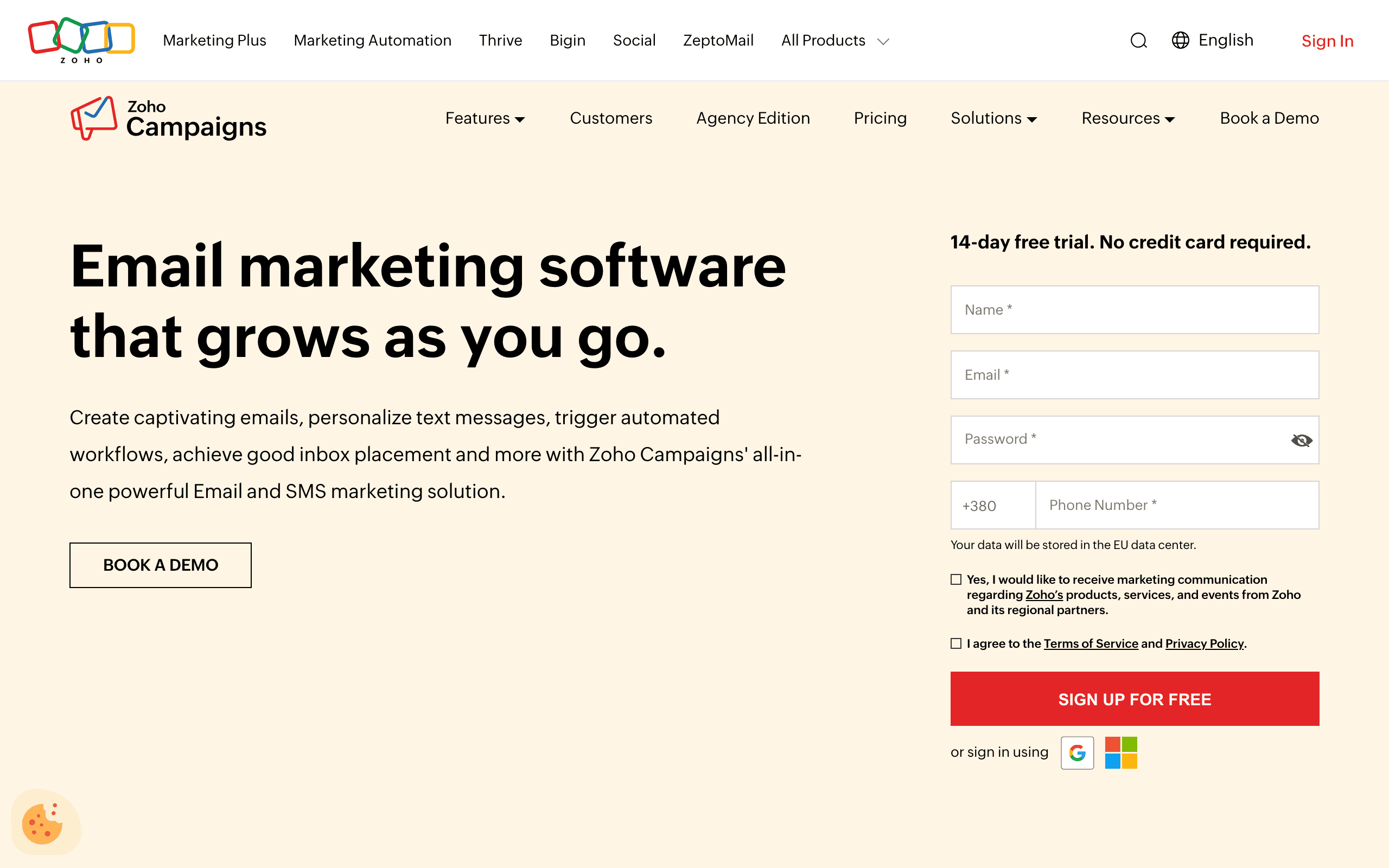
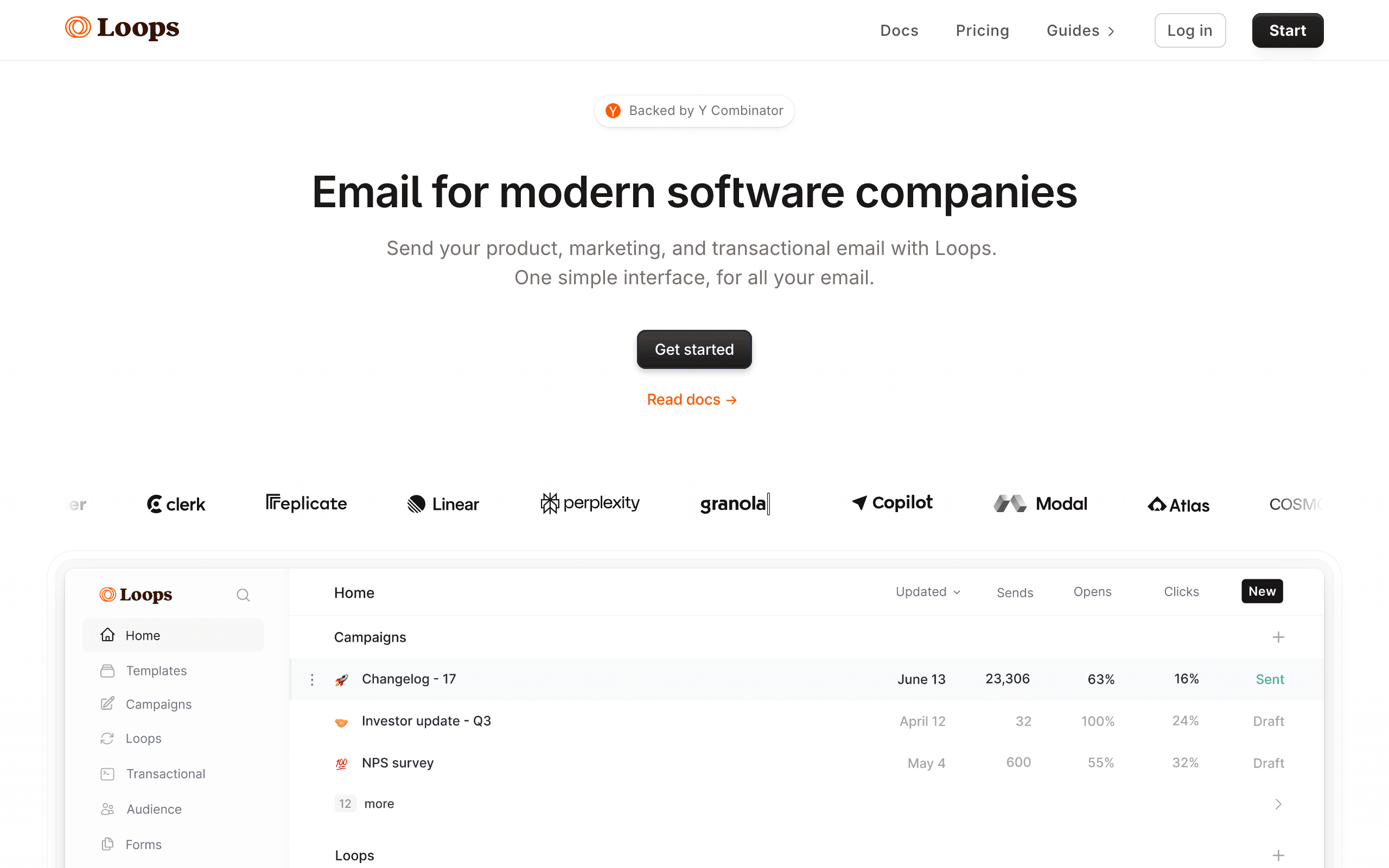
Zoho Campaigns and Loops target completely different audiences. Zoho is affordable general email marketing for small businesses in the Zoho ecosystem. Loops is a modern platform built specifically for SaaS companies. Your business type determines the right choice.
The SaaS Question
Loops is designed for SaaS. Transactional emails, user event tracking, and developer-friendly APIs are core features. The interface is clean and modern, the kind of tool SaaS founders like using.
Zoho is general-purpose. It works for newsletters, marketing campaigns, and basic automation. But it doesn't understand SaaS concepts like user activation, feature adoption, or product-led growth.
Price vs Focus
At 10,000 contacts, Zoho costs $35/month. Loops costs around $99/month. That's nearly 3x the price.
The question is: are SaaS-specific features worth the premium? For actual SaaS companies, often yes. For general business email marketing, Zoho is better value.
Developer Experience
Loops has a modern API that developers appreciate. Clean documentation, sensible endpoints, good SDKs. Zoho's API works but feels more enterprise and dated.
If your team includes developers who will integrate email into your product, Loops is more pleasant to work with.
Ecosystem Trade-offs
Zoho Campaigns shines within the Zoho ecosystem. Native CRM integration, helpdesk connection, and one bill for everything. If you use Zoho products, Zoho Campaigns is the obvious choice.
Loops integrates with modern SaaS data tools like Segment but doesn't connect to Zoho. Different ecosystems for different business types.
For SaaS Companies with Stripe
Neither Zoho nor Loops has deep Stripe integration. Loops has basic support, Zoho has none.
If you're building a SaaS product on Stripe, consider Sequenzy. Native Stripe integration enables automation based on trial endings, payment failures, and subscription changes. At $49/month for 10k contacts, it's between Zoho's budget pricing and Loops' premium cost. AI sequences help create email content, and both transactional and marketing emails work from one platform.
Developer Experience and API Quality
Loops built its platform with developers as a primary audience. The API follows modern REST conventions with clear endpoint naming, consistent response formats, and comprehensive documentation with code examples in multiple languages. SDKs for JavaScript, Python, and Go make integration straightforward. A developer can have event tracking sending data to Loops within an afternoon.
Zoho Campaigns has an API, but it reflects enterprise software conventions from an earlier era. The documentation is less intuitive, authentication is more complex, and the endpoints feel designed for administrative tasks rather than product integration. Connecting your application to Zoho Campaigns requires more development time and ongoing maintenance.
For SaaS companies where email is part of the product experience, API quality directly affects development velocity. Poor API design means more engineering hours spent on email infrastructure instead of product features. If your team will interact with the email platform primarily through code, Loops offers a meaningfully better developer experience.
Transactional vs Marketing Email Architecture
Loops handles both transactional and marketing email from one platform. Password resets, invoice notifications, onboarding sequences, and promotional campaigns all share the same sending infrastructure, contact database, and analytics dashboard. This unified approach simplifies operations and prevents the common SaaS problem of managing separate tools for different email types.
Zoho Campaigns is marketing-only. Transactional emails like password resets and order confirmations require ZeptoMail, a separate Zoho product with its own pricing, dashboard, and DNS configuration. Running two email systems increases operational complexity and fragments your view of subscriber communication history.
For businesses that only send marketing emails, this distinction is irrelevant. For SaaS companies that need both transactional and marketing email, the unified approach saves operational overhead. Sequenzy also handles both transactional and marketing emails from one platform, adding Stripe integration that Loops currently lacks at a deeper level.
Platform Maturity Trade-offs
Zoho Campaigns has been operating for over a decade with millions of emails sent daily. The platform is stable, the infrastructure is proven, and edge cases have been discovered and addressed. When you encounter a problem, chances are someone else has solved it and documented the solution.
Loops launched recently and is still building out core features. The platform iterates quickly, adding capabilities based on user feedback, but you will occasionally encounter limitations that established tools solved years ago. Advanced segmentation, detailed analytics, and complex workflow conditions are areas where Loops is still catching up.
The maturity trade-off is real. Choosing Loops means betting on the team's ability to ship features fast enough to meet your growing needs. Choosing Zoho means accepting a dated experience in exchange for reliability. For SaaS companies that need proven infrastructure with modern SaaS features today, Sequenzy offers a middle path: purpose-built for subscription businesses with the operational stability of a production email platform.
Use-case matchups
| Situation | Best first look | Why |
|---|---|---|
| Team already uses Zoho and wants low-cost email campaigns | Zoho Campaigns | Zoho Campaigns is the baseline when Zoho ecosystem fit and affordable campaigns matter most. |
| SaaS team wants product-led lifecycle messaging | Loops | Loops is stronger when user events and SaaS lifecycle journeys matter more than generic campaigns. |
| SaaS or commerce team wants lifecycle and transactional email | Sequenzy | Sequenzy is stronger when Stripe events, transactional messages, and lifecycle automation matter more than Zoho suite alignment. |
| Team wants straightforward newsletters inside a familiar business suite | Zoho Campaigns | Zoho Campaigns should be tested first if contacts and CRM data already live in Zoho. |
| Product-led team needs SaaS lifecycle email | Loops | Loops deserves the first demo when the main requirement is modern SaaS lifecycle email. |
| Team wants focused email workflows without a broader business suite | Sequenzy | Sequenzy is more relevant when app, store, and billing events drive the email program. |
Pricing reality
The pricing signals on this page list Zoho Campaigns at $35/month, Loops at $99/month, and Sequenzy at $49/month. Compare total workflow cost, not only list price.
Zoho Campaigns can be a strong value when the team already uses Zoho CRM or Zoho apps. Loops's real cost depends on whether the team needs modern SaaS lifecycle email.
Review signals
This page has existing review data from G2, Capterra, Product Hunt. Keep those sources in the decision because buyers often discover differences in support, editor quality, deliverability, integration depth, pricing, and day-to-day usability through reviews.
For Zoho Campaigns, validate review themes around Zoho CRM integration, campaign editor workflow, support, deliverability, and list management. For Loops, focus review research on whether users praise the reason you would choose it: modern SaaS lifecycle email.
Best Fit by Suite Alignment and SaaS Focus
Best low-cost campaign tool for Zoho CRM teams
Zoho Campaigns fits teams already using Zoho CRM or Zoho apps that want affordable newsletters, forms, list management, and straightforward automations. It should be tested first when Zoho ecosystem fit is a real workflow advantage.
Best modern SaaS email platform for product-led lifecycle
Loops fits teams that need user events, loops, transactional messages, and lifecycle campaigns built around SaaS product behavior. Choose it when product-led onboarding and retention matter more than staying inside a general business software suite.
Best focused email platform for app, store, and billing events
Sequenzy fits teams that want lifecycle and transactional email without buying a broader suite or a separate billing-event bridge. It is most relevant when app, store, and Stripe events should drive the email program.
Migration checklist
| Workstream | Moving toward Zoho Campaigns | Moving toward Loops | Simplifying to Sequenzy |
|---|---|---|---|
| Contacts and consent | Import contacts, lists, segments, Zoho CRM fields, consent, unsubscribes, and suppressions. | Map users, events, properties, transactional messages, loops, audiences, and lifecycle triggers. | Import subscribers, attributes, tags, suppressions, store events, Stripe events, and transactional paths. |
| Ecosystem fit | Confirm Zoho CRM, Zoho Forms, Zoho Commerce, or other Zoho apps are actually part of the workflow. | Confirm whether Loops replaces or integrates with the existing CRM and store stack. | Keep CRM-suite features outside scope unless they feed lifecycle email. |
| Automations | Rebuild welcome, newsletter, CRM nurture, ecommerce, and reactivation flows. | Rebuild the workflows that prove Loops's advantage in modern SaaS lifecycle email. | Rebuild lifecycle and transactional email flows. |
| Templates and forms | Move templates, signup forms, sender identities, brand assets, and preference paths. | Move templates, forms, brand assets, and workflow-specific content. | Move email templates and transactional message content. |
| Reporting | Validate campaign reports, CRM attribution, exports, segment performance, and deliverability. | Validate reporting for modern SaaS lifecycle email before committing. | Validate campaign, automation, transactional, and lifecycle reporting. |
Decision checklist
- Is Zoho ecosystem alignment a real advantage, or is the team only comparing email price?
- Does Loops's strength in modern SaaS lifecycle email matter more than Zoho Campaigns' low-cost suite fit?
- Which platform handles consent, suppressions, and imports with the least manual cleanup?
- Are the listed prices still realistic at real contact count, send volume, and required add-ons?
- Would lifecycle and transactional email create more value than another general newsletter platform?
- Loops should be validated against product-event and transactional needs.









