
Overview
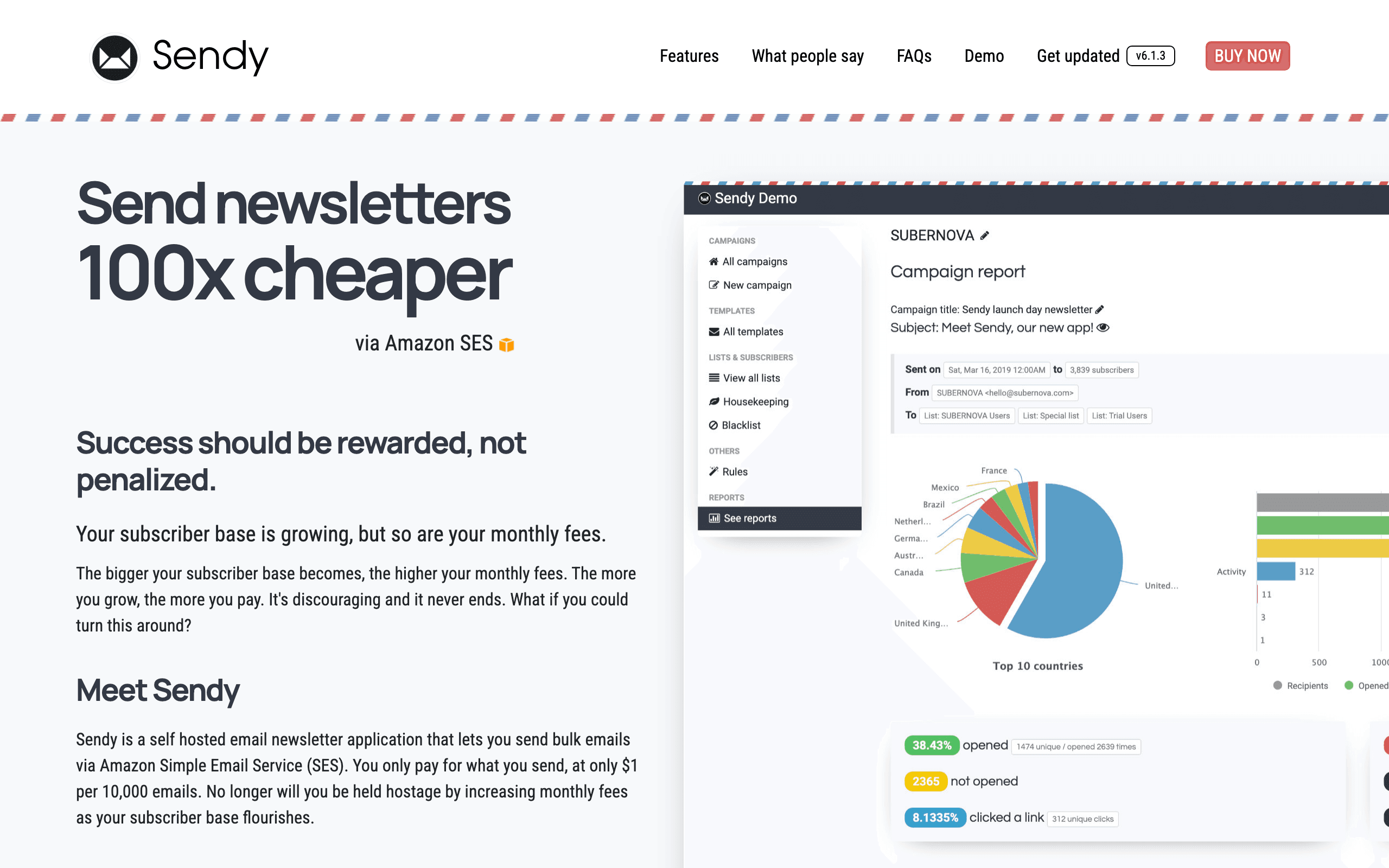
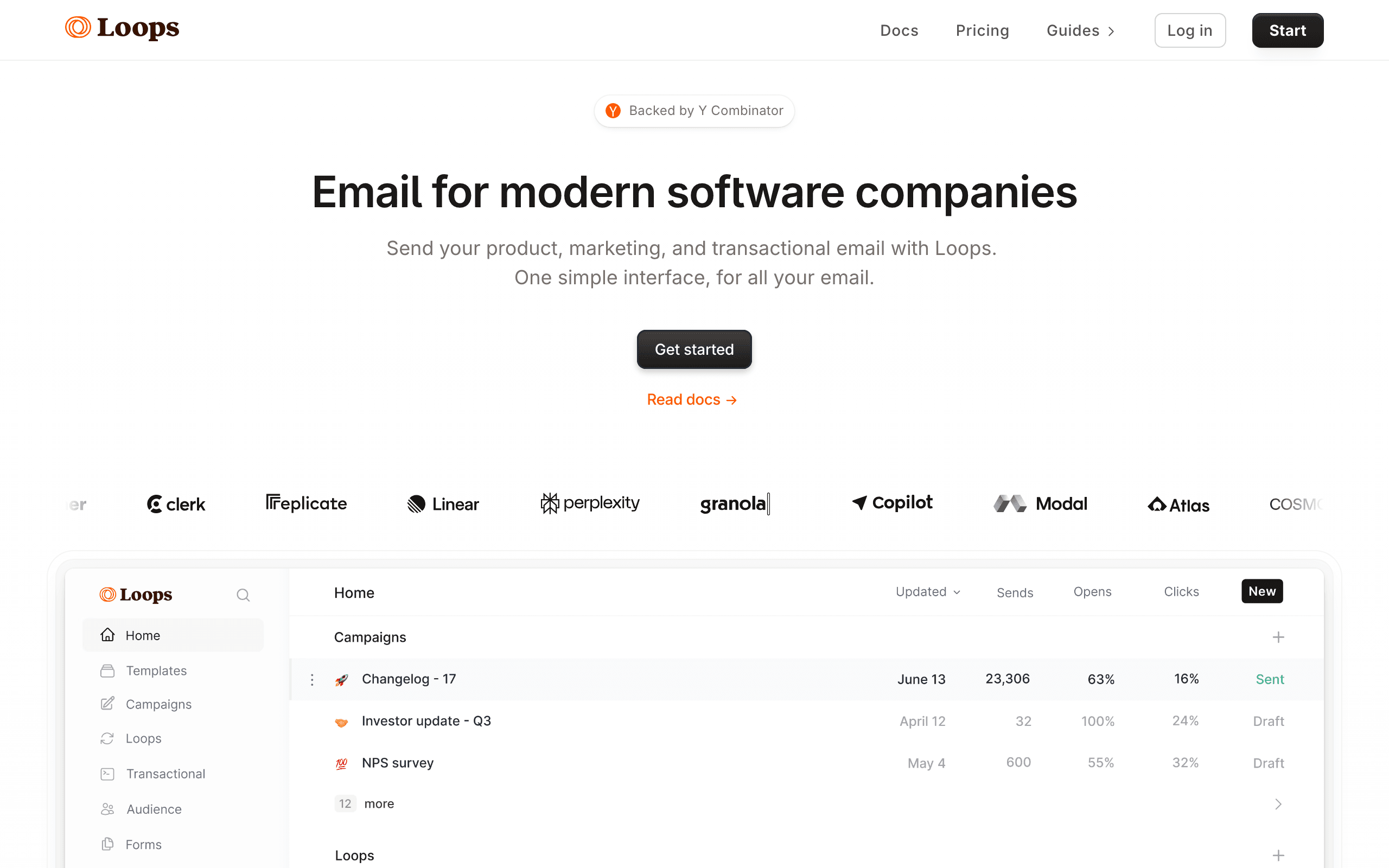
Sendy and Loops represent different approaches to email marketing. Sendy is a proven, cost-effective self-hosted tool. Loops is a modern platform built specifically for SaaS companies. See our Loops comparison for more context.
Different Eras of Email
Sendy was built for a different era. It's PHP-based, requires self-hosting, and has basic automation. Loops is built for modern SaaS with event-based triggers, user properties, and clean APIs. The technology gap is significant.
Sendy's Cost Advantage
At 10,000 contacts, Sendy costs $1-5/month (Amazon SES fees only). Loops costs $149/month. Over a year, that's $1,700+ in savings. For budget-conscious senders with basic needs, Sendy's economics are compelling.
Loops' Modern Approach
Loops has event-based automation, user properties, product analytics integrations, and a developer-first API. You can trigger emails based on in-app behavior, not just email engagement. For product-led SaaS, this is the expected standard.
Technical Trade-offs
Sendy requires server administration, PHP hosting, and Amazon SES configuration. Loops is sign-up-and-go. The time spent on Sendy infrastructure could be spent on your product. But the cost savings are real.
Developer Experience
Loops has clean documentation, modern REST API, and good SDKs. Sendy has dated architecture and manual processes. For modern development teams, Loops integrates more naturally into your stack.
For SaaS with Stripe
Neither Sendy nor Loops has native Stripe integration. If payment-triggered automation is important for your SaaS, consider Sequenzy. We connect directly to Stripe for subscription-aware emails and revenue attribution.
Making the Choice
Choose Sendy if you're technical, have basic email needs, and want to minimize costs. Choose Loops if you're building a modern SaaS and want event-based automation with clean developer experience. For SaaS with Stripe billing, consider Sequenzy.
Generational Differences in Email Architecture
Sendy and Loops represent two distinct generations of email technology. Sendy is built on PHP/MySQL with a traditional web application architecture common in the early 2010s. Loops is built with modern infrastructure designed for real-time event processing, API-first interactions, and cloud-native deployment. The architectural gap affects every aspect of the user experience.
Sendy's architecture determines what it can do: store subscriber lists, schedule campaign sends, and track basic metrics. Loops' architecture enables what modern SaaS companies expect: ingest user events in real time, trigger automated workflows based on product behavior, personalize content using user properties, and manage transactional and marketing email through a unified API.
For developers evaluating these tools, the technical alignment matters. A modern SaaS application built with React, Node.js, and cloud infrastructure integrates naturally with Loops' REST API and event model. Integrating the same application with Sendy requires bridging the gap between modern and legacy architectures, often through workarounds that add complexity.
Event-Based Automation: The Feature That Changes Everything
The fundamental capability gap between Sendy and Loops is event-based automation. Loops can trigger emails when users complete specific actions in your product: creating their first project, inviting a team member, upgrading their plan, or hitting a usage milestone. Sendy can only trigger emails based on subscription to a list or time delays in a sequence.
For product-led SaaS companies, this difference is transformative. Onboarding emails that respond to actual user behavior outperform generic time-based sequences by significant margins. A user who has not created a project after three days needs a different message than one who created five projects on day one. Event-based automation enables this personalization. Time-based autoresponders cannot.
This capability directly impacts business metrics. Better onboarding emails improve activation rates. Behavior-triggered feature announcements increase adoption. Usage-based upgrade prompts drive revenue. These outcomes require event-based automation that Sendy architecturally cannot provide regardless of configuration.
The Developer Experience Gap
Loops' modern REST API with clean documentation, SDKs for popular languages, and webhook support creates a developer experience that Sendy cannot match. Integrating Loops into a modern application takes minutes with well-documented endpoints and predictable JSON responses.
Sendy's API is limited and dated. Basic operations like adding subscribers or sending campaigns are possible, but the API lacks the depth and documentation quality that modern developers expect. No webhooks, limited event support, and sparse documentation mean integration often requires trial and error.
For engineering teams that value developer experience, this gap affects velocity. Time spent wrestling with integration complexity is time not spent building your product. Loops' developer-first approach means email integration does not become a recurring engineering burden.
When Cost Savings Justify Feature Trade-offs
Despite Loops' superiority for SaaS use cases, Sendy's cost advantage creates legitimate scenarios where the simpler tool is the right choice. A bootstrapped founder sending a weekly product update to 5,000 subscribers does not need event-based automation. The $1,700+ annual savings versus Loops can fund other growth initiatives.
The calculus changes as the business matures. Once you have enough users that onboarding quality, feature adoption, and churn prevention measurably affect revenue, the investment in a capable email platform pays for itself. The question is not if you will need event-based automation, but when.
For SaaS companies that need event-based automation but find Loops' $149/month pricing steep, Sequenzy offers similar capabilities at $49/month with the added benefit of native Stripe integration. This positions Sequenzy as the middle ground: modern enough for SaaS needs, affordable enough for early-stage companies.
Use-case matchups
| Situation | Best first look | Why |
|---|---|---|
| Team wants the lowest visible email sending cost and can self-host | Sendy | Sendy is the baseline here for teams comfortable operating their own app layer on top of a sending service. |
| SaaS team wants lifecycle email instead of self-hosted newsletters | Loops | Loops is stronger when product events, lifecycle journeys, and transactional messages matter more than low-cost sends. |
| SaaS or subscription team wants lifecycle and transactional email | Sequenzy | Sequenzy is stronger when Stripe events, transactional messages, and campaigns need a hosted lifecycle workflow. |
| Technical team already owns servers and AWS email operations | Sendy | Sendy can make sense when maintenance, updates, deliverability setup, and backup ownership are acceptable. |
| Product-led team needs SaaS lifecycle email | Loops | Loops deserves the first demo when the main requirement is modern SaaS lifecycle email for product-led teams. |
| Team wants hosted workflows without self-hosting | Sequenzy | Sequenzy removes Sendy-style app maintenance while staying focused on email automation and transactional messages. |
Pricing reality
The pricing signals on this page list Sendy at ~$1-5/month or equivalent operating cost, Loops at $149/month, and Sequenzy at $49/month. Sendy's number should never be read as the whole cost.
Sendy usually shifts cost from the vendor invoice to operations: hosting, updates, backups, SES or SMTP setup, bounce handling, deliverability monitoring, and internal troubleshooting. Loops's real cost depends on whether the team needs modern SaaS lifecycle email for product-led teams.
Review signals
For Sendy, validate reviews around setup, updates, SES integration, bounce handling, deliverability, and the amount of technical maintenance required. For Loops, focus review research on whether users praise the reason you would choose it: modern SaaS lifecycle email for product-led teams.
Best Fit by Hosting Cost and Lifecycle Need
Best self-hosted email tool for the lowest visible sending cost
Sendy fits technical teams that can operate their own app layer, SES or SMTP setup, bounces, backups, updates, and deliverability monitoring. It should be evaluated first when the team accepts operational ownership to keep visible email sending costs low.
Best SaaS lifecycle email platform for product-led teams
Loops fits SaaS teams that need product events, lifecycle journeys, transactional messages, and a hosted interface instead of self-hosted newsletter tooling. Choose it when onboarding and retention workflows matter more than Sendy's low software cost.
Best hosted email automation platform without self-hosting
Sequenzy fits teams that want hosted campaign, lifecycle, and transactional email without owning infrastructure. It is the better fit when app, store, or Stripe events need to trigger messages and the team does not want Sendy-style maintenance.
Migration checklist
| Workstream | Moving toward Sendy | Moving toward Loops | Simplifying to Sequenzy |
|---|---|---|---|
| Hosting and ownership | Provision hosting, backups, updates, SSL, cron jobs, sending service credentials, and admin access. | Map users, events, properties, transactional messages, loops, audiences, and lifecycle triggers. | Import subscribers, attributes, tags, suppressions, and lifecycle events into a hosted workflow. |
| Sending setup | Configure SES or SMTP, SPF, DKIM, DMARC, bounce processing, complaint handling, and suppression logic. | Confirm sender authentication, deliverability tooling, and plan limits. | Configure sending domains and transactional paths without self-hosting. |
| Contacts and consent | Import lists, custom fields, segments, unsubscribes, bounces, and suppression records. | Import the data model Loops needs for modern SaaS lifecycle email for product-led teams. | Import subscriber data and lifecycle attributes. |
| Automations | Rebuild simple autoresponders and campaigns; custom lifecycle logic may need outside code. | Rebuild the workflows that prove Loops's advantage. | Rebuild campaign, lifecycle, and transactional email flows. |
| Reporting | Decide which analytics are built in and which require outside tooling. | Validate reporting for modern SaaS lifecycle email for product-led teams before committing. | Validate campaign, automation, transactional, and subscription lifecycle reporting. |
Decision checklist
- Can your team keep Sendy's PHP/MySQL server running, install updates by hand, back up the data, and protect Amazon SES deliverability?
- Does Loops's strength in modern SaaS lifecycle email for product-led teams matter more than Sendy's low visible cost?
- After moving to Sendy, who will process SES bounces and complaints and keep suppression lists current?
- Once you add server hosting, admin time, and engineering hours, does Sendy's $1-5 monthly figure still beat Loops' $149?
- Would a hosted platform with built-in transactional email, like Loops or Sequenzy, be more useful than a self-hosted newsletter layer?
- Loops should be validated against product-event needs and transactional paths.









