
Overview
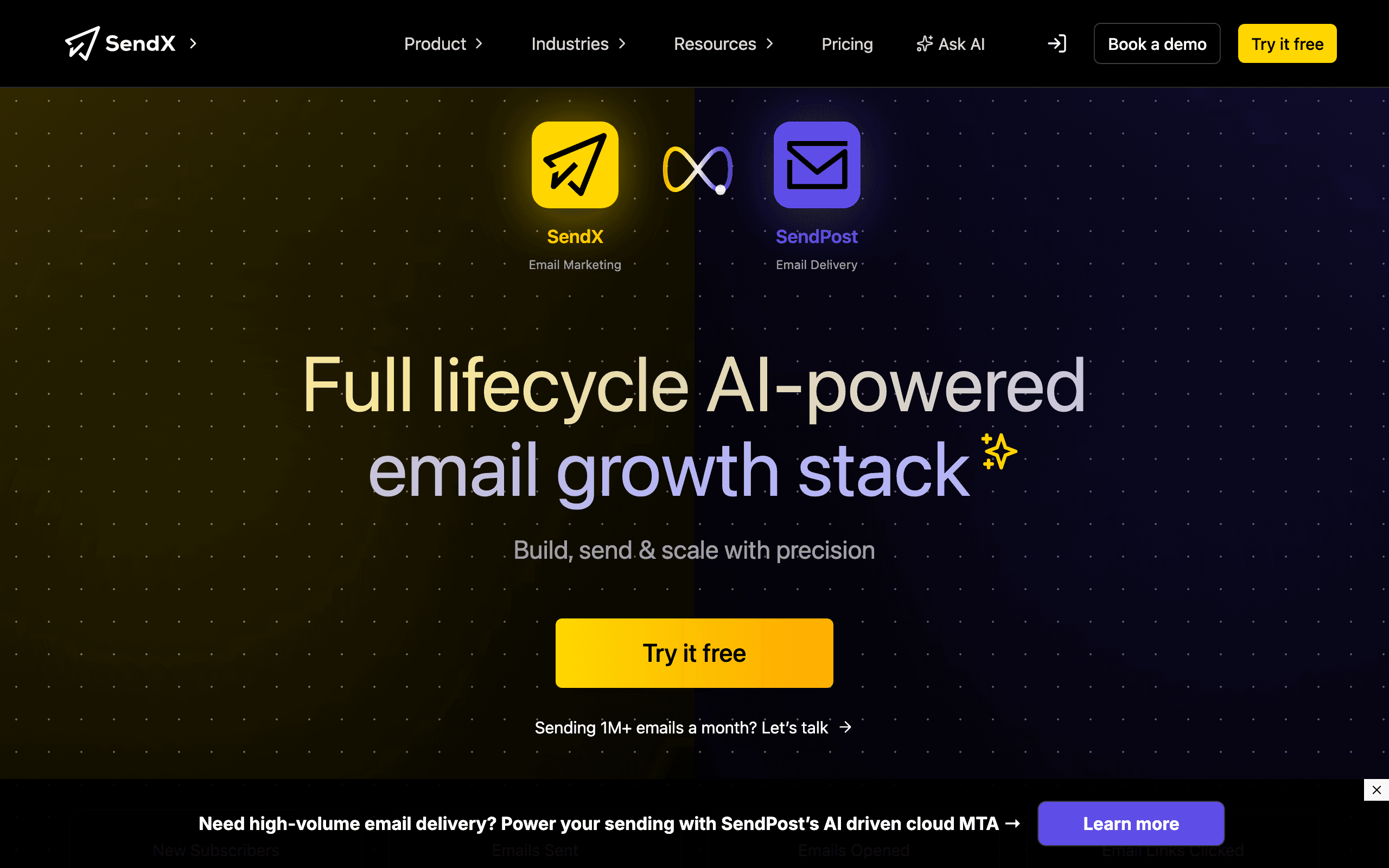
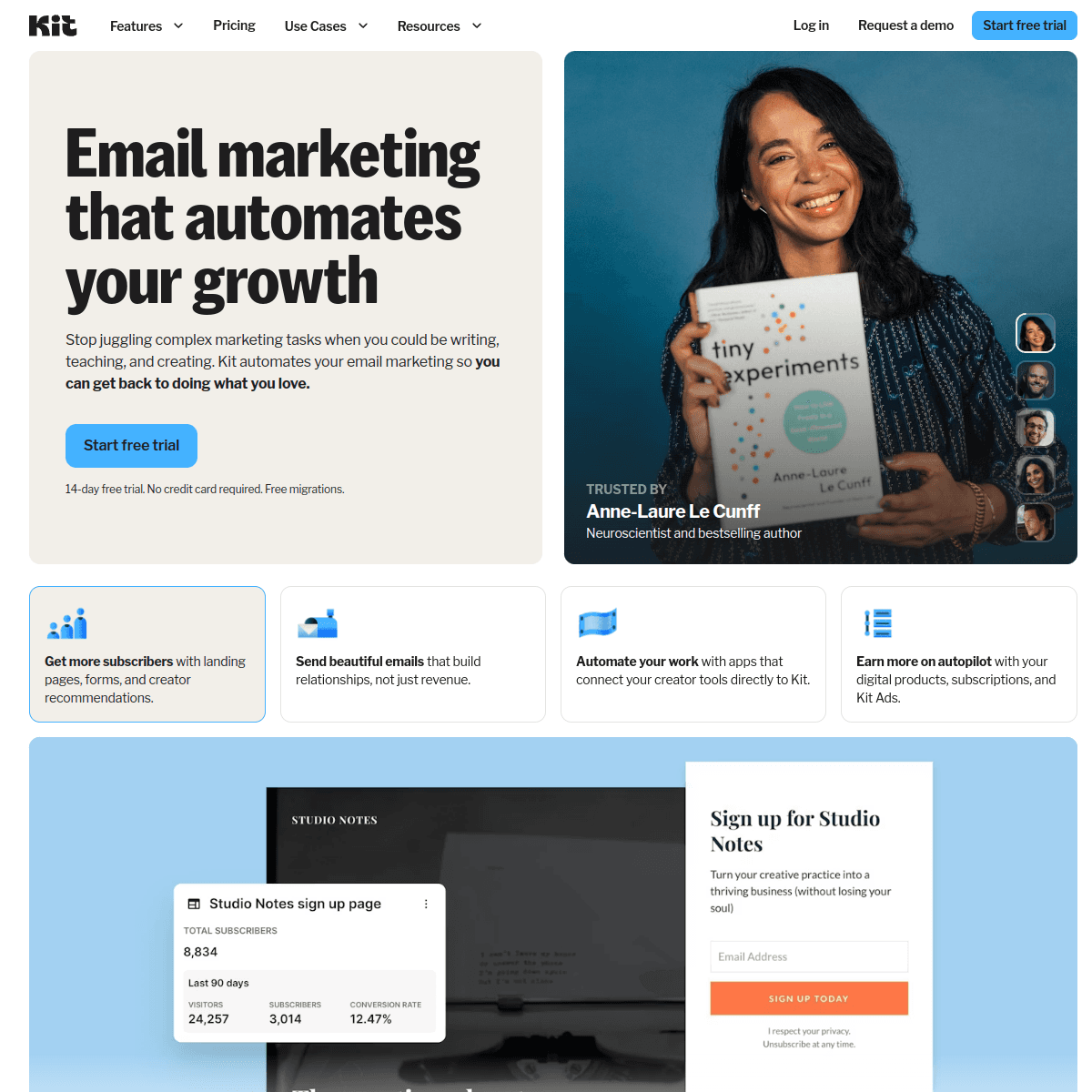
SendX and ConvertKit serve different audiences. SendX is a budget email platform for general SMB needs. ConvertKit is purpose-built for creators who want to build audiences and monetize content.
See our SendX comparison and ConvertKit comparison for individual deep dives.
Different Philosophies
SendX: Affordable email marketing with unlimited sends. General purpose, no specific audience focus.
ConvertKit: Email for creators - writers, podcasters, YouTubers, course creators. Built-in commerce, simple design philosophy, community focus.
ConvertKit's Creator Advantage
Built-in Monetization
ConvertKit includes paid newsletter subscriptions, tip jars, and digital product sales. Stripe integration is native for commerce. Creators can earn directly from their email list without external tools.
Generous Free Tier
10,000 subscribers free. This is extraordinary for creator bootstrapping. Build your audience first, monetize later. SendX's 14-day trial doesn't compare.
Clean Tag-Based System
ConvertKit uses tags only - no separate lists. This simplifies subscriber management and segmentation. Many find it cleaner than traditional list + tag approaches.
Creator-Focused Templates
ConvertKit's templates are minimal by design. The philosophy: simple emails perform better than flashy designs for creator content.
SendX's Value Proposition
Lower Price
$59.99/mo vs $79-100/mo at 10k subscribers. If you don't need creator-specific features, SendX is 25-40% cheaper.
More Templates
64 templates vs ConvertKit's minimal approach. If you want designed email templates, SendX offers more options.
Browser Push
SendX includes web push notifications. ConvertKit is email only. Additional channel for engagement.
Traditional Email Marketing
If you're a business (not a creator), SendX's traditional approach may feel more familiar than ConvertKit's creator-centric design.
For SaaS Companies
Neither platform is built for subscription businesses:
- SendX lacks Stripe integration entirely
- ConvertKit's Stripe integration is for creator commerce, not SaaS billing
For SaaS-specific features like MRR segmentation and subscription automation, Sequenzy offers native Stripe integration and AI sequences at $49/month for 60k emails (unlimited subscribers).
The Verdict
Choose ConvertKit if you're a creator building an audience and want monetization tools built-in. The free tier for up to 10k subscribers is hard to beat.
Choose SendX if you're a general business wanting affordable email without creator-specific features you won't use.
Choose Sequenzy if billing events drive your emails: native Stripe triggers cover failed payments and cancellations, which SendX only handles through Zapier.
For more options, see ConvertKit alternatives or SendX alternatives.
Different Audiences Different Tools
SendX and ConvertKit serve fundamentally different users. SendX is a general-purpose budget email platform for businesses sending campaigns and newsletters. ConvertKit is a creator economy platform for bloggers, podcasters, and digital product sellers who monetize their audience.
If you identify as a creator building an audience through content, ConvertKit's paid newsletters, digital product sales, and creator network are specifically designed for your workflow. SendX's general features would require multiple separate tools to replicate this functionality.
If you run a traditional business selling products or services, SendX provides email marketing at a budget-friendly price without creator-specific features you would never use.
Creator Commerce Integration
ConvertKit's ability to sell digital products, run paid newsletter subscriptions, and accept tips directly within the email platform eliminates the need for separate commerce tools. The integration between content delivery and payment is seamless.
SendX has no commerce capabilities. Creators using SendX would need Gumroad, Patreon, or Shopify alongside their email platform, fragmenting their subscriber data across multiple systems.
Community and Growth Networks
ConvertKit's Creator Network enables cross-promotion where creators recommend each other to their audiences. This organic growth mechanism is unique in the email space and can drive subscriber growth without paid advertising. SendX offers no equivalent community or growth feature.
Use-case matchups
| Situation | Best first look | Why |
|---|---|---|
| Team wants budget email marketing with generous sending | SendX | SendX is the baseline here for teams optimizing for lower-cost sending and simple campaign execution. |
| Creator business wants audience-first email workflows | ConvertKit | ConvertKit is stronger when creator products, forms, broadcasts, and sequences drive the business. |
| SaaS or subscription team wants lifecycle and transactional email | Sequenzy | Sequenzy is stronger when Stripe events, transactional messages, and campaigns need one subscriber model. |
| Newsletter team mainly cares about monthly send allowance | SendX | SendX is worth testing when unlimited or generous sending is the main cost driver. |
| Team needs the specialist capability | ConvertKit | ConvertKit deserves the first demo when the main requirement is creator-focused newsletters, sequences, and audience monetization. |
| Team wants email workflows with less list-size pressure | Sequenzy | Sequenzy is more relevant when lifecycle journeys and transactional email matter more than newsletter blasting. |
Pricing reality
The pricing signals on this page list SendX at $59.99/month, ConvertKit at $100/month, and Sequenzy at $49/month. Those numbers are useful only after checking send limits, list size, plan gates, and required add-ons.
SendX should be evaluated on whether its budget or unlimited-send positioning holds at your actual list size and campaign frequency. ConvertKit's real cost depends on whether the team needs creator-focused newsletters, sequences, and audience monetization.
Review signals
For SendX, validate review themes around ease of use, deliverability, campaign editor quality, support, and pricing transparency. For ConvertKit, focus review research on whether users praise the reason you would choose it: creator-focused newsletters, sequences, and audience monetization.
Best Fit by Budget vs Creator Focus
Best budget email tool for straightforward campaigns
SendX fits teams that want simple email marketing, landing pages, automation, and predictable pricing without creator-specific monetization features. It is strongest when cost and send volume matter more than audience commerce.
Best creator email platform for newsletters and products
ConvertKit is the better fit when the user needs forms, broadcasts, sequences, paid newsletters, digital products, and creator-friendly audience workflows. It works best when the list is an owned audience, not just a campaign database.
Best SaaS lifecycle platform for product-triggered email
Sequenzy fits SaaS teams whose emails should be driven by signups, product behavior, subscriptions, invoices, and failed payments. It is more relevant when lifecycle context matters more than budget sending or creator commerce.
Migration checklist
| Workstream | Moving toward SendX | Moving toward ConvertKit | Simplifying to Sequenzy |
|---|---|---|---|
| Contacts and consent | Import lists, tags, fields, suppression status, unsubscribes, and consent source. | Map subscribers, tags, segments, forms, landing pages, broadcasts, sequences, and products. | Import subscribers, attributes, tags, suppressions, and lifecycle events. |
| Sending model | Confirm monthly send allowance, throttling, sender domains, and deliverability setup. | Confirm plan limits, sending rules, and any add-ons needed for creator-focused newsletters, sequences, and audience monetization. | Confirm email volume and transactional paths fit the Sequenzy plan. |
| Automations | Rebuild core welcome, nurture, newsletter, reactivation, and simple ecommerce flows. | Rebuild the workflows that prove ConvertKit's advantage. | Rebuild lifecycle campaigns and transactional messages around app, store, or Stripe events. |
| Templates and forms | Move templates, forms, landing pages, sender identities, and brand assets. | Move templates, forms, brand assets, and workflow-specific content. | Move email templates and lifecycle message content. |
| Reporting | Validate campaign reports, deliverability exports, engagement tracking, and list growth. | Validate reporting for creator-focused newsletters, sequences, and audience monetization before committing. | Validate campaign, automation, transactional, and subscription lifecycle reporting. |
Decision checklist
- Is SendX's unlimited sending at $59.99/mo enough reason to leave ConvertKit's creator tools behind?
- Does ConvertKit's strength in creator-focused newsletters, sequences, and audience monetization matter more than lower-cost sending?
- Have you weighed SendX's mixed deliverability reviews against ConvertKit's stronger sender reputation work before deciding which one to keep?
- Do the $59.99 and $79-100 figures at 10,000 subscribers still hold once your list grows past that point?
- Since SendX lacks transactional email, are lifecycle triggers worth more to you than its unlimited campaign volume?
- ConvertKit is a better fit only if creator workflows matter more than cheap send volume.









