Overview
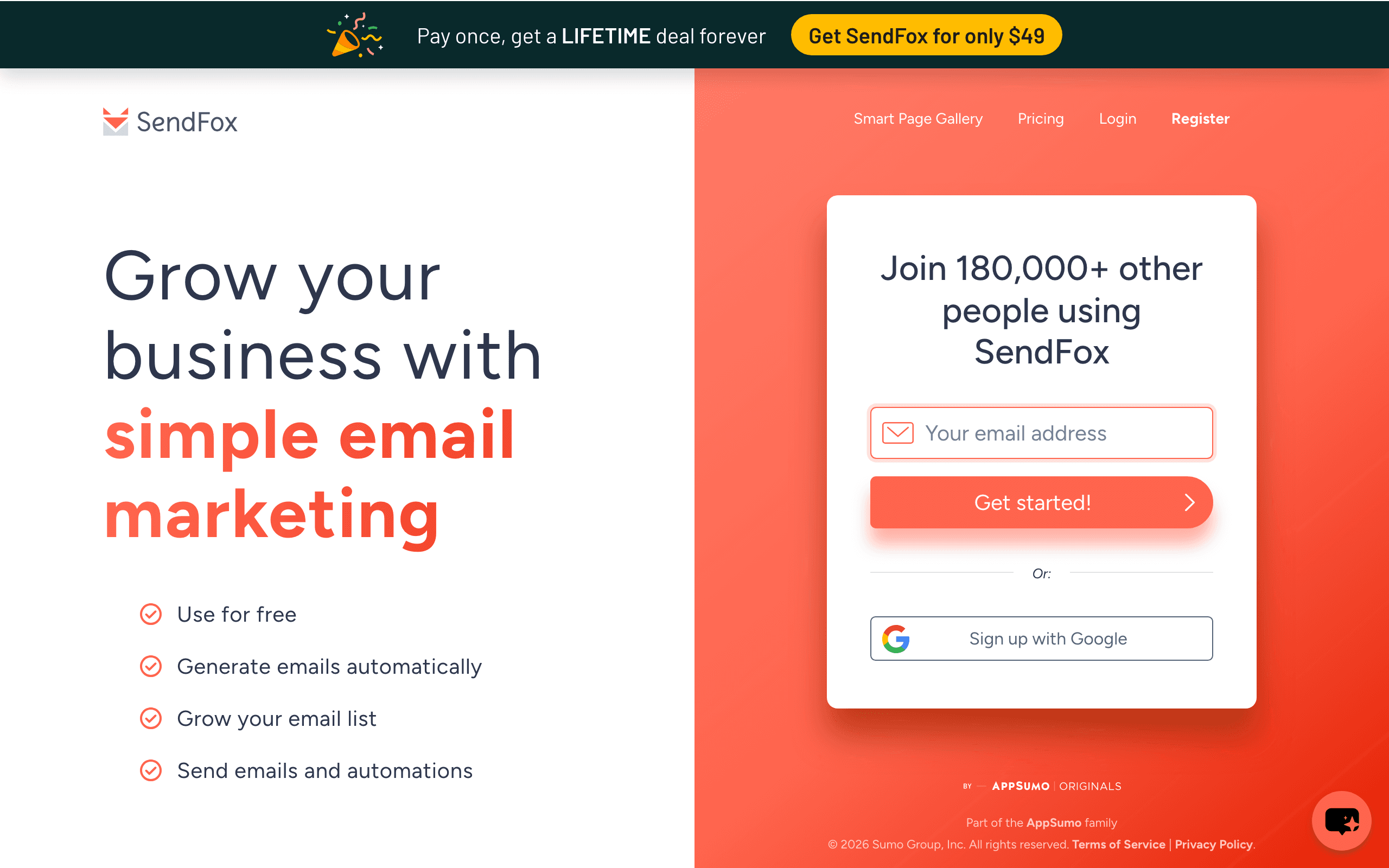
SendFox and Buttondown represent opposite ends of the newsletter spectrum. SendFox is the ultra-budget option from the AppSumo ecosystem with a one-time lifetime deal. Buttondown is a thoughtfully designed, Markdown-first newsletter platform built for writers and developers. For SaaS businesses, Sequenzy offers purpose-built features that neither provides.
The Writing Experience Gap
Buttondown's Markdown-first editor is a genuine differentiator. Writers who think in Markdown can compose newsletters at the speed of thought without touching a mouse. Headers, links, code blocks, and formatting flow naturally from the keyboard. The writing experience feels like a text editor, not a marketing tool.
SendFox's editor is a basic rich text interface. It handles bold, italic, images, and links, but it lacks the fluidity that Markdown provides. For writers who compose long-form content, the difference in daily writing experience is substantial. Buttondown treats writing as the primary activity. SendFox treats it as one step in a process.
The editor choice also affects content portability. Markdown content from Buttondown exports cleanly to any other platform, blog, or publishing system. Rich text from SendFox requires more conversion work if you ever migrate.
Paid Newsletters and Monetization
Buttondown includes built-in paid newsletter subscriptions through Stripe. Writers can charge monthly or annual rates for premium content, managing free and paid tiers within the same platform. The Stripe integration handles payments, subscriber upgrades, and cancellations without additional tools.
SendFox has no monetization features. Creators who want to charge for content would need to integrate a separate payment tool like Gumroad, Patreon, or Memberful, adding complexity and splitting the subscriber relationship across platforms. For writers building a newsletter business, this gap is significant.
The transaction fee model matters too. Buttondown takes a small percentage of paid newsletter revenue on lower plans, while higher plans reduce or eliminate this fee. Compare this against the cost of running separate newsletter and payment tools if you choose SendFox.
The API and Developer Experience
Buttondown's API is clean, well-documented, and designed for developers who want programmatic control. You can create subscribers, send emails, manage tags, and query analytics through a RESTful API. For technical founders who want to integrate their newsletter into a custom workflow, Buttondown's API is a genuine advantage.
SendFox's API is limited. Basic subscriber management exists, but the API lacks the depth that developers expect. Automating complex workflows or building custom integrations requires workarounds that Buttondown handles natively.
For SaaS companies that need deeper integration between their product and email system, neither platform matches what Sequenzy offers with native Stripe integration and transactional email alongside marketing campaigns.
Privacy and Analytics Philosophy
Buttondown takes a privacy-conscious approach to analytics. Open tracking pixels are optional, not default. This matters for newsletters targeting privacy-aware audiences, particularly in tech and developer communities where readers actively block tracking pixels and judge senders who use them.
SendFox includes standard analytics with open and click tracking. For most marketing use cases, this data is valuable. But for newsletters where trust and authenticity matter more than detailed engagement metrics, Buttondown's privacy-first stance builds credibility with subscribers who care about data collection.
The analytics trade-off is real. Without open tracking, you have less data about engagement patterns. With it, you may lose the trust of privacy-conscious readers. The right choice depends entirely on your audience's expectations and your own comfort with tracking.
For SaaS Companies
Neither SendFox nor Buttondown is designed for software businesses. Both lack Stripe integration for subscription lifecycle automation, transactional email, and billing-aware sequences. Sequenzy at $49/month combines marketing and transactional email with native Stripe integration for SaaS companies. Use our email validator to clean your subscriber list when migrating between platforms.
Use-case matchups
| Need | Better fit | Why |
|---|---|---|
| Low-cost creator newsletter sending | SendFox | SendFox is stronger when the buyer wants a simple, low-cost newsletter tool and can accept fewer advanced features. |
| Simple writing-first newsletters | Buttondown | Buttondown is stronger when simple writing-first newsletters are the main requirements. |
| SaaS lifecycle and transactional email | Sequenzy | Sequenzy fits when the team needs Stripe-aware lifecycle campaigns, newsletters, and transactional email in one product. |
Best Fit by Writing Workflow
Best low-cost newsletter tool for creators who want basic sending
SendFox fits creators who care most about low-cost list ownership, simple campaigns, and occasional automations.
Best writing-first newsletter platform for technical publishers
Buttondown is the better fit for writers, developers, and technical publishers who want a clean writing workflow, markdown-friendly publishing, and a minimal newsletter product.
Best SaaS email platform for triggered customer email
Sequenzy fits product teams that need email triggered by onboarding, subscription, and transactional events rather than a purely writing-first newsletter tool.
Pricing reality
The page data lists SendFox at "$49 lifetime", Buttondown at "~$90"/month, and Sequenzy at "$49"/month for the cited comparison tier. SendFox's lifetime-style pricing can be attractive, but it should not be compared as if it includes every workflow in more mature platforms.
Review signals
For SendFox, pay attention to simplicity, lifetime pricing appeal, and feature limits. For Buttondown, pay attention to simple writing-first newsletters, onboarding effort, pricing, and support quality.
Migration checklist
| Workstream | What to verify |
|---|---|
| Subscriber data | Export subscribers, tags, custom fields, segments, consent, unsubscribes, bounces, and suppressions. |
| Content archive | Preserve broadcasts, newsletters, subject lines, templates, and performance history. |
| Automations | Rebuild welcome, nurture, newsletter, promotion, reactivation, and lifecycle workflows manually. |
| Forms and pages | Recreate signup forms, landing pages, embeds, incentives, and confirmation flows. |
| Integrations | Reconnect website forms, ecommerce, CRM, payment, analytics, and Zapier-style handoffs. |
| Sender setup | Recheck SPF, DKIM, DMARC, branded links, sender identities, and warmup. |
Decision checklist
- Choose SendFox if low-cost newsletter sending is the main requirement.
- Choose Buttondown if simple writing-first newsletters matter more than lifetime-price simplicity.
- Avoid SendFox if advanced automation, ecommerce, CRM, or transactional email are required.
- Avoid Buttondown if the buyer only needs a simple newsletter sender.
- Consider Sequenzy if SaaS lifecycle, transactional email, and Stripe-triggered messages are the core jobs.