Overview
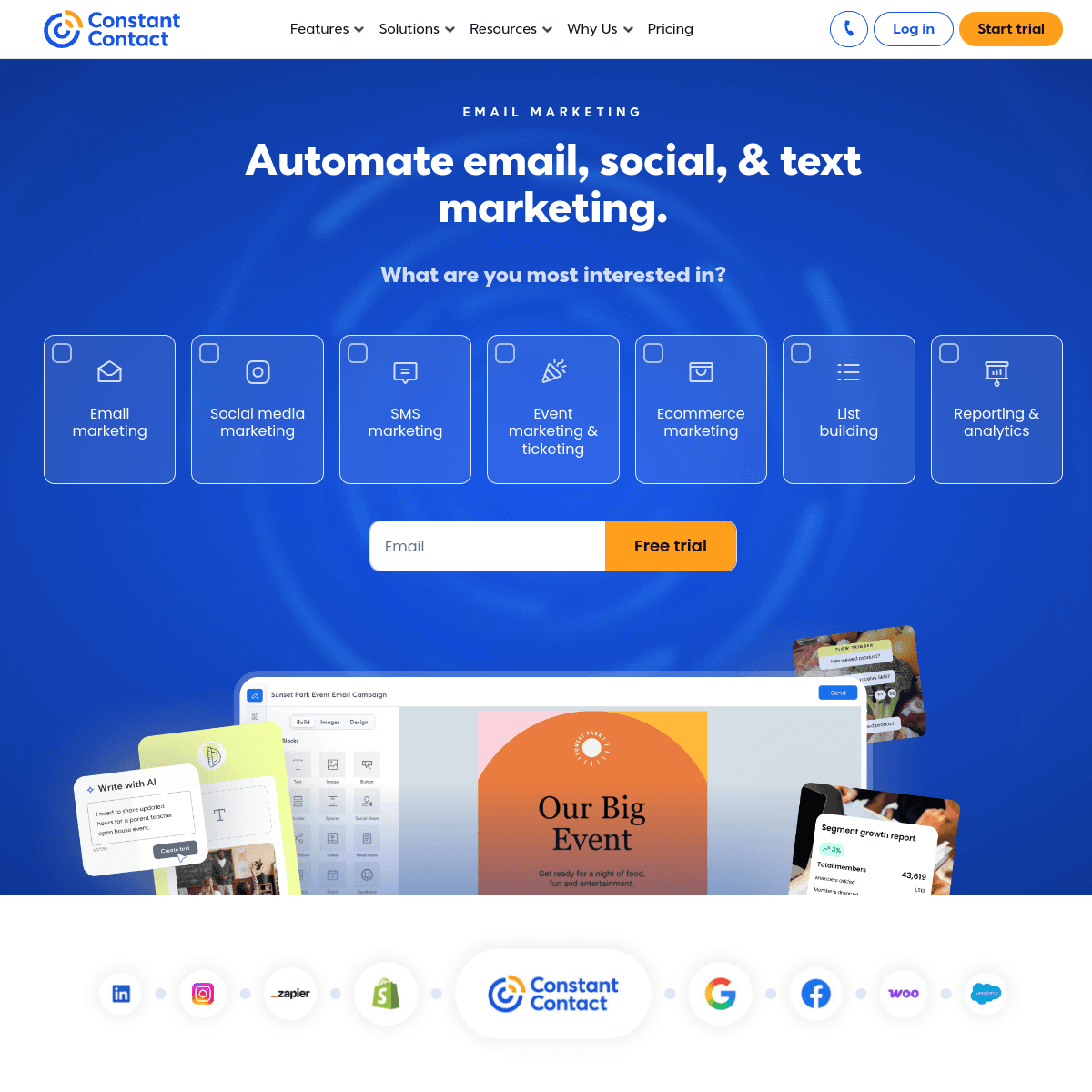
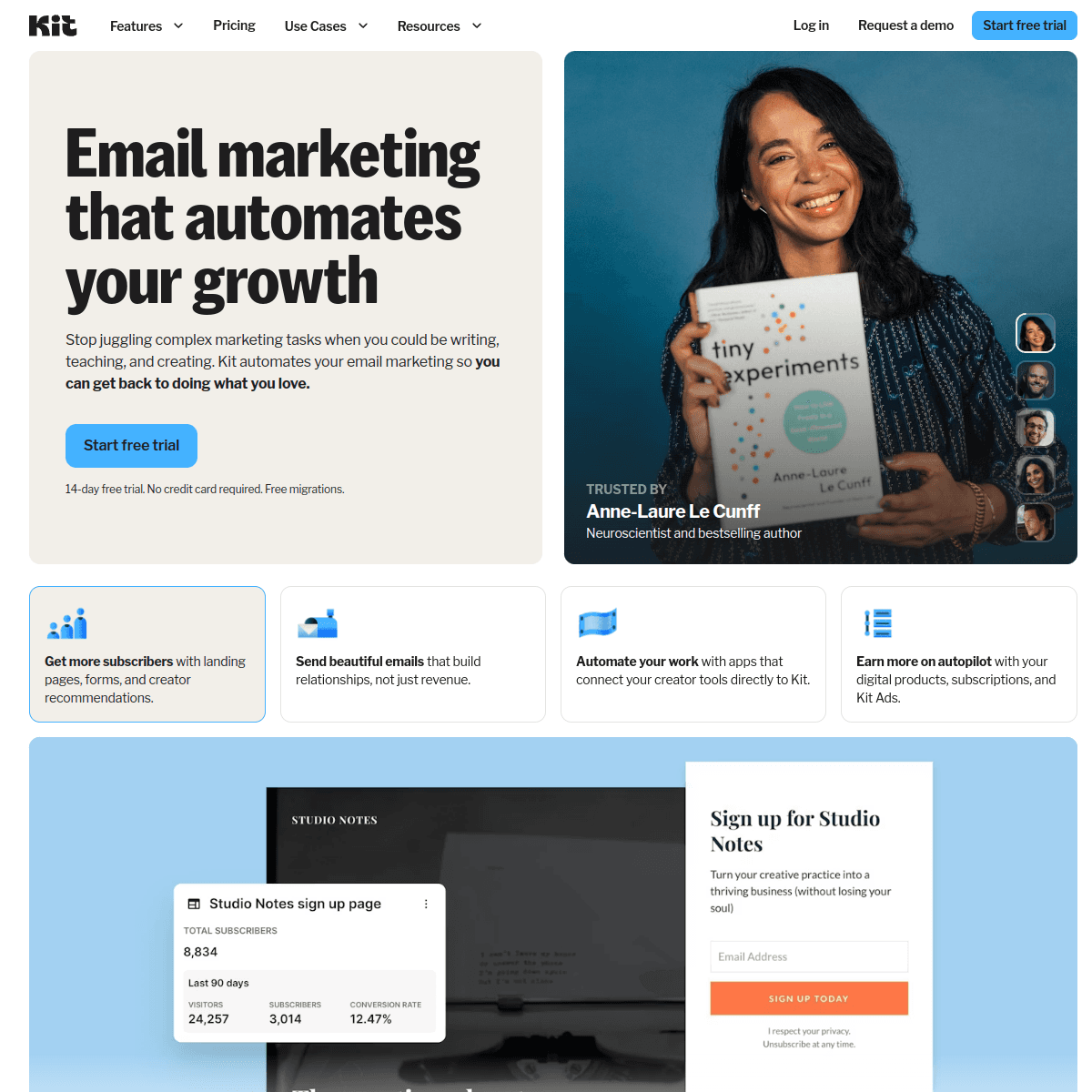
Constant Contact and ConvertKit serve very different audiences. Constant Contact is an established platform for small businesses with event marketing and support. ConvertKit is built specifically for creators who want to monetize their audience.
Different Audiences
Constant Contact serves traditional small businesses - local shops, service providers, nonprofits. ConvertKit serves creators - writers, podcasters, YouTubers, course creators. The features reflect these different needs.
Pricing reality
At 10,000 subscribers, this page compares Constant Contact at $80/month with ConvertKit at $119/month and Sequenzy at $49/month. ConvertKit's free plan changes the early-stage math for creators, while Constant Contact becomes the lower paid option once both tools are paid. The useful pricing question is whether you are buying event/support workflows or creator monetization.
Review signals
The existing reviews are from G2, Capterra, and Trustpilot. Constant Contact reviews praise church/nonprofit events, newsletters, and phone support, but criticize the dated interface and basic automation. ConvertKit reviews praise creator monetization, the free plan, Creator Network growth, and simplicity, while warning that paid tiers get pricey.
Read reviews by identity: local businesses and nonprofits should care about event/support feedback; creators should care about paid newsletter, digital product, and audience-growth feedback.
Use-case matchups
| Use case | Better fit | What to verify |
|---|---|---|
| Traditional small-business newsletters | Constant Contact | Confirm templates, phone support, event tools, social tools, surveys, and current contact pricing. |
| Creator audience monetization | ConvertKit | Verify paid newsletters, digital products, tips, Creator Network, free-plan limits, and payment fees. |
| Nonprofits, churches, and events | Constant Contact | Event registration, RSVPs, ticketing, and phone support are the main differentiators. |
| Newsletter-led creator growth | ConvertKit | ConvertKit is stronger when audience growth and direct monetization matter more than designed campaigns. |
| SaaS subscription lifecycle email | Sequenzy | Compare if Stripe-triggered automations and transactional email matter more than events or creator products. |
Best Fit by Audience Type
Best email marketing tool for local businesses and nonprofits
Constant Contact is the better fit when the buyer needs newsletters, event invitations, registrations, surveys, and phone support. The workflow is built for organizations where email is one practical communication channel rather than a creator revenue engine.
Best email marketing tool for creators selling through email
ConvertKit is the better fit for writers, podcasters, educators, and course creators who want paid newsletters, digital products, tips, and audience-growth loops in the same platform. Its higher paid-plan cost is easier to justify when those creator monetization features are active revenue channels.
Best email marketing tool for SaaS subscription lifecycle email
Sequenzy is the better fit when the audience is made of trials, users, customers, and accounts rather than event attendees or creator subscribers. Stripe-triggered automation and transactional email matter more than ConvertKit's creator products or Constant Contact's event workflow.
Creator Monetization
ConvertKit offers paid newsletters, digital products, and tip jars. Creators can monetize directly through the platform. Constant Contact has no creator monetization features - you'd need separate tools.
Event Marketing
Constant Contact includes event management with registration, ticketing, and follow-ups. ConvertKit has no event features. For organizations running events, this is a significant differentiator.
Support Comparison
Constant Contact offers phone support - you can call and talk to someone. ConvertKit provides email and chat only. For businesses that value phone support, Constant Contact delivers.
Free Plans
ConvertKit offers a generous free plan for up to 10,000 subscribers (with limited features). Constant Contact only has a 60-day trial. For testing or starting out, ConvertKit's free tier is valuable.
For SaaS Companies
Neither platform is built for SaaS. Both lack native Stripe integration for subscription automation. For SaaS companies, consider Sequenzy which offers purpose-built SaaS features.
Migration checklist
| Step | What to confirm |
|---|---|
| Subscriber data | Export contacts, tags, segments, custom fields, unsubscribes, bounces, consent records, and purchase/subscription status. |
| Creator monetization | If leaving ConvertKit, replace paid newsletters, digital products, tips, recommendations, and creator-network growth paths. |
| Events and forms | If leaving Constant Contact, replace event registration, RSVPs, ticketing, surveys, forms, social posts, and phone-supported workflows. |
| Automations | Rebuild welcome, newsletter, product launch, event follow-up, paid-member, re-engagement, and suppression sequences. |
| Templates and identity | Move brand templates, text-forward creator templates, landing pages, preference centers, and sender identities. |
| Reporting | Preserve campaign, subscriber-growth, event, product-sales, paid-newsletter, and referral reports before switching. |
Decision checklist
| Question | Why it matters |
|---|---|
| Are you a traditional business/nonprofit or a creator? | The platforms are built around different buyer identities. |
| Do you need paid newsletters or digital products? | ConvertKit is the stronger fit for creator monetization. |
| Do you need event registration and phone support? | Constant Contact is stronger for events, RSVPs, and less technical teams. |
| Is the free plan important while the list grows? | ConvertKit's free tier can avoid months of early subscription cost. |
| Is Sequenzy enough? | SaaS teams need billing-aware lifecycle email, not creator monetization or event RSVPs. |
Making the Choice
Choose Constant Contact for small business features, events, and phone support. Choose ConvertKit for creator monetization and building audience-supported businesses. For SaaS, consider Sequenzy.
Email Design Philosophy
The two platforms take completely different approaches to email design. Constant Contact offers visually rich templates with images, multi-column layouts, and branded headers. These work well for promotional emails, event invitations, and newsletters from businesses that want polished, designed communications.
ConvertKit deliberately uses simple, text-forward email designs. The philosophy is that personal-feeling emails from creators get higher engagement than heavily designed marketing emails. For newsletter writers, bloggers, and course creators, this approach actually works - plain-text-style emails often achieve higher open and click rates because they feel like personal correspondence rather than marketing material.
The Creator Economy Advantage
ConvertKit has built a genuine ecosystem around the creator economy. The Creator Network allows newsletter writers to recommend each other's publications, driving organic subscriber growth through trusted referrals. Paid newsletters let creators charge subscribers directly, and digital product sales handle everything from ebooks to online courses.
Constant Contact has none of these creator-specific features. A podcaster using Constant Contact would need separate tools for selling courses, collecting tips from fans, and cross-promoting with other creators. ConvertKit consolidates all of this into one platform, which is why it has become the default choice for professional creators despite being more expensive per subscriber.
Handling Large Lists on a Budget
ConvertKit's free plan supporting up to 10,000 subscribers is remarkably generous. While it limits you to basic features (no automation, no premium newsletter tools), it gives creators room to build an audience before committing financially. Many creators grow to thousands of subscribers on the free plan before upgrading.
Constant Contact's 60-day trial is far more restrictive - you get full features but only for two months, after which you must pay. For creators just starting out who might take months or even years to build a meaningful audience, ConvertKit's free tier removes the financial pressure of maintaining a paid subscription while your audience is still small.
Analytics and Subscriber Insights
Constant Contact provides traditional email marketing analytics - open rates, click rates, bounce rates, and comparisons to industry averages. These metrics are useful for small businesses tracking campaign performance and understanding which content resonates with their audience.
ConvertKit focuses on subscriber-level insights - which tags apply to each person, what products they have purchased, and how they entered your ecosystem. This subscriber-centric view matters for creators managing different audience segments (free readers vs. paid subscribers vs. course buyers) and tailoring content accordingly. The approach reflects ConvertKit's philosophy that understanding individual subscribers is more valuable than aggregate campaign metrics.
The Nonprofit and Church Niche Constant Contact Dominates
Constant Contact has quietly become the default email platform for nonprofits, churches, and community organizations. The event marketing feature handles registration, ticketing, RSVPs, and post-event follow-ups in a way no other email platform matches at this price point. Schools use it for parent communication, churches for service announcements, and nonprofits for fundraising campaigns. ConvertKit has zero features for event management, which means organizations running regular events would need a separate tool like Eventbrite ($50-200/month) or Splash alongside their email platform.
Phone support matters disproportionately for these organizations because they often have volunteer staff or non-technical employees managing email. Being able to call someone and walk through a problem is genuinely valuable when your newsletter coordinator is a volunteer who sends emails twice a month. ConvertKit's email-and-chat-only support model works fine for tech-savvy creators but frustrates less technical users who want to hear a human voice.
Why ConvertKit's Free Plan Changes the Math Entirely
ConvertKit's free tier supporting 10,000 subscribers is a strategic weapon that reshapes the entire comparison. A creator building their audience from zero can operate on ConvertKit for free for months or even years before needing to pay. Constant Contact's 60-day trial gives you just two months before bills start at $80/month. Over a year of audience-building, that is $960 spent on a platform before you know whether your newsletter will succeed.
The free plan creates powerful lock-in too. Once a creator has 8,000 subscribers on ConvertKit's free tier, migrating to Constant Contact means immediately paying $80/month for something that was free. The switching cost is not the migration effort but the sudden recurring expense. ConvertKit has designed this brilliantly from a business perspective, and it explains why so many creators start and stay on the platform despite higher paid-tier pricing. For SaaS founders, neither platform's free tier competes with the value of Sequenzy's Stripe integration for subscription-based businesses where the critical automation triggers are billing events, not subscriber actions.
The Identity Test That Decides Everything
The simplest way to choose between these platforms is an identity question: do you think of yourself as a business or a creator? If you run a local bakery, dental practice, or real estate office, Constant Contact's event marketing, phone support, and traditional small business templates are what you need. If you write a newsletter, produce a podcast, teach online courses, or build an audience around your personal brand, ConvertKit's monetization tools and creator community are built specifically for you.
Neither platform is right for SaaS companies. Both lack native subscription tracking, Stripe integration, and behavioral automation triggered by billing events. A SaaS company trying to use Constant Contact's event marketing features for webinar funnels or ConvertKit's creator tools for product onboarding would be forcing a square peg into a round hole. The email automation that drives SaaS growth, such as trial conversion sequences, payment failure recovery, and expansion revenue campaigns, requires platforms that understand subscription lifecycle, not audience monetization or event RSVPs.