
Overview
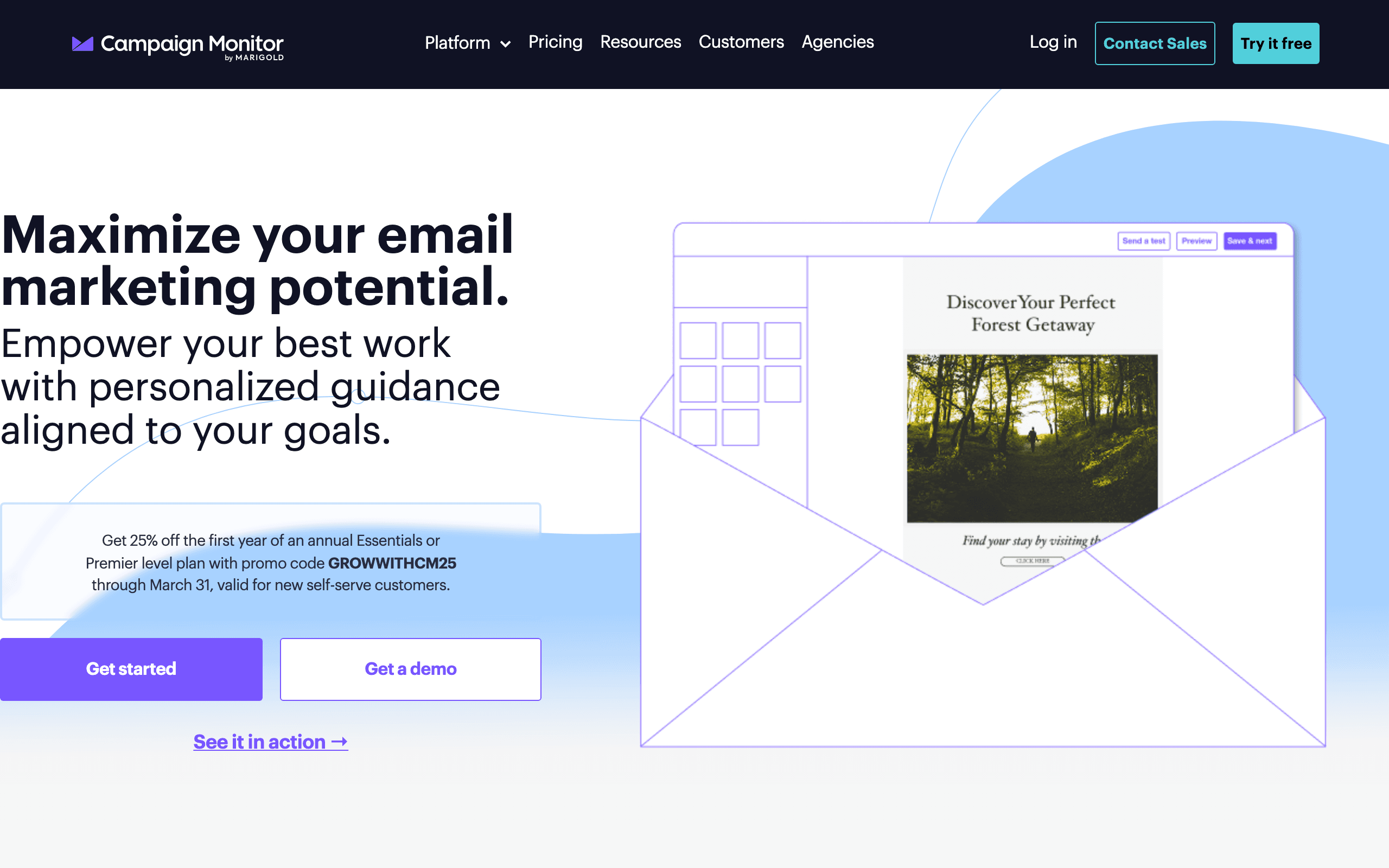
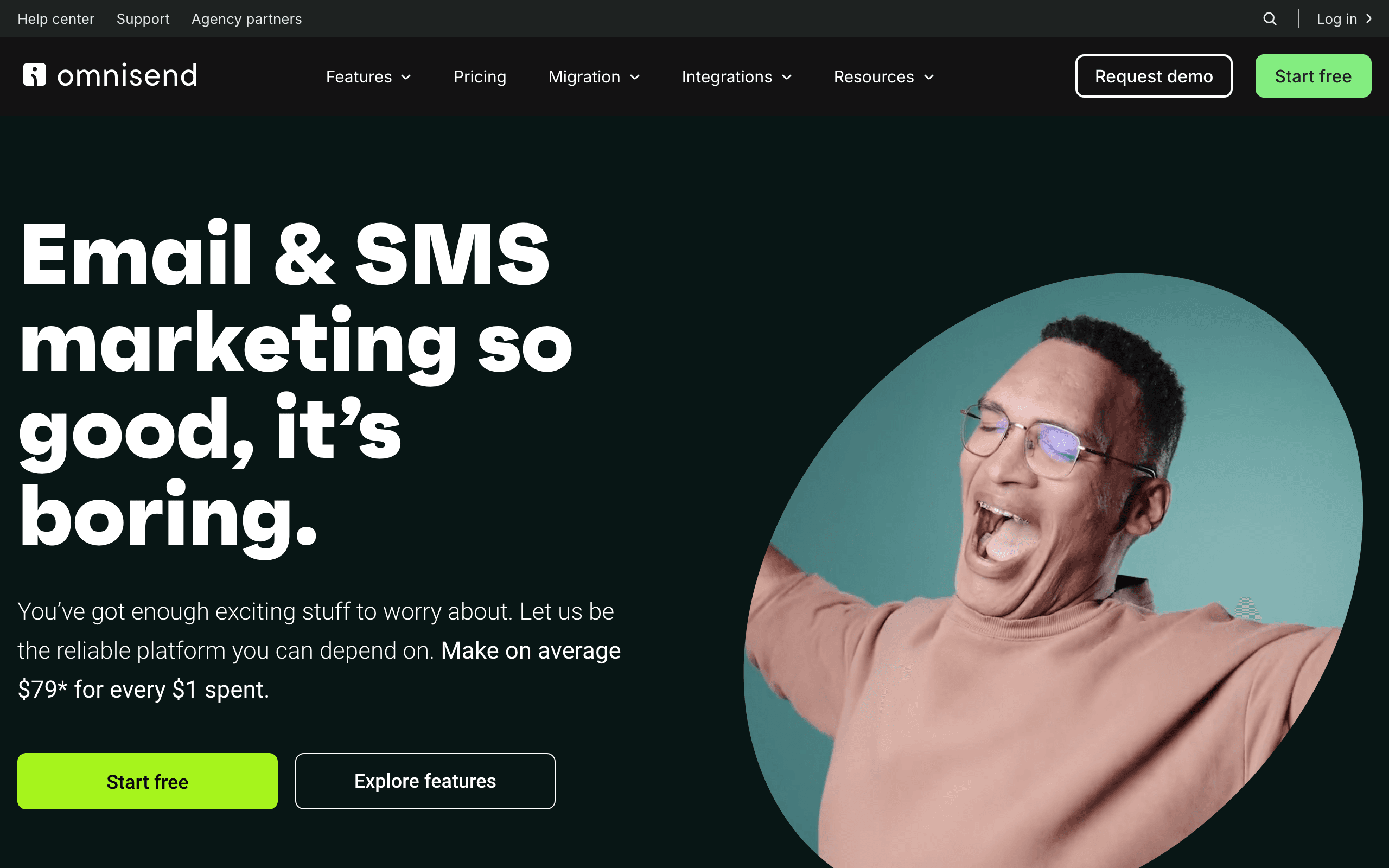
Campaign Monitor and Omnisend serve different markets. Campaign Monitor is for agencies and brands wanting premium email design. Omnisend is built for e-commerce with omnichannel marketing including SMS and push.
Different Markets
Campaign Monitor helps agencies manage client campaigns with premium design tools. Omnisend helps e-commerce stores drive revenue with email, SMS, and web push notifications. Little overlap in use cases.
Multi-Channel Marketing
Omnisend is stronger when ecommerce marketing depends on coordinated email, SMS, web push, cart recovery, product campaigns, and store data. Campaign Monitor is stronger when the main job is brand-controlled email production and client campaign management.
Use-case matchups
| Need | Better fit | Why |
|---|---|---|
| Premium email design and agency workflow | Campaign Monitor | Campaign Monitor is stronger for design-led campaigns and client management. |
| Ecommerce email, SMS, and push in one workflow | Omnisend | Omnisend is built around store data and omnichannel retention flows. |
| SaaS lifecycle and transactional email | Sequenzy | Sequenzy is better when billing and product events drive email. |
| White-label campaign management | Campaign Monitor | Campaign Monitor has the more mature agency feature set. |
| Cart recovery and store-triggered campaigns | Omnisend | Omnisend has ecommerce automations and channel coordination. |
Best Fit by Channel and Commerce Need
Best email marketing tool for premium brand campaigns
Campaign Monitor is the better fit when designers, agencies, or brand teams need polished email production, approval workflows, white labeling, and client campaign management. It is strongest when email is the main branded deliverable.
Best email marketing tool for ecommerce email, SMS, and push
Omnisend is the better fit when store behavior should drive email, SMS, web push, cart recovery, product campaigns, and customer retention. It is more relevant for ecommerce teams that need coordinated channels around purchase behavior.
Best email marketing tool for SaaS billing lifecycle email
Sequenzy is the better fit when billing and product events drive the customer lifecycle. Trial, payment, subscription, transactional, onboarding, and retention messages need SaaS context rather than ecommerce cart or agency campaign logic.
Pricing reality
Do not compare Campaign Monitor and Omnisend from a single monthly number. Campaign Monitor is usually justified by design quality, brand control, client management, and agency workflow. Omnisend is usually justified by ecommerce data, SMS, push notifications, store integrations, and lifecycle automations.
| Cost area | Campaign Monitor question | Omnisend question |
|---|---|---|
| Billing driver | What changes as subscribers, send volume, client accounts, and agency features grow? | What changes as contacts, email volume, SMS usage, push, store integrations, and support grow? |
| Required workflow | Do you need branded templates, approval workflows, white labeling, and client management? | Do you need cart recovery, product campaigns, SMS, push notifications, and store segmentation? |
| Tool overlap | Will Campaign Monitor need separate ecommerce automation and SMS tools? | Is Omnisend too ecommerce-specific for non-store email work? |
| Team ownership | Will an agency or brand team own most email work? | Will ecommerce marketing, retention, or lifecycle teams own the platform? |
Review signals
The structured review data on this page keeps sourced snippets from G2, Capterra, and Trustpilot. Campaign Monitor reviews emphasize premium brand presentation but note poor ecommerce fit. Omnisend reviews emphasize cart recovery, email/SMS workflows, and the need to budget for SMS credit usage.
Migration checklist
| Step | What to check |
|---|---|
| Contacts and consent | Export subscribers, profiles, tags, segments, unsubscribes, bounces, SMS consent, and push consent records. |
| Store data | Map products, orders, carts, customer IDs, revenue fields, events, and ecommerce platform sync rules. |
| Templates and brand assets | Move templates, images, saved sections, brand rules, and approval workflows. |
| Automations | Rebuild cart recovery, browse abandonment, post-purchase, win-back, SMS, push, suppression rules, and personalization. |
| Sender setup | Reverify domains, DKIM, SPF, DMARC, unsubscribe behavior, link tracking, and ecommerce event testing. |
Decision checklist
- Is this a brand/agency email workflow or an ecommerce retention workflow?
- Do email, SMS, and push need to work inside one automation system?
- Are Campaign Monitor's design and agency features more important than cart recovery?
- What is Omnisend's full cost after SMS credits, contacts, and ecommerce automations?
- Would SaaS lifecycle and transactional email make Sequenzy the better comparison?
Omnisend combines email, SMS, and push notifications in one platform. Campaign Monitor is email-only. For omnichannel e-commerce marketing, Omnisend wins.
Email Design Quality
Campaign Monitor has premium email design tools with polished templates. Omnisend's builder has e-commerce product blocks but isn't as design-focused. For brand aesthetics, Campaign Monitor wins.
Agency Features
Campaign Monitor has robust agency features: client management, white labeling, reseller programs. Omnisend has no agency features. For agencies, Campaign Monitor is the better choice.
For SaaS Companies
Neither is ideal for SaaS. Omnisend is e-commerce focused. Campaign Monitor is agency focused. Sequenzy offers Stripe integration for subscription businesses.
Making the Choice
E-commerce store wanting omnichannel: Omnisend. Marketing agency: Campaign Monitor. The markets are different enough that the choice is usually clear.
The Omnichannel Coordination Advantage
Omnisend's defining feature is coordinated messaging across email, SMS, and web push notifications within a single automation workflow. A cart recovery sequence can send an email after one hour, follow up with a push notification after four hours, and send an SMS after 24 hours - all from one workflow builder. The channel escalation happens automatically based on whether the customer engaged with previous messages.
Campaign Monitor operates in a single channel: email. Adding SMS requires a separate platform like Twilio or Attentive, and coordinating timing between channels requires manual orchestration or middleware like Zapier. The result is that most Campaign Monitor users simply do not do omnichannel marketing because the operational overhead is too high.
For e-commerce businesses, omnichannel coordination can matter when customers have opted into multiple channels and the store has a clear message hierarchy. Shipping notifications, cart reminders, back-in-stock alerts, and promotions may belong on different channels. Treat SMS and push as separate programs that need consent, frequency controls, attribution, and cost tracking rather than guaranteed performance boosts.
For SaaS companies, the omnichannel question is less relevant. Software subscribers primarily engage through email and in-app messaging. Sequenzy focuses on the email automation channel that SaaS companies actually use rather than spreading across channels that subscription businesses rarely need.
Entry Plan Evaluation
Omnisend has often appealed to ecommerce teams because it gives stores a way to test store-connected workflows before committing to a larger implementation. Campaign Monitor is more likely to be evaluated after a team has already decided that design quality, agency workflow, or brand control matters.
The lesson for buyers is to consider the starting point carefully. The platform you test first often becomes the platform you keep, because templates, automations, store data, consent records, and reporting history create switching costs.
The Klaviyo Comparison Shadow
Any discussion of Omnisend inevitably involves comparison to Klaviyo, its primary competitor in e-commerce email marketing. Omnisend positions itself as the more affordable alternative to Klaviyo - similar e-commerce features at lower pricing with the added benefit of native SMS and push notifications included.
Campaign Monitor exists in a different competitive space entirely. It does not compete with Omnisend or Klaviyo for e-commerce customers. It competes with Mailchimp, MailerLite, and ActiveCampaign for general marketing and agency customers. The overlap between Campaign Monitor and Omnisend's target audiences is minimal.
This market separation means the "Campaign Monitor vs Omnisend" comparison is more of a "should I use a general email tool or an e-commerce-specific tool" decision. If you sell physical products through Shopify or WooCommerce, Omnisend (or Klaviyo) is the right category of tool. If you run a marketing agency or brand that does not sell products online, Campaign Monitor is the right category.
For SaaS companies, neither category fits. E-commerce tools assume you sell products. General email tools assume you send campaigns and newsletters. SaaS companies need billing-triggered lifecycle automation. Sequenzy provides exactly this with native Stripe integration and AI-powered sequences built for subscription revenue models.









