
Overview
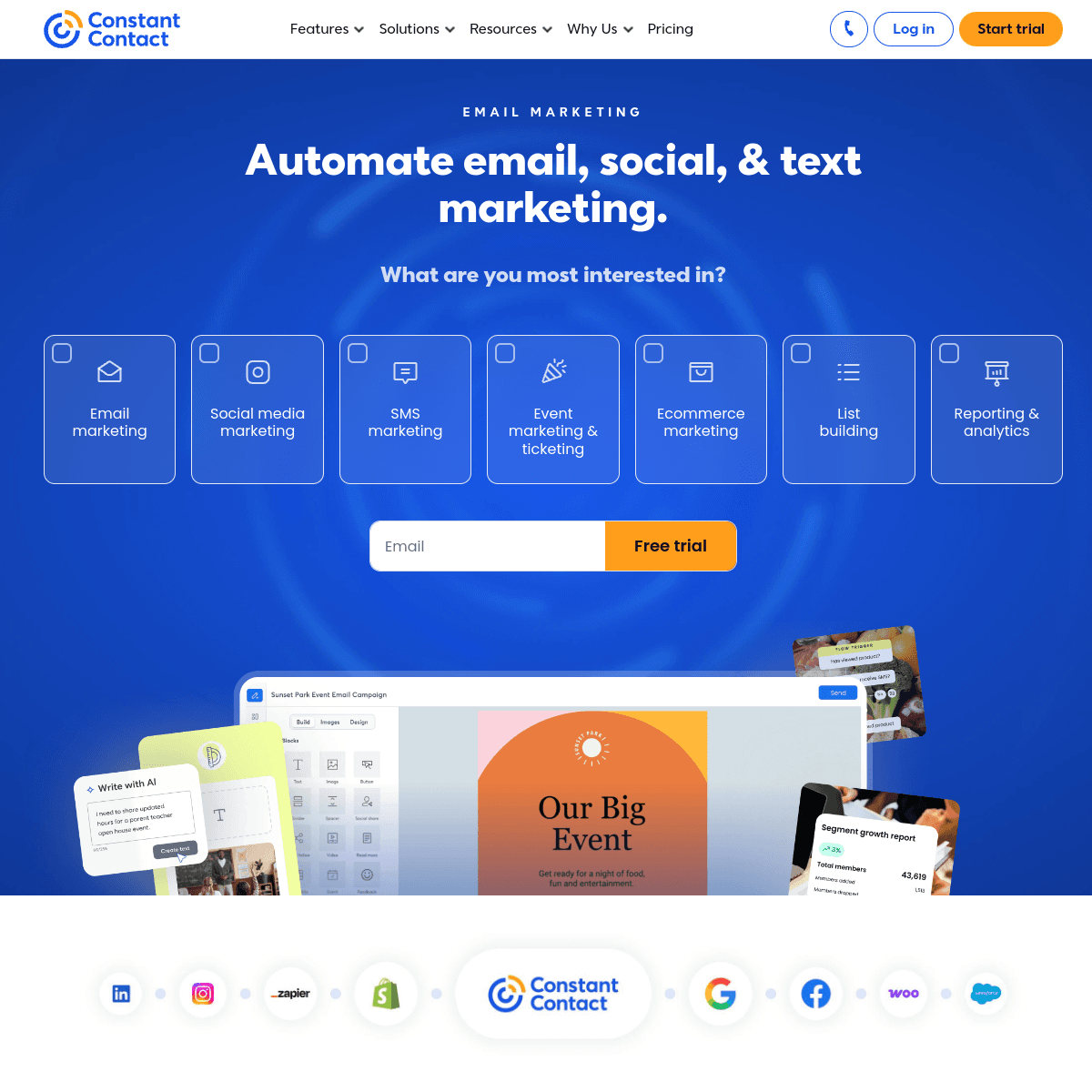
Buttondown and Constant Contact serve different needs in the email space. Buttondown is a minimalist Markdown-first newsletter platform. Constant Contact is a established email marketing for small businesses.
The choice depends on what you need: markdown-native (Buttondown) or long track record (Constant Contact). For SaaS businesses specifically, Sequenzy offers purpose-built features that neither tool provides.
Pricing Comparison
- Buttondown: ~$90/month - Markdown-first newsletter. Paid newsletters via Stripe.
- Constant Contact: $80/month - Established platform. Event marketing. Social tools.
- Sequenzy: $99/month for 120,000 emails, unlimited subscribers, fully managed. See pricing.
Use-case matchups
| Need | Better fit | Why |
|---|---|---|
| Markdown-first creator or developer newsletter | Buttondown | Buttondown keeps publishing simple and focused. |
| Local-business campaigns, events, and support-heavy workflows | Constant Contact | Constant Contact has event marketing, templates, social tools, and SMB support. |
| SaaS lifecycle and transactional email | Sequenzy | Sequenzy is better when product and billing events drive the email program. |
| Paid newsletter with a clean writing workflow | Buttondown | Buttondown is the more natural publisher-first tool. |
| Event invitations, RSVPs, and follow-up | Constant Contact | Constant Contact's event tooling is the stronger match. |
Best Fit by Organization Type
Best newsletter tool for independent technical publishers
Buttondown is the better fit when the work is writing newsletters, managing archives, using Markdown, and keeping the publishing workflow simple. It suits creators and developers who do not need event management or social campaign features.
Best email marketing tool for event-heavy local organizations
Constant Contact is the better fit when the team sends newsletters around events, RSVPs, announcements, social promotion, and support-heavy workflows. Its value is operational help for small organizations, not minimalist publishing.
Best email marketing tool for SaaS lifecycle communication
Sequenzy is the better fit when emails are triggered by product and billing behavior. SaaS teams need transactional, onboarding, retention, and subscription-state messaging rather than Buttondown publishing or Constant Contact events.
Pricing reality
Buttondown and Constant Contact should be priced against the work they replace. Buttondown's cost is mainly about subscribers, paid publishing, API needs, and newsletter workflow. Constant Contact's cost is about contacts, templates, event marketing, support, social tools, automation, and whether those SMB features replace other software.
Review signals
The structured review data on this page keeps sourced snippets from G2, Capterra, and Trustpilot. Buttondown reviews emphasize simplicity, Markdown, and lack of event tools. Constant Contact reviews emphasize event marketing and long-term reliability, with pricing and dated UX as cautions.
Where Buttondown Wins
Markdown-native
Buttondown offers markdown-native, which is a genuine advantage for teams that need it.
Clean API
Buttondown offers clean api, which is a genuine advantage for teams that need it.
Paid newsletter support
Buttondown offers paid newsletter support, which is a genuine advantage for teams that need it.
Privacy-conscious
Buttondown offers privacy-conscious, which is a genuine advantage for teams that need it.
Where Constant Contact Wins
Long track record
Constant Contact offers long track record, which matters for teams that prioritize this.
Event marketing
Constant Contact offers event marketing, which matters for teams that prioritize this.
Social tools
Constant Contact offers social tools, which matters for teams that prioritize this.
Migration checklist
| Step | What to check |
|---|---|
| Contacts and consent | Export subscribers, tags, custom fields, unsubscribes, bounces, and consent records. |
| Events | Move event lists, RSVP fields, invitation templates, and follow-up sequences if events are in scope. |
| Publishing archive | Decide whether old posts, public archives, and paid content need to move. |
| Forms and pages | Rebuild signup forms, landing pages, social links, and embedded widgets. |
| Sender setup | Reverify domains, DKIM, SPF, DMARC, unsubscribe behavior, and link tracking. |
Decision checklist
- Is this primarily a publishing workflow or an event-driven SMB marketing workflow?
- Do you need Markdown-native content and paid newsletter support?
- Are event invitations, RSVPs, reminders, and follow-up central enough to justify Constant Contact?
- Will the team use social tools and support, or are they paying for unused breadth?
- Would SaaS-specific lifecycle and transactional email make Sequenzy a better comparison?
Good support
Constant Contact offers good support, which matters for teams that prioritize this.
The Event Marketing Differentiator
Constant Contact's most unique feature is native event marketing. You can create event invitations, manage RSVPs, send reminder emails, and follow up with attendees - all within the email platform. No other major email marketing platform handles events this natively. For organizations that run regular events - conferences, webinars, community meetups, fundraising galas - this integration eliminates the need for a separate event management tool.
Buttondown has zero event capability. It is a newsletter tool, and events are entirely outside its scope. If you need event marketing alongside your newsletter, you would need Buttondown plus Eventbrite or Luma, adding another vendor and another monthly cost. Constant Contact bundles this into one platform.
The event marketing advantage is narrow but deep. Most businesses do not run frequent events, and for them this feature is irrelevant. But for chambers of commerce, professional associations, educational institutions, and nonprofit organizations where events are a primary engagement channel, Constant Contact's event tools provide genuine value that no amount of Buttondown's Markdown elegance can replace.
Platform Age and Design Philosophy
Constant Contact launched in 1995, making it one of the oldest email marketing platforms in existence. Buttondown launched in 2017. This twenty-two year gap is visible in every aspect of both platforms - from interface design to feature philosophy to support infrastructure.
Constant Contact's interface carries the weight of decades of feature additions. Menus are deep, options are abundant, and navigation requires learning where things live. The platform does many things adequately rather than a few things excellently. Design templates, while numerous, often look dated compared to modern competitors. The trade-off is comprehensiveness - you can find a feature for almost any marketing need.
Buttondown's interface reflects modern design sensibilities - clean typography, minimal navigation, and fast interactions. The platform does fewer things but does them with care. There are no dusty corners of unused features or legacy interfaces maintained for backward compatibility. For users who value interface quality and workflow efficiency, the generational gap between these platforms is immediately apparent.
Audience and Use Case Alignment
The ideal Buttondown user writes a newsletter for a technically savvy audience that appreciates clean design and values privacy. Think programming tutorials, data science insights, indie game development logs, or academic research summaries. These audiences read on desktops, appreciate Markdown formatting, and may actually prefer emails without heavy visual design.
The ideal Constant Contact user manages marketing for a local business, nonprofit, or community organization. Think restaurant weekly specials, church bulletins, community association updates, or retail promotions. These audiences expect visual emails with images, buttons, and branded design. They need event management, social posting, and a platform that a non-technical marketing coordinator can operate independently.
For SaaS companies, neither profile fits perfectly. SaaS email needs combine technical sophistication (API integration, event-triggered sends, behavioral segmentation) with marketing functionality (campaigns, lifecycle sequences, onboarding flows). Sequenzy addresses this specific need with AI-powered sequences and native Stripe billing integration designed for subscription businesses.









