
21 Best Email Tools With Zapier Integration (2026)

Every email tool claims to integrate with Zapier. But the quality of those integrations varies wildly. Some have 3 triggers and 2 actions. Others have 20+ triggers, robust search actions, and support for multi-step Zaps. The difference matters when you're building automation workflows that connect your email marketing to the rest of your stack.
I looked at how many triggers and actions each platform offers in Zapier, how reliable the integration is, and whether it supports the workflows that actually matter for email marketing.
Zapier is often the glue that holds a SaaS company's tool stack together. If your email platform has a shallow Zapier integration, you'll hit walls quickly. If it has a deep one, you can automate workflows that would otherwise require custom code or manual effort.
Best Zapier Email Tool by Use Case
Best Zapier email tool for SaaS stack glue: Sequenzy
Use Sequenzy when Zapier should feed product, form, webinar, or CRM events into one lifecycle email system. The best pattern is to let Zapier trigger events and tags, then keep the actual email logic inside Sequenzy instead of spreading it across dozens of Zaps. Pair this with AI sequences, smart segments, and the automate onboarding guide.
Best Zapier email tool for deep no-code automation: ActiveCampaign
ActiveCampaign is the best choice when Zapier depth is the main buying criterion. Search actions, CRM objects, deal updates, tags, and automation triggers make it much more flexible than most email tools. The trade-off is complexity. Read the ActiveCampaign comparison if you need no-code automation depth more than SaaS-specific email.
Best Zapier email tool for creator businesses: ConvertKit or Mailchimp
Creators, course sellers, and newsletter operators usually need Zapier to connect forms, checkout tools, communities, and spreadsheets. ConvertKit is stronger for creator monetization; Mailchimp is stronger when broad app compatibility matters. Use the Mailchimp comparison if you are deciding between familiar campaign software and more focused lifecycle email.
Best Zapier email tool for payment-triggered workflows: use native billing first
Zapier can move Stripe, Paddle, Chargebee, or Lemon Squeezy events, but payment email is often too important for a polling or task-based automation layer. Prefer native billing integrations where available, then use Zapier for non-critical stack glue. Start with the Stripe email tools guide, Chargebee email tools guide, and dunning templates.
Quick Comparison Table
| Tool | Best For | Pricing | Zapier Integration |
|---|---|---|---|
| Sequenzy | SaaS founders connecting product stack via Zapier | Free up to 2.5k emails/mo, from $19/mo | AI integration |
| ActiveCampaign | Deepest Zapier integration in email marketing | From $29/mo | 30+ triggers, 20+ actions, search actions |
| Mailchimp | Most pre-built Zap templates | Free / from $13/mo | 10+ triggers, 10+ actions, huge template library |
| ConvertKit (Kit) | Creators connecting content and sales stack | Free / from $29/mo | 8+ triggers, 8+ actions, creator-focused |
| Brevo (Sendinblue) | Budget email + SMS via Zapier | Free / from $9/mo | 5+ triggers, 8+ actions, SMS action support |
| Loops | Indie SaaS wanting simple event-driven Zaps | Free / from $49/mo | Contact + event triggers, basic actions |
| Klaviyo | E-commerce stacks connecting non-native tools | Free / from $45/mo | 5+ triggers, 8+ actions, e-commerce focused |
| HubSpot | Teams already on HubSpot CRM | Free / from $20/mo | Deep CRM triggers + actions, gated by tier |
| Customer.io | Technical teams wanting flexible event Zaps | From $100/mo | Event triggers, robust API, prefer direct API |
| Drip | E-commerce-led SaaS hybrids | From $39/mo | Decent triggers + actions, purchase-shaped |
| MailerLite | Solo founders wanting simple Zapier email | Free / from $10/mo | Basic triggers + actions, easy setup |
| GetResponse | Webinar + email teams using Zapier | From $19/mo | Standard triggers, webinar-aware actions |
| AWeber | Small businesses needing reliable Zapier email | Free / from $15/mo | Mature integration, basic feature set |
| Constant Contact | SMBs wanting widely supported Zapier email | From $12/mo | Standard triggers + actions, large template library |
| Bento | Indie SaaS wanting events + Zapier | From $30/mo | Event-driven triggers + actions |
| Encharge | Non-technical teams wanting visual flows + Zaps | From $79/mo | Native trigger source + Zapier extensions |
| Userlist | B2B SaaS needing account-level Zapier sync | From $149/mo | Account + user triggers, fewer than competitors |
| Ortto (Autopilot) | Marketing teams blending Zapier + journeys | From $599/mo | Standard triggers + actions, polished UI |
| Beehiiv | Newsletter operators connecting subscriber tools | Free / from $39/mo | Subscriber triggers + actions, newsletter-shaped |
| Mailjet | Teams wanting Zapier + transactional in one tool | Free / from $17/mo | Basic contact + send actions |
| EmailOctopus | Budget-conscious teams wanting Zapier email | Free / from $9/mo | Basic triggers + actions, very affordable |
What Makes a Good Zapier Integration?
The best email tool Zapier integrations have:
- Trigger variety: New subscriber, tag added, email opened, link clicked, campaign sent, automation completed. More triggers mean more ways to initiate workflows.
- Action breadth: Add subscriber, update subscriber, send email, add tag, remove tag, create campaign. More actions mean more things Zapier can do in your email tool.
- Search actions: Find subscriber by email, find list by name (for use in multi-step Zaps). Without search actions, multi-step Zaps break when they need to reference existing data.
- Webhook support: Custom webhooks for events not covered by standard triggers. This is the escape hatch for advanced use cases.
- Reliability: Consistent trigger firing without delays or missed events. The best integration in the world is useless if it drops events.
- Instant triggers: Webhook-based triggers that fire immediately, rather than polling-based triggers that check every 1-15 minutes.
When Zapier Makes Sense (and When It Doesn't)
Zapier is excellent for connecting tools that don't have native integrations. But it's not always the right choice:
Use Zapier when:
- You need to connect your email tool to a niche app without an API integration
- You want non-technical team members to build automations
- The workflow isn't time-critical (a few minutes of delay is acceptable)
- You need a quick prototype before building a native integration
Skip Zapier when:
- Your email tool has a native integration with the other app (native is always more reliable)
- The workflow is time-critical (dunning emails, security alerts)
- You're processing high volumes (Zapier pricing scales with task count)
- You need complex data transformation (Zapier handles simple mapping, not ETL)
For SaaS teams evaluating email platforms, check whether the tools you care about most have native integrations before relying on Zapier. A Stripe integration through Zapier works, but a native one is more reliable and faster for critical payment events.
The 21 Best Options
1. Sequenzy
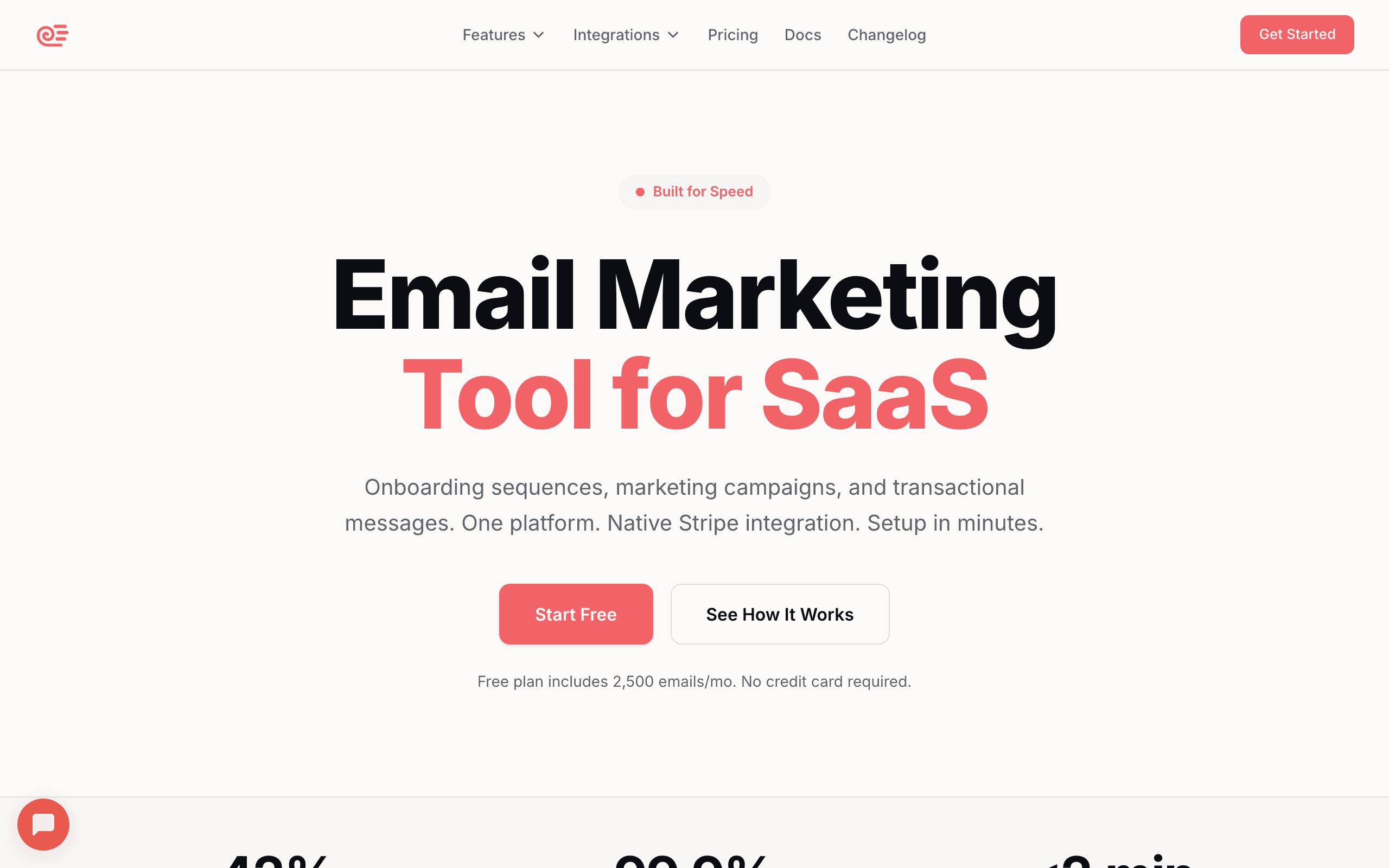
Best for: SaaS founders connecting email to their product stack via Zapier
Sequenzy's Zapier integration lets you connect subscriber management and event tracking to any app in Zapier's ecosystem. Add subscribers from form tools, trigger events from payment platforms, sync tags from your CRM. The event-based approach means Zapier can trigger Sequenzy automations by sending events.
For SaaS teams, the common Zaps are connecting form submissions to subscriber lists, syncing CRM data to subscriber tags, and triggering onboarding events from user actions in other tools. Sequenzy's Stripe integration handles payment events natively, so you mainly need Zapier for non-payment integrations.
The event-driven model is worth understanding. Instead of Zapier directly triggering an email, Zapier sends an event to Sequenzy (like "webinar_attended" or "demo_requested"), and Sequenzy's automation engine decides what to do with it. This separation means your automation logic lives in one place (Sequenzy) rather than being spread across dozens of Zaps.
Sequenzy also supports webhook-based triggers for advanced use cases where Zapier's standard triggers aren't sufficient.
- Zapier triggers: Subscriber events, automation triggers
- Zapier actions: Add subscriber, update subscriber, trigger event, manage tags
- Pricing: Free up to 2,500 emails/month, paid plans from $19/month
- Key strength: AI integration
- Pros: Event-driven Zaps, SaaS-focused, Stripe handles payments natively, centralized automation logic
- Cons: Fewer triggers/actions than established platforms, newer integration
2. ActiveCampaign
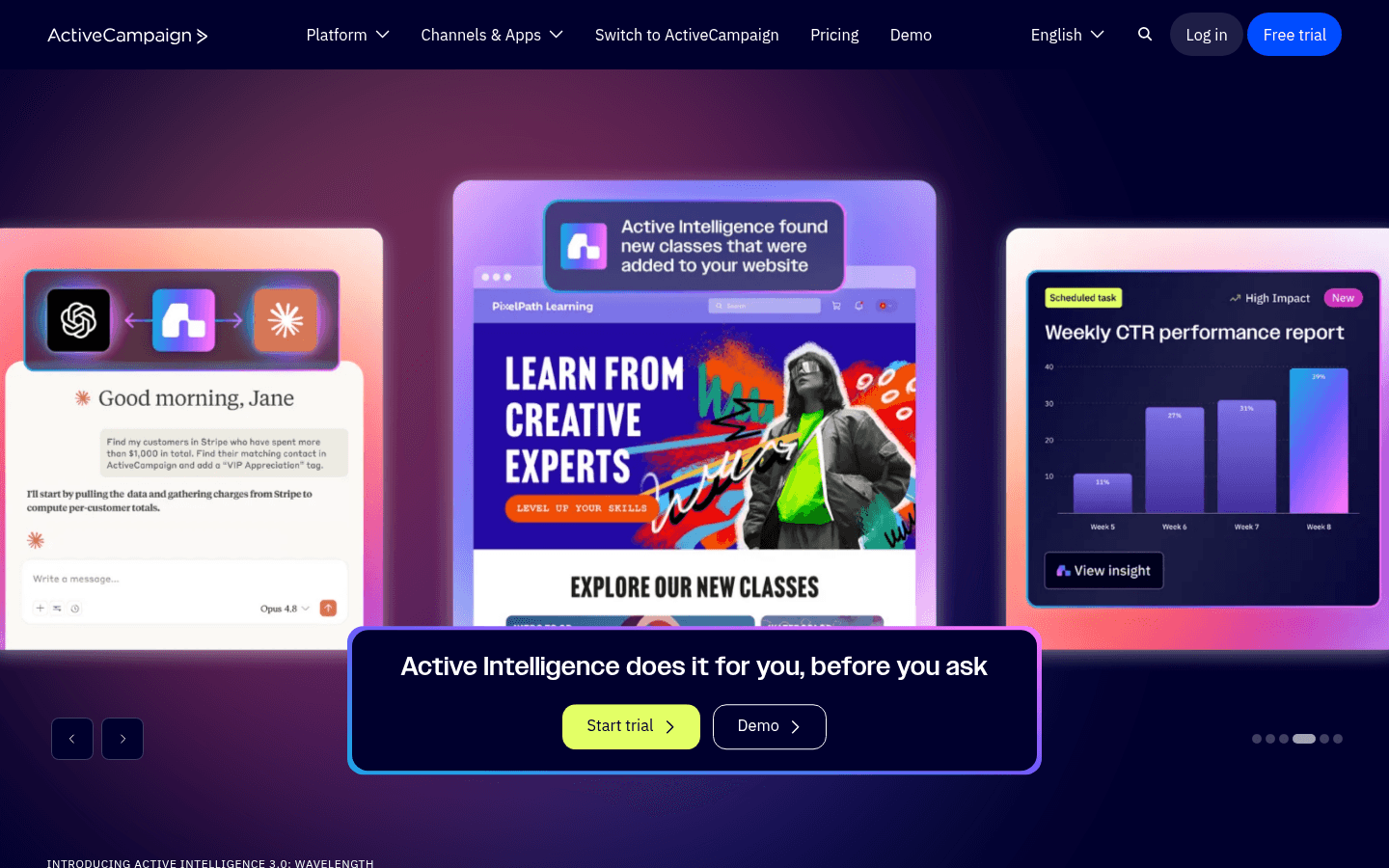
Best for: The deepest Zapier integration in email marketing
ActiveCampaign has arguably the most comprehensive Zapier integration of any email platform. 30+ triggers covering contacts, deals, automations, campaigns, and tags. 20+ actions for creating contacts, adding to lists, creating deals, and managing tags. Plus search actions for finding contacts and deals.
The depth means you can build complex multi-step Zaps. When a payment comes through Stripe, create a contact in ActiveCampaign, add them to a specific list, apply a tag, and start an automation. All in one Zap with no custom code.
The search actions are what separate ActiveCampaign from most competitors. In a multi-step Zap, you often need to find an existing contact before updating them. Without search actions, you'd need to create a new Zap or use workarounds. ActiveCampaign's "Find Contact" and "Find Deal" actions make multi-step Zaps practical.
For teams that also use ActiveCampaign's Slack integration, you can build Zaps that combine data from multiple tools, update ActiveCampaign, and notify your team in Slack, all in a single automation.
- Zapier triggers: 30+ (new contact, tag added, deal updated, automation completed, email opened, etc.)
- Zapier actions: 20+ (create contact, add tag, create deal, add to automation, etc.)
- Pricing: From $29/month
- Pros: Most comprehensive Zapier integration, CRM + email, search actions, reliable, multi-step Zap support
- Cons: Complex, higher tiers needed for advanced features, can feel overwhelming
3. Mailchimp
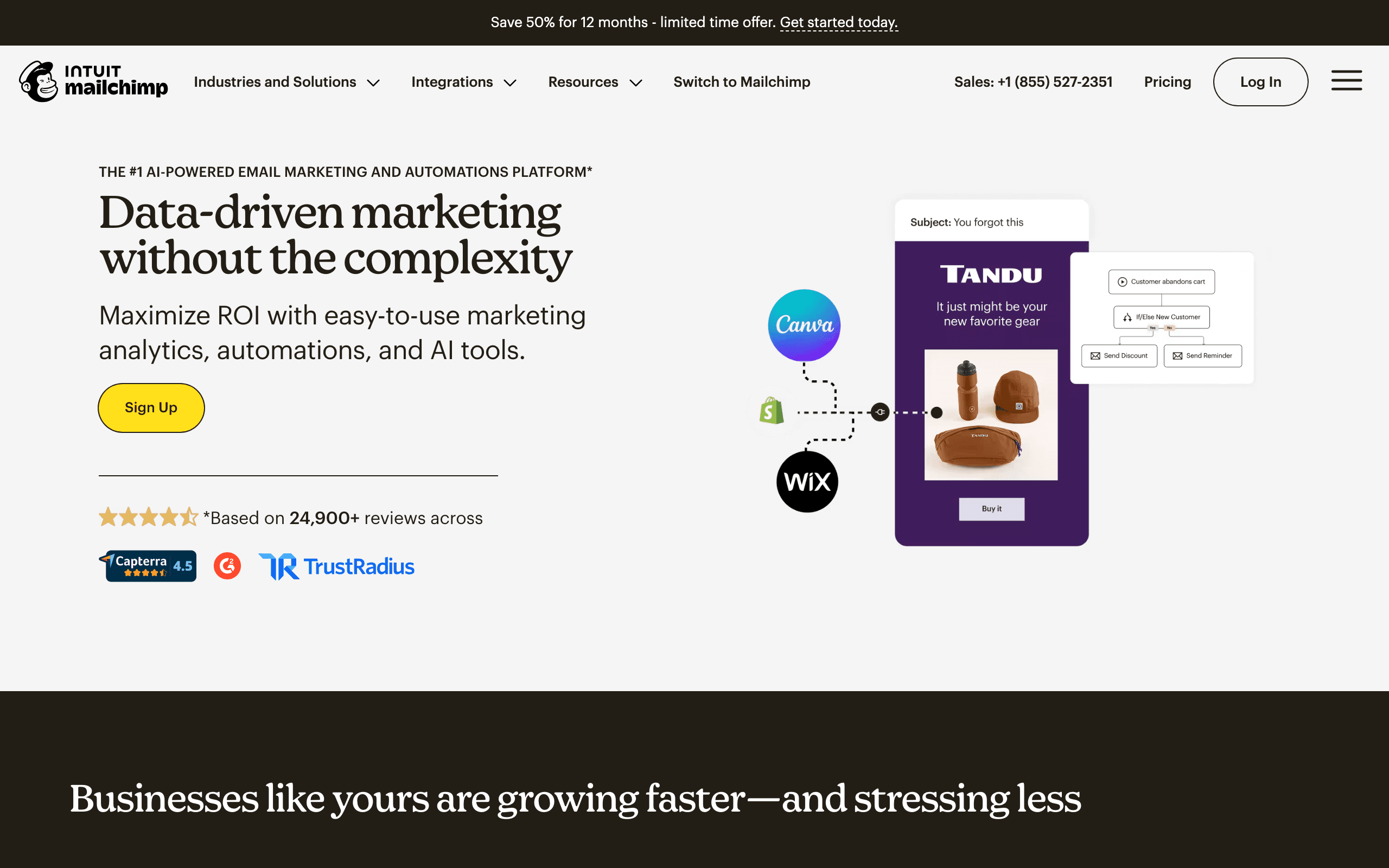
Best for: The most widely used email-Zapier combination
Mailchimp's Zapier integration has been around longer than most and is one of the most used integrations on the platform. It covers the essentials: new subscriber triggers, campaign triggers, and actions for adding/updating subscribers and managing lists.
The integration is reliable and well-documented, with thousands of pre-built Zap templates available. If you're looking for a "connect Mailchimp to [any other tool]" workflow, someone has probably already built a template for it. This means less configuration time and fewer mistakes.
The template library is a genuine advantage for non-technical users. Want to connect Mailchimp to Typeform? There are 15+ templates. Google Sheets to Mailchimp? 20+ templates. This pre-built ecosystem reduces the barrier to automation significantly.
For teams that need Mailchimp to work with tools it doesn't natively integrate with, Zapier bridges the gap effectively. The integration handles high-volume operations well and has been battle-tested across millions of users.
- Zapier triggers: 10+ (new subscriber, new campaign, new unsubscriber, etc.)
- Zapier actions: 10+ (add subscriber, update subscriber, add to tag, send campaign, etc.)
- Pricing: Free up to 500 contacts, from $13/month
- Pros: Most Zap templates available, reliable, well-documented, widely used, battle-tested
- Cons: Limited automation depth, basic triggers, pricing increases at scale
4. ConvertKit (Kit)
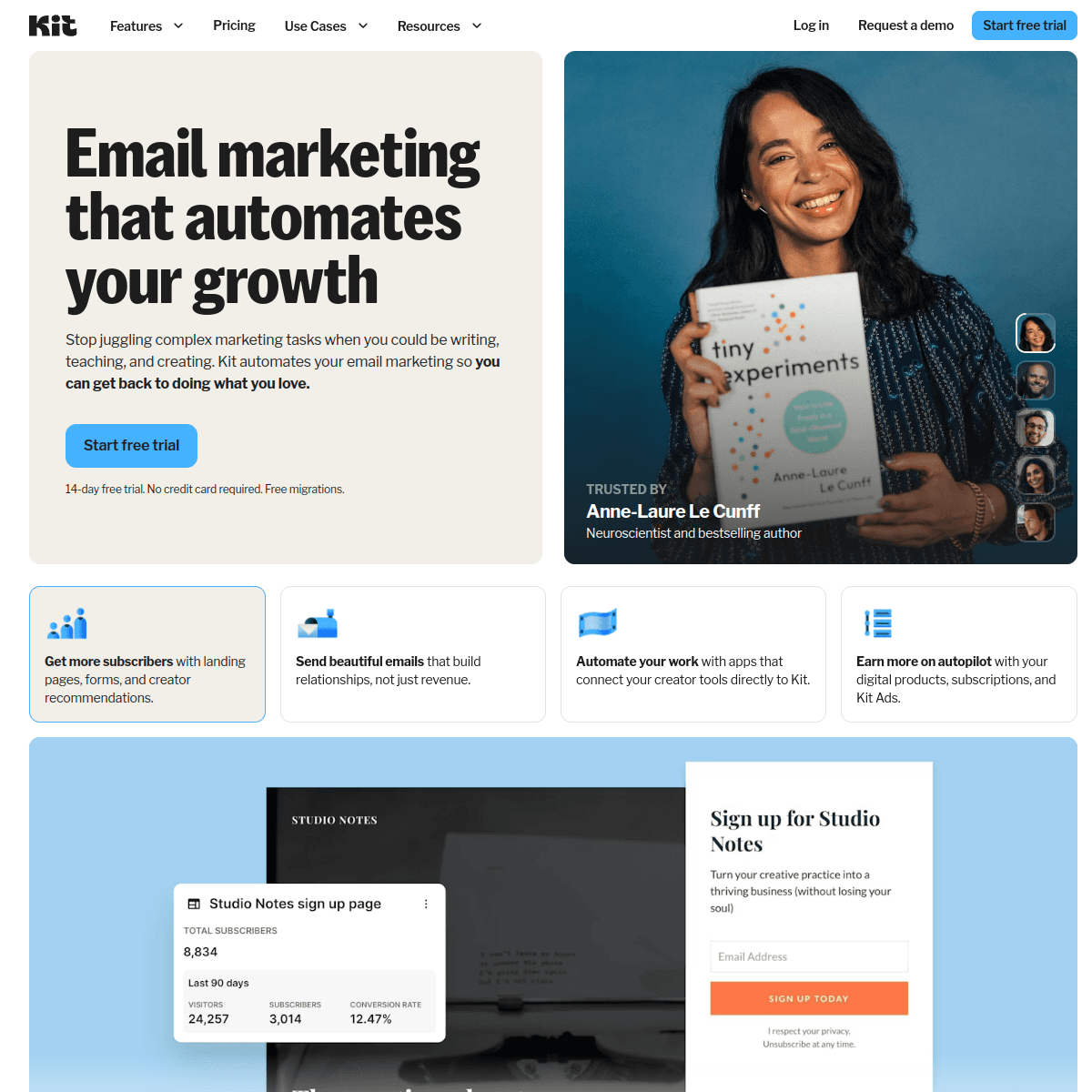
Best for: Creators connecting their content and sales stack to email
ConvertKit's Zapier integration is popular among creators, bloggers, and course sellers. Triggers include new subscriber, tag added, purchase completed, and form submitted. Actions cover adding subscribers, tagging, and managing sequences.
The integration is clean and focused on creator workflows: new Gumroad sale triggers a ConvertKit tag, new Teachable student gets added to a sequence, new Patreon supporter gets a welcome email. If your business is content-based, the ConvertKit + Zapier combination covers most automation needs.
The form-submitted trigger is particularly useful for creators who use multiple form tools across their website, landing pages, and guest posts. Each form submission can route to ConvertKit with specific tags, placing subscribers into the right sequence based on which content attracted them. This enables basic subscriber segmentation without complex setup.
ConvertKit's generous free tier (up to 10,000 subscribers) combined with Zapier's free tier gives creators a cost-effective automation stack for getting started.
- Zapier triggers: 8+ (new subscriber, tag added, purchase, form submitted, etc.)
- Zapier actions: 8+ (add subscriber, add tag, remove tag, add to sequence, etc.)
- Pricing: Free up to 10,000 subscribers, from $29/month
- Pros: Creator-focused, generous free tier, clean integration, good for content businesses, form-specific triggers
- Cons: Limited for SaaS, basic automation, fewer triggers than ActiveCampaign
5. Brevo (formerly Sendinblue)
Best for: Budget-friendly email with broad Zapier connectivity
Brevo's Zapier integration covers contact management, list operations, and campaign sending. The triggers and actions are straightforward, and the integration handles the common workflows: add contacts from forms, sync contacts from CRMs, trigger campaigns from external events.
The value proposition is Brevo's pricing. You get email, SMS, and basic automation at a fraction of what most competitors charge, and Zapier fills the integration gaps. For small teams on a budget, Brevo + Zapier gives you a lot of connectivity without spending much.
Brevo also handles GDPR compliance well, which is relevant when you're using Zapier to move subscriber data between tools. When data flows through Zapier into Brevo, Brevo's privacy controls apply to the incoming data, helping maintain compliance even in complex multi-tool workflows.
The SMS action in Zapier is a bonus that other email tools on this list don't offer. You can trigger SMS messages from Zapier alongside email, which is useful for urgent notifications or multi-channel sequences.
- Zapier triggers: 5+ (new contact, updated contact, email event, etc.)
- Zapier actions: 8+ (create contact, update contact, send email, send SMS, etc.)
- Pricing: Free for 300 emails/day, from $9/month
- Pros: Very affordable, email + SMS, Zapier extends functionality, good free tier, GDPR-compliant data handling
- Cons: Fewer triggers, basic integration, less polished than focused tools
6. Loops
Best for: SaaS startups wanting simple Zapier-based email automation
Loops integrates with Zapier for contact management and event tracking. The integration is focused on the essentials: add contacts, update properties, and trigger events that start Loops automations. It's simple and it works.
For startups that use a variety of tools (Stripe for payments, Typeform for surveys, Slack for notifications), Zapier connects them all to Loops without custom code. The simplicity of Loops means there's less to configure on the receiving end.
The event-trigger action is the most useful part of Loops' Zapier integration. Similar to Sequenzy, you can send events from any Zapier trigger to Loops, and Loops' automation engine handles the rest. This event-driven approach means your Zaps stay simple (just forward the event), and your email logic stays in Loops where it's easier to manage.
For developer-friendly teams who prefer to keep their Zaps minimal and their email logic centralized, this approach is clean and maintainable.
- Zapier triggers: Contact events
- Zapier actions: Add contact, update contact, trigger event
- Pricing: Free for 1,000 contacts, from $49/month
- Pros: Simple, focused on developers, good free tier, clean integration, event-driven
- Cons: Fewer triggers/actions, basic automations, limited Zapier features
7. Klaviyo
Best for: E-commerce brands connecting their sales stack to email
Klaviyo's Zapier integration is built around e-commerce workflows. Triggers include new customer, new order, and profile updates. Actions cover adding profiles, updating properties, and managing lists. For Shopify and WooCommerce stores, Klaviyo's native integrations are better, but Zapier fills the gaps for other e-commerce tools.
The integration is solid for connecting payment processors, review platforms, and loyalty programs to Klaviyo's email automation. If you're running an e-commerce business with tools that don't have native Klaviyo integrations, Zapier bridges the gap.
Klaviyo's revenue tracking through Zapier allows you to attribute purchases to email campaigns even when the purchase happens through a non-natively-integrated platform. This makes Klaviyo's revenue attribution capabilities accessible beyond just Shopify.
For e-commerce businesses that also need CCPA compliance, be aware that data flowing through Zapier into Klaviyo is still subject to privacy regulations. Ensure your Zaps don't create data processing that violates consumer opt-out preferences.
- Zapier triggers: 5+ (new customer, new order, profile updated, etc.)
- Zapier actions: 8+ (add to list, update profile, track event, etc.)
- Pricing: Free up to 250 contacts, from $45/month
- Pros: E-commerce focus, revenue tracking, strong automation engine, purchase attribution
- Cons: E-commerce-centric, limited SaaS use, pricing scales with contacts
8. HubSpot
Best for: Teams already standardized on HubSpot CRM
HubSpot's Zapier integration is comprehensive but gated by tier. The free CRM tier exposes basic contact triggers and actions. Marketing Hub paid tiers unlock workflow triggers, deal triggers, and the full set of contact updates. For teams already using HubSpot, Zapier complements the native integrations rather than replacing them.
The strength is the depth of CRM data exposed through Zapier. New deals, deal stage changes, contact lifecycle changes, and form submissions are all available as triggers. Actions cover creating contacts, updating properties, enrolling in workflows, and creating deals. For a Zap that needs to coordinate sales and marketing actions, HubSpot has more surface area than most tools.
The downside is that the most useful triggers (workflow enrollment, deal stage changes) require paid Marketing Hub or Sales Hub plans. Free-tier users get a fairly limited Zapier surface. And HubSpot's general pricing means Zapier sits on top of an already-expensive baseline.
For teams committed to HubSpot, Zapier extends what the CRM can already do. For teams just adding email automation, HubSpot via Zapier is rarely the best entry point.
- Zapier triggers: Contact, deal, workflow, form submission, lifecycle events (depth varies by tier)
- Zapier actions: Create/update contact, enroll in workflow, create deal, update properties
- Pricing: Free CRM; Marketing Hub from $20/month, advanced triggers gated by tier
- Pros: Deep CRM data exposed via Zapier, strong workflow integration, mature ecosystem
- Cons: Best triggers gated behind paid tiers, base pricing escalates fast, complex permissions model
9. Customer.io
Best for: Technical teams wanting flexible event-driven Zaps
Customer.io has a Zapier integration, but most teams who pick Customer.io use the direct API instead. The Zapier app supports identifying people, tracking events, and adding/removing people from segments. Triggers are limited compared to other platforms because Customer.io expects events to come in via API.
Where Zapier helps is the long tail: a niche tool that doesn't have a Customer.io integration but does have a Zapier app. Forward those events into Customer.io via Zapier, and the platform's segmentation and workflow engine handle the rest. For high-volume or time-critical events, send directly to Customer.io's Track API and skip Zapier entirely.
The honest framing: Customer.io is a power tool, and Zapier is the convenience layer for non-critical integrations. If you're choosing Customer.io primarily for Zapier, you're probably using the wrong tool.
- Zapier triggers: Limited (Customer.io expects direct API events)
- Zapier actions: Identify person, track event, add/remove from segment
- Pricing: From $100/month (Essentials plan)
- Pros: Flexible event-driven model, Zapier covers long-tail integrations, robust direct API
- Cons: Few Zapier triggers, expensive for small teams, most value comes from direct API not Zapier
10. Drip
Best for: E-commerce-led SaaS hybrids using Zapier as a bridge
Drip's Zapier integration covers the e-commerce CRM model: new subscribers, new orders, tag changes, and workflow completion as triggers. Actions cover creating/updating subscribers, applying tags, recording purchases, and starting workflows.
Because Drip lacks a first-party Stripe integration, Zapier is often the bridge teams use to wire payment events into Drip workflows. That works but adds the usual Zapier latency and task-cost concerns. For pure e-commerce on Shopify or WooCommerce, Drip's native connectors are better than going through Zapier.
The integration is solid but shaped by Drip's e-commerce mental model. SaaS teams will find the terminology and event types feel a bit off-fit.
- Zapier triggers: New subscriber, new order, tag applied, workflow completed
- Zapier actions: Create/update subscriber, apply tag, record purchase, start workflow
- Pricing: From $39/month for 2,500 contacts
- Pros: Decent trigger coverage, useful for connecting non-native commerce tools, mature platform
- Cons: E-commerce-shaped, Zapier needed for Stripe, pricing scales with contacts
11. MailerLite
Best for: Solo founders wanting simple Zapier-based email
MailerLite's Zapier integration handles the basics cleanly: new subscriber, subscriber updated, and campaign-related triggers; actions for creating subscribers, adding to groups, and removing from groups. It's not the deepest integration on the list, but it covers the typical use cases for solo founders and small teams.
The platform itself is one of the more pleasant editors in the space, and the free tier is generous. Pair that with Zapier and you can run a full email program for very little money, as long as your needs stay simple. Once you need branching automation, account-level data, or complex segmentation, MailerLite's ceiling becomes visible.
For a creator or solo SaaS founder shipping basic onboarding and newsletter emails, MailerLite + Zapier is hard to beat on price and simplicity.
- Zapier triggers: New subscriber, subscriber updated, campaign sent
- Zapier actions: Create subscriber, add to group, remove from group, update fields
- Pricing: Free up to 1,000 subscribers and 12,000 emails/month; from $10/month
- Pros: Pleasant editor, generous free tier, simple Zapier setup, affordable
- Cons: Basic automation, limited segmentation, fewer triggers than larger platforms
12. GetResponse
Best for: Webinar + email teams using Zapier to connect tools
GetResponse's Zapier integration covers contacts, autoresponders, and their built-in webinar product. Triggers include new contact, new webinar registration, and new autoresponder cycle. Actions cover creating contacts, adding to autoresponders, and registering for webinars. The webinar-aware triggers are unique on this list.
For teams running webinar-driven funnels, this is genuinely useful: a Zap can register a contact for a GetResponse webinar from a Typeform submission, then add them to a pre-webinar email sequence. Most other tools require pairing a separate webinar platform via Zapier.
Outside of webinars, the integration is comparable to other mid-tier email tools. The platform itself is competent but rarely the best in any one category.
- Zapier triggers: New contact, new webinar registration, new autoresponder cycle
- Zapier actions: Create contact, add to autoresponder, register for webinar, update contact
- Pricing: From $19/month
- Pros: Webinar-aware triggers/actions, comprehensive feature set, decent automation builder
- Cons: Generic outside of webinars, UI can feel dated, not best-in-class in any category
13. AWeber
Best for: Small businesses needing reliable Zapier email
AWeber is one of the oldest email platforms and has had Zapier support for as long as Zapier has existed. The integration is stable and well-tested: new subscriber, subscriber unsubscribed, and tag-applied triggers; actions for adding subscribers, applying/removing tags, and unsubscribing.
Reliability is the main selling point. The integration just works, has years of edge cases ironed out, and Zapier templates are abundant. The platform itself feels dated next to newer competitors, but for small businesses that prioritize stability over modern UI, AWeber holds up.
The downside is depth. Compared to ActiveCampaign or Klaviyo, AWeber's Zapier surface is narrower. There's no search action, multi-step Zaps are simpler to break, and the automation features in AWeber proper are basic.
- Zapier triggers: New subscriber, unsubscribed, tag applied
- Zapier actions: Add subscriber, apply/remove tag, unsubscribe
- Pricing: Free up to 500 subscribers, from $15/month
- Pros: Mature and reliable integration, abundant templates, simple to set up
- Cons: Dated UI, basic feature set, no search actions, limited automation depth
14. Constant Contact
Best for: SMBs wanting widely supported Zapier email
Constant Contact's Zapier integration covers the standard SMB use cases: new contact, contact updated, email opened, link clicked as triggers; actions for creating contacts, adding to lists, removing from lists, and sending emails. Combined with Constant Contact's large template library, this covers most small-business marketing needs.
The integration is reliable and there are plenty of pre-built Zap templates for common workflows (form to list, CRM to list, calendar to email). For non-technical users, the documentation is among the better in this space.
The platform itself is squarely aimed at small businesses (event promotion, local services, nonprofits) rather than SaaS or e-commerce. The Zapier integration reflects that focus, so SaaS teams will find features missing rather than just hidden.
- Zapier triggers: New contact, contact updated, email opened, link clicked
- Zapier actions: Create contact, add to list, remove from list, send email
- Pricing: From $12/month
- Pros: Reliable integration, large template library, good for SMB workflows, solid documentation
- Cons: SMB-shaped, weak for SaaS or complex automation, basic feature set
15. Bento
Best for: Indie SaaS wanting events + Zapier in one tool
Bento's Zapier integration is event-driven, matching the platform's broader model. Triggers include subscriber events (created, tag added, custom events). Actions cover creating/updating subscribers and triggering events that start Bento workflows.
The event-driven approach is similar to Sequenzy and Loops: forward an event from any Zapier source into Bento, and Bento's automation engine handles segmentation and sequencing. For indie hackers running on a tight budget, Bento + Zapier gives you a lot of capability per dollar.
The honest tradeoff is polish. Bento's UI is busier than its competitors, documentation has gaps, and the platform feels like it's still maturing. The underlying engine is strong, but you'll spend more time figuring things out.
- Zapier triggers: Subscriber events, custom events, tag changes
- Zapier actions: Create/update subscriber, trigger event, apply tag
- Pricing: From $30/month
- Pros: Event-driven model, indie pricing, real automation engine, deliverability tooling
- Cons: UI feels cluttered, documentation gaps, smaller ecosystem
16. Encharge
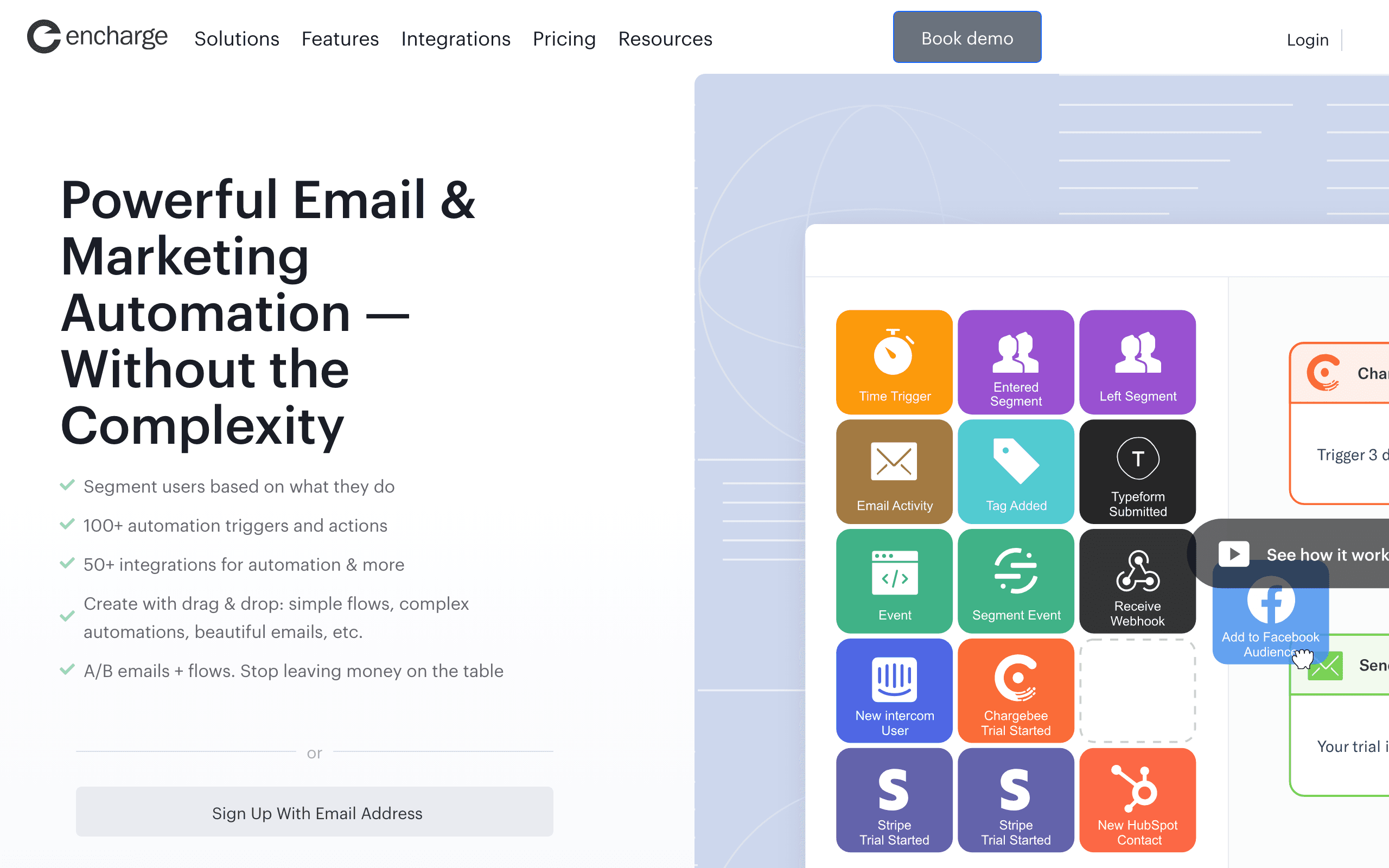
Best for: Non-technical teams wanting visual flows + Zapier
Encharge has a native Zapier integration alongside its existing direct integrations with Stripe, HubSpot, Segment, and others. Zapier triggers include new subscriber, tag applied, and field changed. Actions cover creating subscribers, applying tags, and starting flows.
The strength is the visual flow builder. A Zap can drop a contact into Encharge with specific tags, and the visual flow logic decides what happens next. Non-technical founders can see exactly what their automation does, which is helpful when debugging or onboarding new team members.
For workflows where Zapier feeds Encharge with data and Encharge does the actual sequencing, this combination works well. For workflows that should bypass Zapier entirely, Encharge's native integrations cover most popular SaaS tools.
- Zapier triggers: New subscriber, tag applied, field changed
- Zapier actions: Create subscriber, apply tag, start flow
- Pricing: From $79/month
- Pros: Visual flow builder paired with Zapier, easy for non-technical users, native integrations cover popular tools
- Cons: Mid-range pricing, smaller user base, basic email editor
17. Userlist
Best for: B2B SaaS needing account-level Zapier sync
Userlist's Zapier integration supports both user and company entities, which is unusual. Triggers cover new user, new company, and event-based actions; actions cover creating/updating users and companies, and triggering events.
For B2B SaaS where multiple users belong to a single account, this account-level Zapier sync matters. A Zap can update an entire company's attributes (plan, MRR, status) based on a single event from your billing or CRM system, and Userlist segments and automations can target either users or companies.
The Zapier surface is smaller than ActiveCampaign or Klaviyo, but the account-level model fills a real gap. Most B2B SaaS teams using Userlist supplement Zapier with their direct API for the heavier integrations.
- Zapier triggers: New user, new company, custom event
- Zapier actions: Create/update user, create/update company, trigger event
- Pricing: From $149/month
- Pros: Account-level Zapier sync, B2B-shaped, clean entity model
- Cons: Smaller Zapier surface, higher starting price, fewer templates
18. Ortto (formerly Autopilot)
Best for: Marketing teams blending Zapier + journey builder
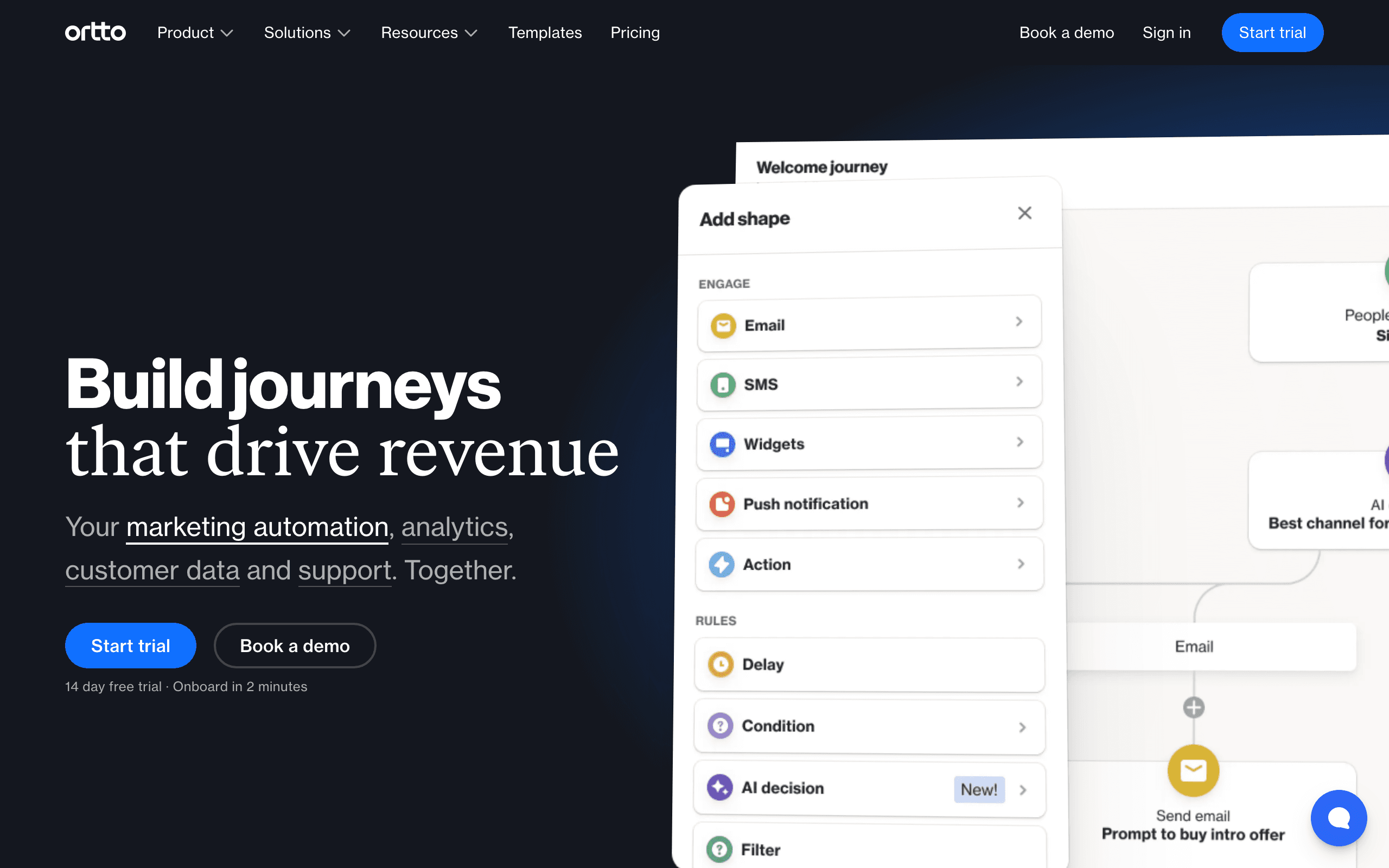
Ortto's Zapier integration covers contact creation/updates and activity triggers, which then feed into Ortto's journey builder. Triggers include new contact, contact updated, and activity tracked. Actions cover creating/updating contacts and adding activities.
The strength is what happens after the Zap fires. Ortto's journey builder is one of the better visual builders in this category, and once data lands in Ortto, you can build sophisticated multi-channel journeys (email, SMS, push, in-app). For marketing teams who want Zapier as one of many input sources into a centralized journey engine, Ortto fits.
The catch is pricing. The plans where Zapier + journey building become genuinely useful start around $599/month, which prices out smaller teams.
- Zapier triggers: New contact, contact updated, activity tracked
- Zapier actions: Create/update contact, add activity, add to audience
- Pricing: From $599/month for the plan tier where everything is usable
- Pros: Strong journey builder, multi-channel, polished UI, Zapier feeds rich automation
- Cons: Expensive, overkill for small teams, complex to learn
19. Beehiiv
Best for: Newsletter operators connecting subscriber tools
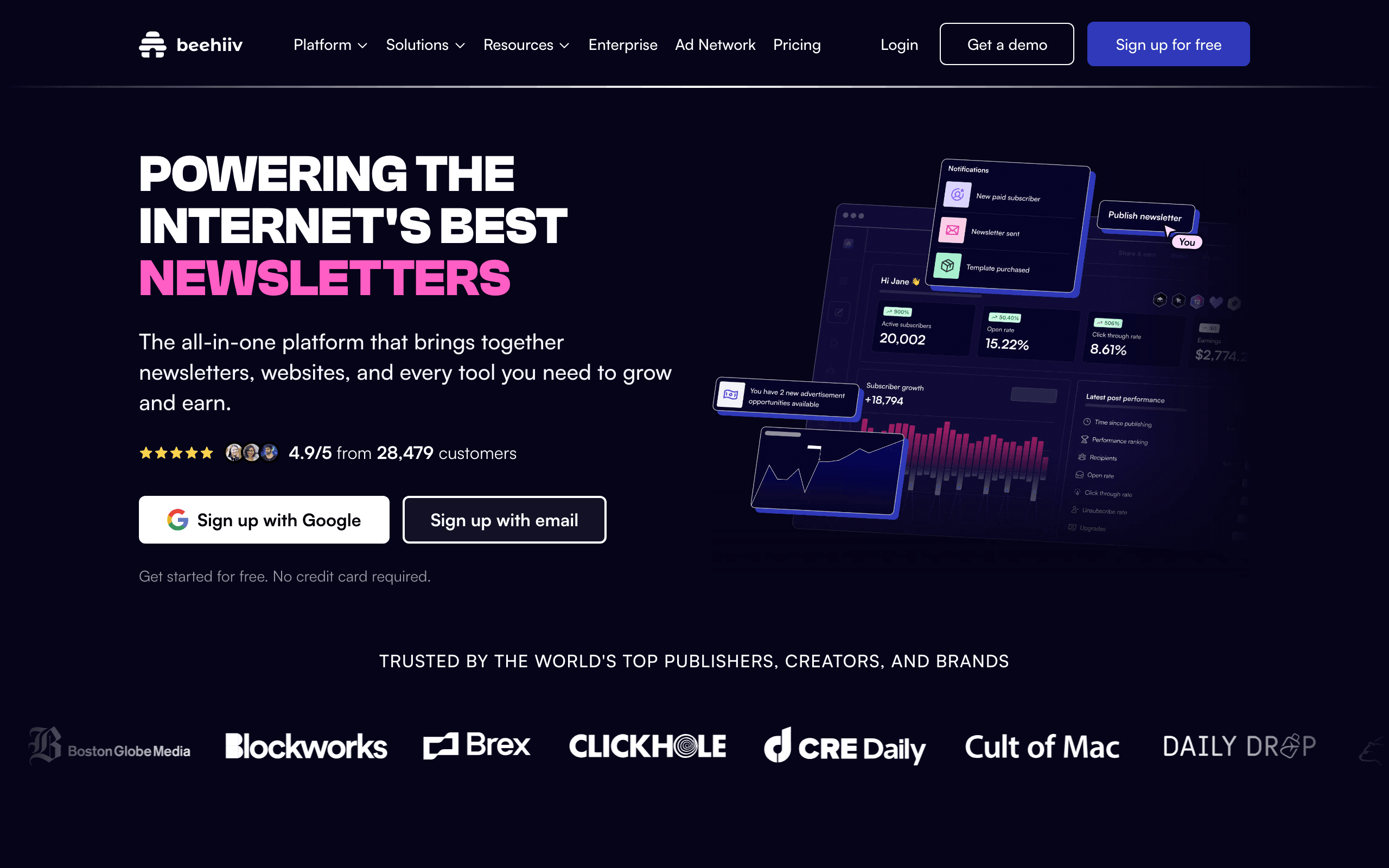
Beehiiv's Zapier integration is shaped around newsletter subscriber management. Triggers include new subscriber and unsubscribe; actions cover creating subscribers, updating attributes, and managing segments. There's nothing here for SaaS lifecycle automation, but for newsletter operators, the basics are covered.
The most common Zaps are connecting form tools (Tally, Typeform), CRMs, and event platforms to Beehiiv subscriber lists. For newsletter-led businesses, this is enough; for traditional SaaS, Beehiiv is the wrong category of tool entirely.
- Zapier triggers: New subscriber, unsubscribe, segment changes
- Zapier actions: Create subscriber, update attributes, manage segments
- Pricing: Free up to 2,500 subscribers; paid plans from $39/month
- Pros: Clean newsletter-shaped integration, strong audience growth tools, polished editor
- Cons: Newsletter-shaped, no SaaS lifecycle, weak transactional, narrow Zapier surface
20. Mailjet
Best for: Teams wanting Zapier + transactional in one tool
Mailjet's Zapier integration is basic but functional: new contact and contact updated as triggers; actions for creating contacts, adding to lists, and sending emails. The unique angle is that Mailjet handles both transactional and marketing email, so a single Zapier integration covers both.
For teams who want one tool for receipts and newsletters, Mailjet is a reasonable choice. The Zapier integration won't impress on depth, but it covers the standard use cases. Marketing automation in Mailjet itself is fairly basic, so Zapier becomes the way to extend it.
- Zapier triggers: New contact, contact updated
- Zapier actions: Create contact, add to list, send email, send transactional
- Pricing: Free up to 6,000 emails/month; from $17/month
- Pros: Transactional + marketing in one tool, decent deliverability, EU-based
- Cons: Basic automation, narrow Zapier surface, limited segmentation
21. EmailOctopus
Best for: Budget-conscious teams wanting Zapier email
EmailOctopus's Zapier integration is intentionally simple: new subscriber and unsubscribe triggers; actions for adding subscribers and updating fields. Combined with EmailOctopus's very low pricing, this is one of the cheapest ways to get Zapier-driven email working.
The platform is a good fit for newsletter operators and small businesses who want pay-as-you-go email without the complexity of larger platforms. Zapier handles whatever the platform itself doesn't, which is a lot, but at this price point that's acceptable.
The honest limitation: EmailOctopus is not built for sophisticated automation. Treat it as a sender that lists, segments, and sends well, with Zapier filling the integration gaps.
- Zapier triggers: New subscriber, unsubscribe
- Zapier actions: Add subscriber, update field, remove subscriber
- Pricing: Free up to 2,500 subscribers and 10,000 emails/month; from $9/month
- Pros: Very affordable, simple to set up, reliable for basic Zaps
- Cons: Minimal automation, narrow Zapier surface, basic segmentation
Common Zapier Workflows for Email Marketing
Lead Capture
Trigger: New form submission (Typeform, Tally, Google Forms) Action: Add subscriber to email list with tags based on form responses
This is the most common Zap for email marketing. The key is mapping form fields to subscriber tags or custom attributes so your email tool can segment and personalize based on the form responses. Don't just dump everyone into a generic list.
Payment Integration
Trigger: New payment (Stripe, Gumroad, Paddle) Action: Add/update subscriber with purchase tag, trigger welcome sequence
For SaaS, this becomes the foundation of your Stripe email automation. Tag subscribers with plan name, billing status, and payment amount. Use these tags to drive lifecycle sequences.
CRM Sync
Trigger: Deal stage change (HubSpot, Pipedrive) Action: Update subscriber tags, move between email lists
Keeping your CRM and email tool in sync ensures sales and marketing are sending consistent messages. When a deal moves to "closed won," the subscriber should move from a nurture sequence to a customer onboarding sequence. For teams evaluating HubSpot integration options, Zapier is often the bridge.
Webinar Follow-up
Trigger: New webinar registrant (Zoom, Webinar Jam) Action: Add to pre-webinar email sequence, tag by event
Webinar follow-up is one of the highest-ROI email sequences. Registrants are warm leads. Getting them into a pre-webinar reminder sequence and a post-webinar follow-up sequence can significantly improve attendance and conversion rates.
Support Ticket Integration
Trigger: New support ticket (Zendesk, Intercom) Action: Tag subscriber, pause marketing sequences during open tickets
This is a often-overlooked workflow. When a customer has an open support ticket, sending them marketing email is tone-deaf. Tagging them in your email tool and suppressing marketing sequences shows that your systems are aware of each other.
Product Event Forwarding
Trigger: Custom event from your product (via webhook) Action: Add event or tag to email tool
For SaaS teams, forwarding product events to your email tool enables behavioral email automation. When a user completes onboarding, triggers a key feature, or hits a usage milestone, Zapier can forward that event to your email platform.
Survey Response Handling
Trigger: New survey response (Typeform, SurveyMonkey) Action: Update subscriber attributes, adjust segmentation
Survey responses contain valuable data for email personalization. A subscriber who reports they're "just getting started" should receive different content than one who says they're "evaluating alternatives." Zapier can route this data to your email tool and adjust subscriber segments accordingly.
Managing Zapier Costs
Zapier pricing is based on task count (each step of a Zap that runs is a task). This can add up quickly:
- Free tier: 100 tasks/month, single-step Zaps only
- Starter: $20/month for 750 tasks, multi-step Zaps
- Professional: $49/month for 2,000 tasks, advanced features
For email marketing, estimate your task usage:
- New subscribers per month x Zap steps = subscriber-related tasks
- Campaign sends per month (if triggered by Zapier) = campaign tasks
- Events per month x Zap steps = event tasks
If your task count exceeds 2,000/month regularly, consider whether native integrations would eliminate some Zaps. Tools with native Stripe integration, Slack integration, or webhook support can handle their own events without going through Zapier.
How to Choose
You need the deepest Zapier integration: ActiveCampaign. 30+ triggers, 20+ actions, search actions, and the most flexibility for complex multi-step Zaps.
You want the most pre-built templates: Mailchimp. Thousands of existing Zap templates, widely documented.
You're SaaS and need lifecycle email: Sequenzy. Event-driven Zaps that trigger onboarding, conversion, and retention sequences.
You're a creator or content business: ConvertKit. Zapier integration designed for creator workflows.
You need affordable email + Zapier: Brevo or EmailOctopus. The cheapest options with usable Zapier connectivity.
You want simple and focused: Loops or Bento. Clean event-driven Zapier integrations without complexity.
You're in e-commerce: Klaviyo. Zapier fills the gaps between your e-commerce stack and email.
You're already on HubSpot: HubSpot's Zapier integration extends what the CRM already does.
You need account-level B2B sync: Userlist. Zapier triggers and actions on both user and company entities.
You run webinars: GetResponse. Built-in webinar triggers and actions in Zapier.
FAQ
Do I need Zapier if my email tool has native integrations? Not for tools with native integrations. But most email platforms only have native integrations with 5-10 popular tools. Zapier connects to 7,000+. If you use niche tools or need multi-step workflows involving several apps, Zapier is usually necessary. Check your email tool's native integration list first, and use Zapier only for the gaps.
How much does Zapier cost on top of my email tool? Zapier's free tier includes 100 tasks/month with single-step Zaps. For multi-step Zaps and higher volumes, plans start at $20/month. Factor this into your total cost when comparing email platforms. A platform that's $10/month cheaper but requires $20/month of Zapier to match another platform's native integrations isn't actually cheaper.
Are Zapier triggers real-time? Most are near-real-time (within 1-2 minutes). Some triggers use polling (checking every 1-15 minutes depending on your Zapier plan). For truly time-sensitive actions like transactional email or dunning sequences, use the email tool's API directly rather than going through Zapier. The latency difference can matter for email deliverability of time-critical messages.
Can Zapier replace a CDP like Segment? For simple event routing (2-3 tools), yes. For complex event routing, data transformation, and identity resolution across many tools, a CDP is more appropriate. Zapier is best for connecting specific workflows, not for comprehensive data routing. If you're considering a CDP, tools with Segment integration offer a more robust data pipeline.
What happens when a Zap fails? Zapier has a "Task History" that shows failed Zaps and the error details. Common failures: the subscriber already exists, a required field is missing, or the email tool's API rate limit was hit. Zapier retries automatically for some errors. Set up email notifications for Zap failures so you catch issues quickly, especially for critical workflows like lead capture.
Should I use Zapier or build a direct API integration? For quick prototypes and low-volume workflows, Zapier is faster and easier. For high-volume, time-critical, or complex workflows, a direct API integration is more reliable and cost-effective. A good rule of thumb: start with Zapier to validate the workflow, then build a native integration when the workflow is proven and volume justifies the development time.
Can I use Zapier to migrate between email tools? Technically yes, but it's not recommended for large migrations. Zapier's task limits and potential for failures make it unreliable for bulk data transfer. Use your email tool's import/export features for migration. Zapier is better for ongoing synchronization than one-time data moves.
How do I test Zaps without affecting real subscribers? Most email tools have test/sandbox modes or allow you to use test email addresses. Create a test subscriber in your email tool and run the Zap manually in Zapier's editor. Zapier also has a "Test" step for each action that shows you what would happen without actually executing it. Always test before turning a Zap on for production traffic.