
21 Best Email Tools With Send Time Optimization (2026)

What tools support email send-time optimization?
Braze, Klaviyo, ActiveCampaign, Dotdigital, Iterable, GetResponse, Moosend and Drip do true per-subscriber predictive send times, modelling each contact's engagement history to pick their personal best hour. Mailchimp and Brevo optimise at audience level. Sequenzy, Loops and Campaign Monitor use timezone-aware plus engagement-based scheduling instead of a per-subscriber model. Predictive STO needs volume to work; below roughly 5,000 engaged subscribers, timezone-aware sending captures most of the benefit.
Prices verified September 2026.
Predictive send time vs. what Sequenzy actually does
Being precise, because the two get conflated: predictive send time means a model outputs a per-subscriber timestamp. Sequenzy does not do that. What Sequenzy does is timezone-aware, engagement-based scheduling - it sends inside each subscriber's local waking window and skews toward the hours that subscriber has historically engaged in, with quiet hours enforced on both email and SMS. For a 2,000-subscriber SaaS list that is usually the better trade, because a per-subscriber model trained on a handful of opens is fitting noise. If you have hundreds of thousands of contacts and years of engagement data, Braze and Klaviyo will beat it. That is an honest boundary, not a hedge.
Send time optimization (STO) delivers each email at the time when that specific subscriber is most likely to open and engage. Not "Tuesday at 10am for everyone" but "Tuesday at 10am for Sarah, Thursday at 7pm for Mike, Saturday at 9am for Priya."
The impact is real but modest. Most platforms report a 5-15% improvement in open rates from STO. That's meaningful at scale but not transformative. The bigger value is reducing the guesswork. Instead of debating whether to send at 9am or 2pm, you let data decide.
Here's which email tools do send time optimization best. If you are evaluating email platforms more broadly, our comparison of the best email marketing tools for SaaS covers STO alongside other important features.
This guide covers predictive per-subscriber timing only. Timing decisions come in three flavors and they are easy to confuse:
- Predictive send time (this page): the platform models each subscriber's engagement history and picks their personal best hour.
- Behavior-based scheduling: the send is scheduled off what the user did, not off a clock. See the best email automation tools for behavior-based scheduling for the platform comparison, and behavioral triggers for the trigger mechanics.
- Sending-window rules: quiet hours, timezone alignment, and business-hours policies you set yourself. See how to send emails outside business hours.
Most teams need more than one of these, and they compose rather than compete.
This guide is part of our best email automation software comparison.
Best Send Time Optimization Tool by Use Case
Best send time optimization tool for SaaS lifecycle email: Sequenzy
Choose Sequenzy when delivery timing needs to work inside onboarding, trial conversion, dunning, and retention sequences. For SaaS, the goal is not only opens; it is getting the right lifecycle email in front of users when they can act. Pair send time optimization with AI sequences, the dunning templates, and the reduce churn guide.
Best send time optimization tool for enterprise multi-channel timing: Braze
Braze is the strongest option when timing decisions span email, push, SMS, and in-app messages across a huge user base. It needs enterprise budget and enough data volume to justify the modeling. If that is your market, compare Braze against Iterable before choosing a lighter email platform.
Best send time optimization tool for ecommerce revenue timing: Klaviyo
Klaviyo is the better fit when send time predictions should consider purchase behavior, cart timing, and revenue per flow. Sequenzy handles simpler Shopify email - including browse-abandonment and price-drop triggers - and has a WooCommerce integration in beta, but Klaviyo is stronger when the optimization target is ecommerce revenue. Read the Klaviyo comparison and the revenue attribution tools guide for that decision.
Best send time optimization tool for simple marketing teams: ActiveCampaign or Mailchimp
ActiveCampaign is useful when you want predictive sending inside a broader automation and CRM platform. Mailchimp is more accessible if you mainly want campaign timing recommendations for broad newsletters. Use the ActiveCampaign comparison and Mailchimp comparison if STO is only one part of a familiar marketing stack.
How Send Time Optimization Works
STO analyzes each subscriber's historical engagement patterns:
- Collect data: Track when each subscriber opens and clicks emails over time
- Build individual models: Identify patterns (subscriber A engages most on weekday mornings, subscriber B on weekend evenings)
- Predict optimal time: For each subscriber, predict the send time with the highest engagement probability
- Deliver accordingly: When you schedule a campaign, each email is delivered at each subscriber's optimal time
The quality of STO depends on:
- Data volume: More engagement history per subscriber means better predictions
- Model sophistication: Simple (most common open hour) vs. advanced (day-of-week, time-of-day, season, device patterns)
- Fallback handling: What happens for new subscribers with no history? Good STO uses cohort-level predictions.
The Data Behind STO
STO models typically use several signals:
Open timestamps: When the subscriber has historically opened emails. This is the primary signal for most STO implementations. The model identifies recurring patterns (always opens emails between 8-9am on weekdays, tends to check email on Sunday evenings).
Click timestamps: When clicks occur, indicating not just that the email was seen but that the subscriber was in an active, engaged state. Click data is more reliable than open data because it requires deliberate action.
Purchase/conversion timestamps: For e-commerce and SaaS, when the subscriber tends to make purchasing decisions. Optimizing for purchase behavior (not just opens) can directly impact email revenue attribution.
Device patterns: Mobile vs. desktop engagement at different times. A subscriber might check email on their phone during their commute (8am, 6pm) but engage more deeply on desktop during work hours (10am-4pm).
Timezone data: Either explicitly collected or inferred from engagement patterns and IP geolocation. Critical for global audiences.
STO vs. Timezone-Based Sending
These are often confused but are different things:
Timezone-based sending delivers the same campaign at the same local time for each subscriber. If you schedule for 10am, subscribers in EST receive it at 10am EST, PST subscribers at 10am PST, and so on. Simple, effective, and does not require engagement history.
Send time optimization delivers each email at the individual subscriber's predicted optimal time, regardless of a fixed schedule. One subscriber might get the email at 8:37am, another at 2:15pm, another at 7:42pm, all based on individual engagement patterns.
Timezone-based sending is table stakes. STO is the next level. If your email tool does not offer STO, timezone-based sending is a good fallback that captures most of the benefit for global audiences.
Quick Comparison
| Tool | Best For | Starting Price | Free Tier | STO Method |
|---|---|---|---|---|
| Sequenzy | SaaS lifecycle with smart delivery timing | $19/mo | Yes (2.5k emails/mo) | Timezone-aware + engagement-based |
| Braze | Most sophisticated STO at enterprise scale | $50K+/yr | No | Per-user ML, multi-channel, similar-user fallback |
| Klaviyo | STO with purchase behavior signals | $20/mo | Yes (250 contacts) | Per-subscriber, purchase + email behavior |
| ActiveCampaign | One-toggle predictive sending | $15/mo | No | Per-contact ML predictions |
| Mailchimp | Audience-level STO recommendations | $13/mo | Yes (500 contacts) | Audience-level (not per-subscriber) |
| Customer.io | DIY configurable send time logic | $100/mo | No | Manual workflow-based |
| HubSpot | CRM-informed send time optimization | $20/mo | Yes | Engagement-based recommendations |
| Campaign Monitor | Per-subscriber STO with timezone | $9/mo | No | Per-subscriber, timezone + engagement |
| Dotdigital | AI-driven send time optimization | $330+/mo | No | Per-contact ML, predictive |
| Moosend | Affordable per-subscriber STO | $9/mo | No | Per-subscriber behavioral |
| Drip | E-commerce STO with purchase timing | $39/mo | No | Per-subscriber, e-commerce signals |
| Brevo | Smart Send timing for campaigns | $9/mo | Yes (300/day) | Send time recommendations |
| GetResponse | Perfect Timing feature | $19/mo | No | Per-subscriber engagement-based |
| Omnisend | E-commerce STO with multi-channel | $16/mo | Yes (500/day) | Per-subscriber, purchase behavior |
| Iterable | Enterprise per-user STO across channels | $500+/mo | No | Intelligent timing, per-user ML |
| Ortto | Journey-level timing optimization | $599/mo | No | Per-contact behavioral timing |
| Kit (formerly ConvertKit) | Basic send time recommendations | $39/mo | Yes (10k subs) | Basic engagement-based |
| Beehiiv | Newsletter-focused send time recommendations | $43/mo | Yes (2.5k subs) | Basic timing recommendations |
| MailerLite | Simple send time optimization | $12/mo | Yes (250 subs) | Basic engagement-based |
| Loops | Timezone-aware delivery | $49/mo | Yes (1k contacts) | Timezone-based |
| Encharge | Timing optimization in visual flows | $79/mo | No | Engagement-based in flows |
How we evaluated these tools
Each platform was scored on four things: whether the optimisation is genuinely per-subscriber or only audience-level, what signals feed the model (email engagement only, or purchase and product events too), whether STO applies to automated sequences or campaigns only, and the minimum data volume the vendor says it needs before predictions are reliable. We also checked whether quiet hours and timezone alignment are available independently of the predictive feature, because most teams need those regardless. Prices were checked at the entry tier against each vendor's published pricing page in September 2026. Sequenzy is our own product and is listed with its actual method (timezone plus engagement, not predictive) rather than a flattering one.
The 21 Best Options
1. Sequenzy
Best for: SaaS teams wanting smart delivery within lifecycle sequences
Sequenzy supports timezone-aware sending and engagement-based delivery timing for campaigns and sequences. Emails in sequences are delivered respecting subscriber timezone and engagement patterns, ensuring lifecycle emails arrive at appropriate times rather than the middle of the night.
For SaaS lifecycle email, the timing nuances matter. A dunning email sent at 3am feels different than one sent at 10am. Timezone-aware delivery and smart timing ensure that automated sequences feel intentional rather than robotic.
The lifecycle context adds another dimension to send time optimization. For STO on campaigns, timing is mostly about engagement probability. For STO on automated sequences, timing also interacts with urgency. A trial expiration email should arrive when the user is likely to act, not just when they are likely to open. Sequenzy balances these factors for lifecycle-specific emails.
Sequenzy's approach is pragmatic. Rather than promising per-subscriber AI predictions that require massive data volumes, it focuses on timezone-aware delivery and engagement-based timing that works well even for smaller lists. For SaaS companies with 1,000-50,000 subscribers, this balanced approach often outperforms sophisticated per-subscriber models that lack sufficient data.
STO quality: Good. Timezone-aware, engagement-based timing, lifecycle-optimized Pricing: Free up to 2,500 emails/month, then from $19/month (unlimited subscribers) Pros: SaaS lifecycle focus, timezone-aware sequences, smart delivery timing, works at smaller scale, quiet hours apply to SMS too Cons: No per-subscriber predictive model, less sophisticated than dedicated STO, newer platform
2. Braze
Best for: The most sophisticated send time optimization at scale
Braze's Intelligent Timing analyzes each user's engagement patterns across all channels (email, push, SMS, in-app) to predict the optimal delivery time. The model considers day of week, time of day, and channel preference. It also handles users with insufficient data by using similar-user models.
At enterprise scale with millions of users, Braze's STO has enough data to build robust predictions. The multi-channel aspect is unique, as it considers engagement across channels, not just email. If a user is more responsive to push notifications in the morning and email in the evening, Braze adapts accordingly.
The similar-user fallback is worth highlighting. For new subscribers without engagement history, Braze clusters them with similar users (based on demographics, location, device, and behavioral patterns) and uses the cluster's optimal time. This is more sophisticated than simply using the audience average.
Braze also accounts for "quiet hours," automatically holding messages during times when sending would be inappropriate (middle of the night in the subscriber's timezone). This prevents the worst-case scenario of STO sending at 3am because the subscriber once opened an email at that time.
The trade-off is clear: Braze is enterprise software with enterprise pricing. For most SaaS companies, the cost (typically $50K+/year) is hard to justify unless you have millions of users and a dedicated marketing operations team.
STO quality: Excellent. Multi-channel, per-user predictions, similar-user fallback, quiet hours Pricing: Custom (typically $50K+/year) Pros: Most sophisticated STO, multi-channel analysis, enterprise scale, good fallbacks, quiet hours Cons: Enterprise pricing, requires significant data volume, complex platform
3. Klaviyo
Best for: Send time optimization with e-commerce engagement data
Klaviyo's Smart Send Time analyzes each subscriber's email and purchase engagement patterns to predict optimal delivery times. The model considers when subscribers open emails, click links, and make purchases. For e-commerce, optimizing for purchase behavior (not just opens) is particularly valuable.
Smart Send Time is available on campaigns and flows. You select a 24-hour window, and Klaviyo distributes sends across that window based on individual predictions. Subscribers with insufficient data receive emails at the cohort-optimal time.
The purchase behavior signal is Klaviyo's differentiator. While most STO models optimize for opens (when the subscriber is likely to see the email), Klaviyo also optimizes for purchases (when the subscriber is likely to buy). For e-commerce businesses, this distinction directly impacts revenue. An email that arrives when the subscriber is in a buying mindset generates more revenue than one that just gets opened.
Klaviyo's flow-level STO is especially useful for automated sequences. Abandoned cart flows, post-purchase sequences, and win-back campaigns all benefit from being delivered at the subscriber's optimal time rather than at a fixed delay after the trigger event.
STO quality: Very good. Email + purchase behavior, per-subscriber, cohort fallback Pricing: Free up to 250 contacts, from $20/month Pros: Purchase behavior considered, available on flows and campaigns, good predictions, e-commerce focus Cons: E-commerce-focused, needs engagement history, pricing scales with contacts
4. ActiveCampaign
Best for: Accessible send time optimization within an automation platform
ActiveCampaign's Predictive Sending uses machine learning to determine the best send time for each contact. The feature analyzes past open and click behavior to predict when each contact is most likely to engage. It's available on campaigns and can be enabled with a single toggle.
The simplicity is the selling point. You don't need to configure anything. Enable Predictive Sending on a campaign, select a delivery window, and ActiveCampaign handles the rest. For teams that want STO without complexity, it works.
ActiveCampaign's broader automation platform adds context. If you are already using ActiveCampaign for behavioral email triggers and CRM, adding Predictive Sending to your campaigns is a natural extension. The STO data enriches the same contact profiles used for segmentation and automation.
The limitation is that Predictive Sending is only available on higher-tier plans. If you are on the Lite or Plus plan, STO is not accessible. This limits the feature's appeal for smaller teams on lower plans.
STO quality: Good. Per-contact predictions, simple to enable, based on email engagement Pricing: From $29/month (STO on higher tiers) Pros: Simple one-toggle activation, per-contact predictions, automation integration, CRM context Cons: STO only on higher tier plans, less sophisticated than Braze, limited configuration
5. Mailchimp
Best for: Send time optimization for small businesses
Mailchimp's Send Time Optimization analyzes your audience's engagement patterns and recommends optimal send times. The recommendations are at the audience level (not per-subscriber), which is less precise but requires less data. For small lists where per-subscriber modeling wouldn't have enough data, audience-level STO is practical.
The feature is straightforward: when scheduling a campaign, Mailchimp shows the recommended send time based on your audience's historical engagement. You can accept the recommendation or override it.
Mailchimp's audience-level approach has a hidden advantage for small lists. Per-subscriber STO needs enough engagement data per subscriber to make meaningful predictions (typically 3-5 interactions). For a list of 500 subscribers where many have only opened one or two emails, per-subscriber predictions would be unreliable. Audience-level recommendations aggregate enough data to be useful even for small lists.
The trade-off is precision. For large lists with diverse subscriber behavior, audience-level STO misses the opportunity to personalize timing. But for small to medium lists, the aggregate recommendation is a solid starting point.
STO quality: Basic. Audience-level recommendations, not per-subscriber Pricing: From $13/month (Standard plan) Pros: Simple, audience-level recommendation, no configuration needed, accessible, good for small lists Cons: Not per-subscriber, less precise, basic model, only for campaigns
6. Customer.io
Best for: Technical teams wanting configurable send time logic
Customer.io doesn't have a one-click STO feature, but its workflow builder supports time-based optimization through manual configuration. You can build workflows that use subscriber timezone data, engagement history queries, and conditional logic to approximate STO.
For technical teams willing to invest setup time, this approach is more flexible than black-box STO. You control the logic, the fallbacks, and the delivery windows. The trade-off is that it's manual work rather than automatic optimization.
The DIY approach has a specific advantage: transparency. With black-box STO, you trust the algorithm without understanding why specific times were chosen. With Customer.io's workflow approach, you define the rules explicitly. If something is not working, you can see exactly why and adjust.
For example, you might build a workflow that checks the subscriber's timezone, then routes to different send times based on their segment (enterprise users get morning delivery, developers get evening delivery, based on your engagement data analysis). This level of control is not possible with automated STO.
STO quality: DIY. Configurable through workflow logic, not automatic Pricing: From $100/month Pros: Full control over send time logic, configurable, timezone support, transparent rules Cons: Manual setup, no automatic optimization, requires workflow engineering, time-intensive
7. HubSpot
Best for: CRM-informed send time recommendations
HubSpot's email scheduling includes engagement-based send time suggestions that analyze when your contacts have historically opened emails. The recommendations are personalized at the contact level for Marketing Hub Professional and Enterprise, using engagement history to predict optimal delivery times.
The integration with CRM data adds context that pure email tools lack. HubSpot can factor in a contact's timezone (stored as a CRM property), their engagement patterns with both marketing emails and sales sequences, and their overall activity level. This combined signal can produce better predictions than engagement data alone.
For teams already standardized on HubSpot, the built-in STO removes the need for a separate configuration step. Enable intelligent send time on a campaign and HubSpot distributes sends based on per-contact predictions.
STO quality: Good. Per-contact, CRM-informed, engagement-based Pricing: From $20/month for Marketing Hub (STO on higher tiers) Pros: CRM context improves predictions, unified with contact data, simple to enable Cons: Better STO features on higher (more expensive) tiers, less sophisticated than Braze
8. Campaign Monitor
Best for: Per-subscriber STO with timezone awareness
Campaign Monitor's send time optimization analyzes per-subscriber engagement history and timezone data to schedule each email at the individual subscriber's optimal time. The feature is available on campaigns and automatically distributes sends across a delivery window based on individual predictions.
For mid-market businesses with global subscriber lists, the combination of per-subscriber STO and timezone awareness is particularly valuable. A subscriber in Singapore and a subscriber in New York get their emails at their respective optimal local times, both personalized to their engagement patterns.
Campaign Monitor's approach to fallback handling is sensible: subscribers with insufficient data receive the email at the audience's most common optimal time, ensuring that new subscribers still get a reasonably well-timed email.
STO quality: Good. Per-subscriber, timezone-aware, sensible fallbacks Pricing: From $9/month Pros: Per-subscriber predictions, timezone awareness, good for global lists, simple setup Cons: Less data-rich than Klaviyo or Braze, e-commerce attribution limited, smaller ecosystem
9. Dotdigital
Best for: AI-driven per-contact send time optimization
Dotdigital's AI-powered send time optimization analyzes each contact's engagement history using machine learning to predict their optimal engagement window. The model considers day-of-week patterns, time-of-day preferences, and engagement depth (click behavior vs. open behavior) to produce per-contact predictions.
For mid-market retail and e-commerce brands with large subscriber lists, Dotdigital's AI approach provides predictions that improve with each campaign send. The model learns from both positive engagement signals (opens, clicks, purchases) and negative signals (ignores, unsubscribes at specific times).
The platform also surfaces insights about when different audience segments tend to be most active, which helps marketers understand the underlying patterns that drive the AI's recommendations.
STO quality: Very good. Per-contact ML predictions, learns over time Pricing: From $330/month Pros: AI-driven STO, improves with data, segment insights, retail-focused Cons: Expensive, e-commerce orientation, complex implementation
10. Moosend
Best for: Affordable per-subscriber send time optimization
Moosend's send time optimization delivers emails based on each subscriber's historical engagement patterns, using behavioral data to predict the best delivery time. At one of the lowest price points in the category to offer per-subscriber STO, it's a practical option for small to mid-size teams.
The feature analyzes opening patterns, click times, and engagement frequency to build per-subscriber delivery profiles. For teams on a budget that want genuine per-subscriber optimization (not just audience-level recommendations), Moosend provides that at a fraction of enterprise pricing.
The model is less sophisticated than Braze or Klaviyo, but for many use cases the difference is marginal - especially for smaller lists where sophisticated ML models don't have enough data to outperform simpler behavioral approaches.
STO quality: Good. Per-subscriber, behavioral patterns, affordable Pricing: From $9/month Pros: Per-subscriber STO at low price, simple to enable, decent predictions Cons: Less sophisticated than premium platforms, smaller ecosystem, limited customization
11. Drip
Best for: E-commerce STO with purchase timing signals
Drip's send time optimization factors in both email engagement patterns and e-commerce purchase behavior to predict optimal delivery times. For e-commerce brands using Drip, the purchase timing signal adds a revenue-relevant dimension that pure email engagement models miss.
When a subscriber tends to make purchases in the evening, Drip's STO model can factor in that behavior alongside email open patterns to predict when they're both likely to engage with email and likely to convert. This purchase-aware timing is more relevant for e-commerce campaigns than pure engagement-based STO.
STO quality: Good. E-commerce-aware, purchase behavior signals Pricing: From $39/month Pros: Purchase behavior signals, e-commerce integration, per-subscriber predictions Cons: E-commerce-focused, less useful for SaaS, no multi-channel STO
12. Brevo (formerly Sendinblue)
Best for: Affordable STO with basic send time recommendations
Brevo's Send Time Optimization feature analyzes subscriber engagement history to suggest optimal send times for campaigns. The feature is included in the Business plan and above, making it accessible at a lower price point than many competitors.
The recommendations are based on when subscribers have previously opened and clicked emails, with fallback to general engagement patterns for subscribers with limited history. For budget-conscious teams that want STO without paying premium prices, Brevo provides functional optimization.
The implementation is simpler than enterprise tools - you toggle STO on when scheduling a campaign, and Brevo distributes sends based on its predictions. Configuration options are limited compared to platforms like Customer.io or Braze.
STO quality: Moderate. Engagement-based recommendations, basic model Pricing: Free tier available, Business plan from $18/month for STO Pros: Affordable, included in Business plan, simple to use, multi-channel Cons: Basic STO model, not per-subscriber at all tiers, limited customization
13. GetResponse
Best for: Per-subscriber Perfect Timing delivery
GetResponse's Perfect Timing feature delivers each email at the time when that specific subscriber is most likely to engage, based on their historical open and click behavior. The model analyzes each subscriber's patterns and predicts the optimal delivery window.
The feature is available on Plus plans and above, which means the STO capability comes bundled with the broader automation and segmentation features GetResponse offers at that tier. For teams using GetResponse for landing pages, webinars, and email automation, Perfect Timing adds STO without requiring a separate tool.
GetResponse's Perfect Timing is well-regarded for its accuracy - the predictions are based on individual behavioral patterns rather than audience averages, and the fallback to cohort behavior for new subscribers is handled cleanly.
STO quality: Good. Per-subscriber, engagement-based, clean implementation Pricing: From $19/month (Perfect Timing on Plus plan+) Pros: Per-subscriber predictions, clean interface, bundled with automation features, webinar integration Cons: STO on higher tiers only, less sophisticated than Braze/Klaviyo, e-commerce attribution basic
14. Omnisend
Best for: Multi-channel e-commerce STO
Omnisend's send time optimization applies to both email and SMS channels, giving e-commerce brands a unified way to optimize timing across their multi-channel messaging. The per-subscriber predictions factor in e-commerce purchase behavior alongside email engagement patterns.
For teams running both email and SMS campaigns on Omnisend, the cross-channel timing optimization ensures that email arrives at the best email-engagement time and SMS arrives at the best SMS-response time for each subscriber - which are often different windows.
The automation workflow builder respects STO settings within flows, so abandoned cart and post-purchase sequences benefit from optimized delivery timing in addition to event-triggered sending.
STO quality: Good. Per-subscriber, cross-channel, purchase behavior Pricing: From $16/month Pros: Multi-channel STO (email + SMS), purchase behavior, e-commerce integration Cons: E-commerce-focused, limited SaaS relevance, basic for non-e-commerce
15. Iterable
Best for: Enterprise per-user STO across channels
Iterable's Intelligent Timing feature applies per-user send time optimization across email, push, and SMS channels. The ML model analyzes engagement patterns across all channels for each user, predicting the optimal time window for delivery of each message type.
For enterprise SaaS companies running cross-channel lifecycle programs, Iterable's STO means every touchpoint in a customer journey is delivered at that user's optimal time. The channel-specific models recognize that a user might engage with email during their commute and push notifications during work hours.
The similar-user model handles new users without engagement history by finding the closest behavioral cluster and using that cluster's optimal timing profile.
STO quality: Excellent. Per-user ML, cross-channel, enterprise scale Pricing: Custom, typically $500+/month Pros: Enterprise-grade STO, cross-channel, sophisticated ML, similar-user fallback Cons: Expensive, complex implementation, overkill for most teams
16. Ortto (formerly Autopilot)
Best for: Journey-level timing optimization
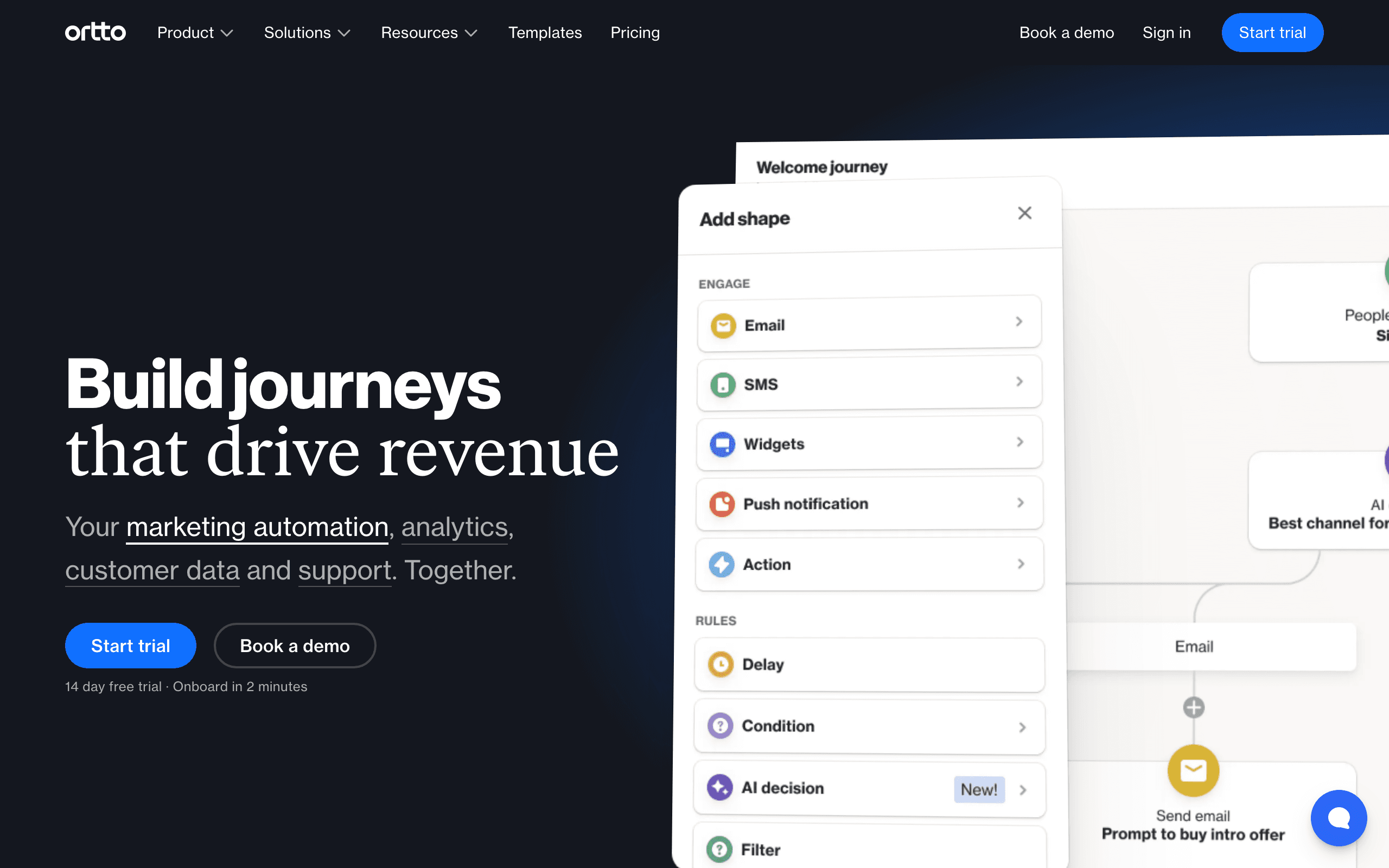
Ortto's send time optimization applies to individual journey steps, allowing each message in a customer journey to be delivered at the recipient's optimal time. Unlike campaign-level STO that applies to a single send, journey-level STO continuously optimizes timing for each step as subscribers move through multi-step sequences.
The timing data feeds back into Ortto's analytics dashboards, showing how timing optimization impacts engagement and conversion rates at each journey stage. For marketing teams that want to see whether STO is actually working, this feedback loop is more transparent than platforms that just report the predicted times.
STO quality: Good. Journey-level, per-contact, analytics visibility Pricing: From $599/month for usable tiers Pros: Journey-level STO, analytics feedback, multi-channel Cons: Expensive, complex, limited by pricing tier
17. ConvertKit (Kit)
Best for: Creator-focused basic send time recommendations
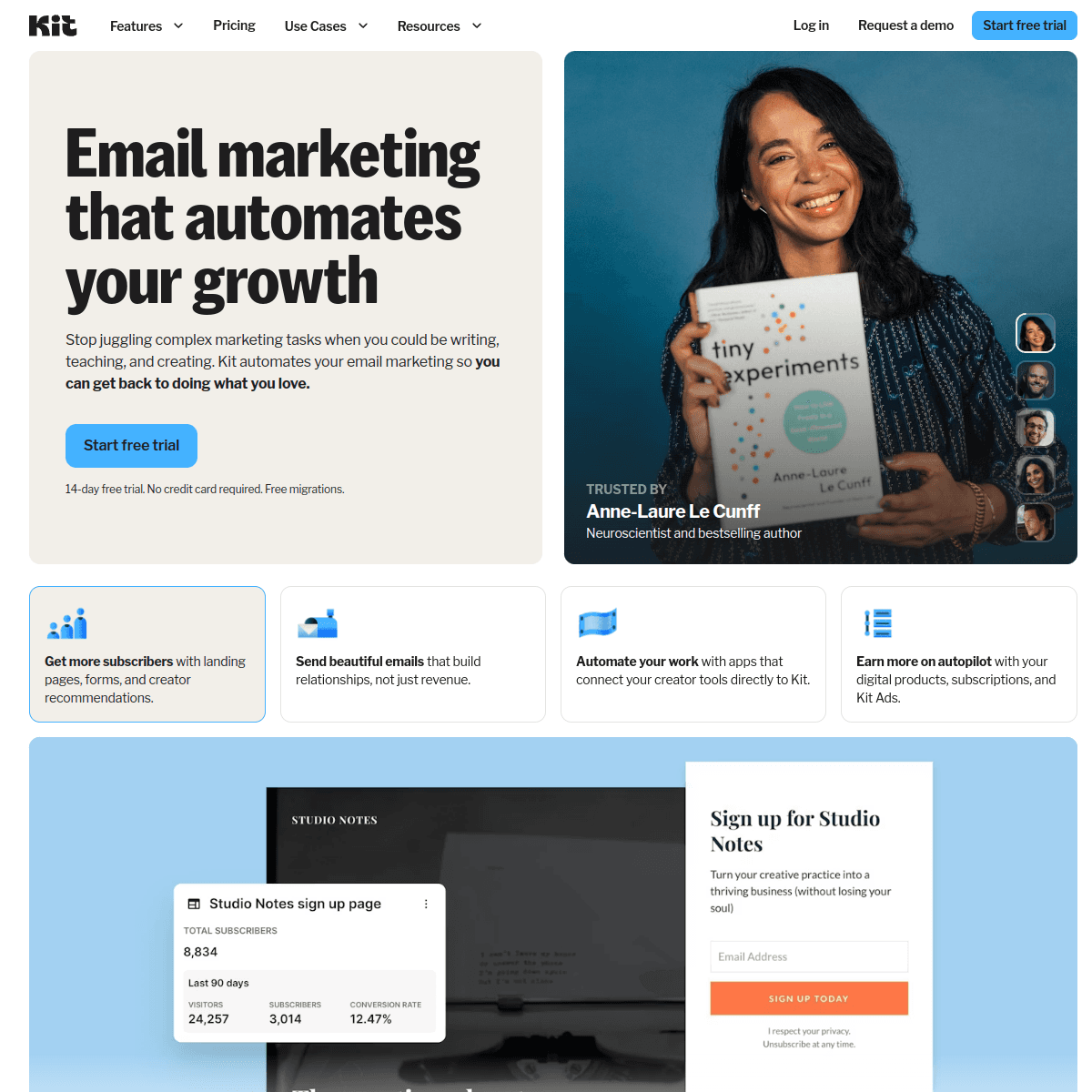
ConvertKit's scheduling feature includes basic engagement-based send time suggestions that recommend when to schedule broadcasts based on your audience's historical engagement. The recommendations are at the audience level rather than per-subscriber.
For creators and newsletter publishers, knowing the best general time to send for your audience is useful even if it's not per-subscriber. ConvertKit's audience is typically more homogeneous than SaaS or e-commerce audiences, which makes audience-level recommendations more accurate.
The simplicity is intentional - ConvertKit's philosophy is to remove complexity from email marketing, so STO is presented as a simple recommendation rather than a complex configuration.
STO quality: Basic. Audience-level recommendations, simple Pricing: Free up to 10,000 subscribers, from $29/month Pros: Simple to use, generous free tier, good for creators, clean interface Cons: Not per-subscriber, basic model, not suitable for large diverse lists
18. Beehiiv
Best for: Newsletter send time recommendations
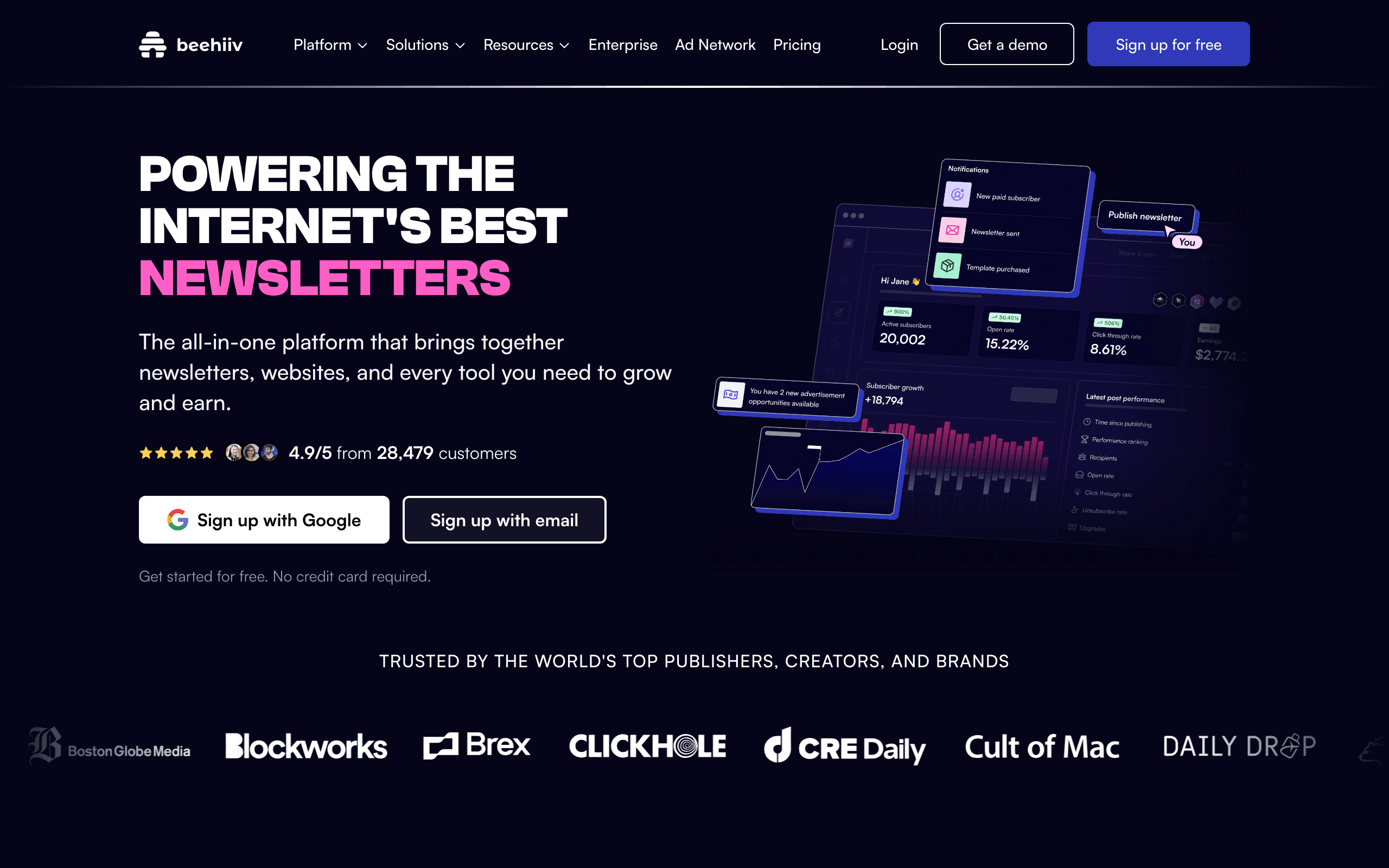
Beehiiv provides send time recommendations based on historical engagement data from your newsletter audience. For newsletter publishers, understanding when your readers are most likely to open content is a meaningful optimization - newsletters compete with many other emails for attention.
The recommendations factor in your specific audience's behavior, not generic benchmarks. Over time, as your list grows and accumulates engagement history, the recommendations become more accurate.
Beehiiv's STO is newsletter-shaped: it optimizes for open engagement with long-form content, not for conversion-focused commercial emails. For newsletter publishers, that's exactly the right orientation.
STO quality: Basic. Audience engagement-based, newsletter-oriented Pricing: Free up to 2,500 subscribers, from $39/month Pros: Newsletter-focused, simple recommendations, integrated with strong publishing tools Cons: Not per-subscriber, limited to newsletter use cases, basic optimization
19. MailerLite
Best for: Simple affordable send time optimization
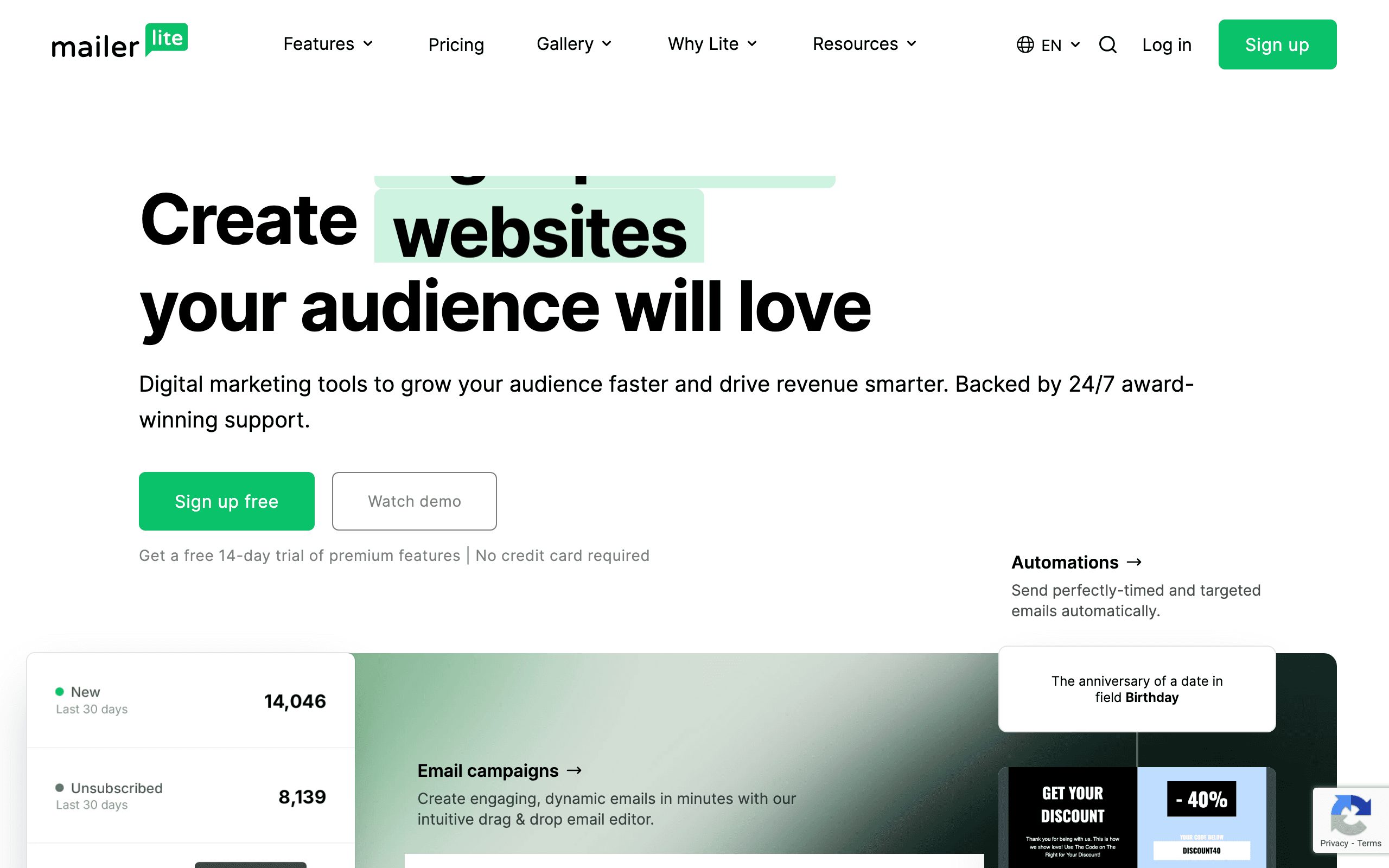
MailerLite's Send Time Optimization feature analyzes subscriber engagement history to predict optimal delivery times. The feature is available on Growing Business and Advanced plans, providing per-subscriber timing for campaigns.
For solo founders and small teams, MailerLite's pleasant interface and affordable pricing make STO accessible without complexity. You enable the feature when scheduling a campaign, and MailerLite handles the distribution - no configuration required.
The predictions are solid for lists with sufficient engagement history. For newer lists, the fallback to audience-level timing ensures emails still go out at reasonable times.
STO quality: Good. Per-subscriber at higher tiers, simple implementation Pricing: From $10/month (STO on Growing Business plan+) Pros: Affordable, clean interface, simple to use, good free tier Cons: STO on paid plans only, less sophisticated than premium tools, basic customization
20. Loops
Best for: Timezone-aware delivery for SaaS event-driven emails
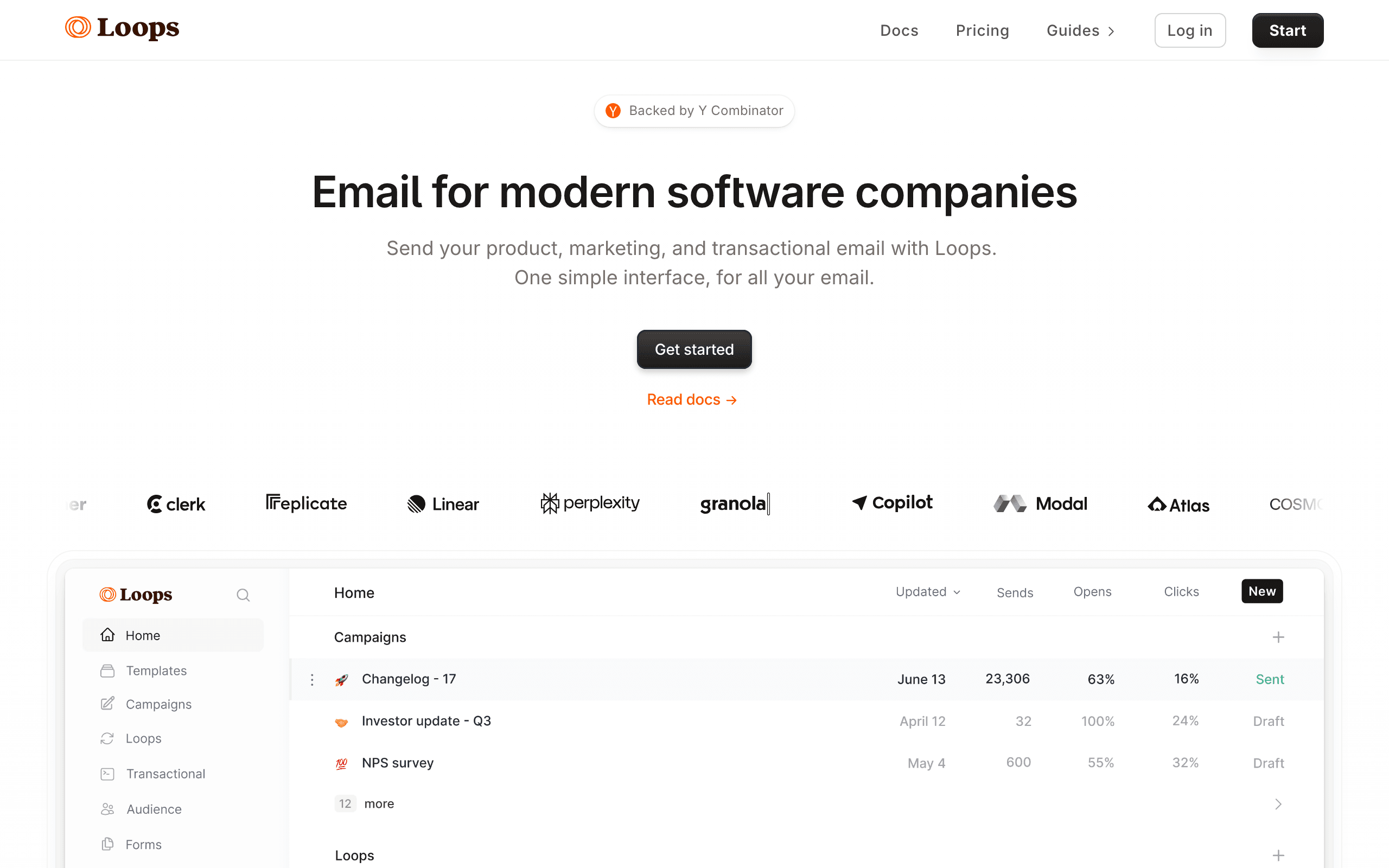
Loops supports timezone-aware delivery, ensuring that event-triggered emails and campaign sends respect each subscriber's local time. While not full per-subscriber STO based on engagement history, timezone-aware sending captures a significant portion of the STO benefit for global SaaS audiences.
For early-stage startups using Loops for lifecycle email, timezone-aware delivery prevents the worst-case scenario (welcome emails arriving at 3am in the subscriber's timezone) without requiring complex configuration.
As your list grows and you need genuine per-subscriber STO, you'll want to graduate to a more capable platform. But for the early stage, timezone awareness is a meaningful improvement over fixed send times.
STO quality: Basic. Timezone-aware, no per-subscriber engagement modeling Pricing: Free for 1,000 contacts, from $49/month Pros: Simple, good free tier, timezone awareness covers the basics Cons: No engagement-based STO, basic model, will need to migrate for more sophisticated optimization
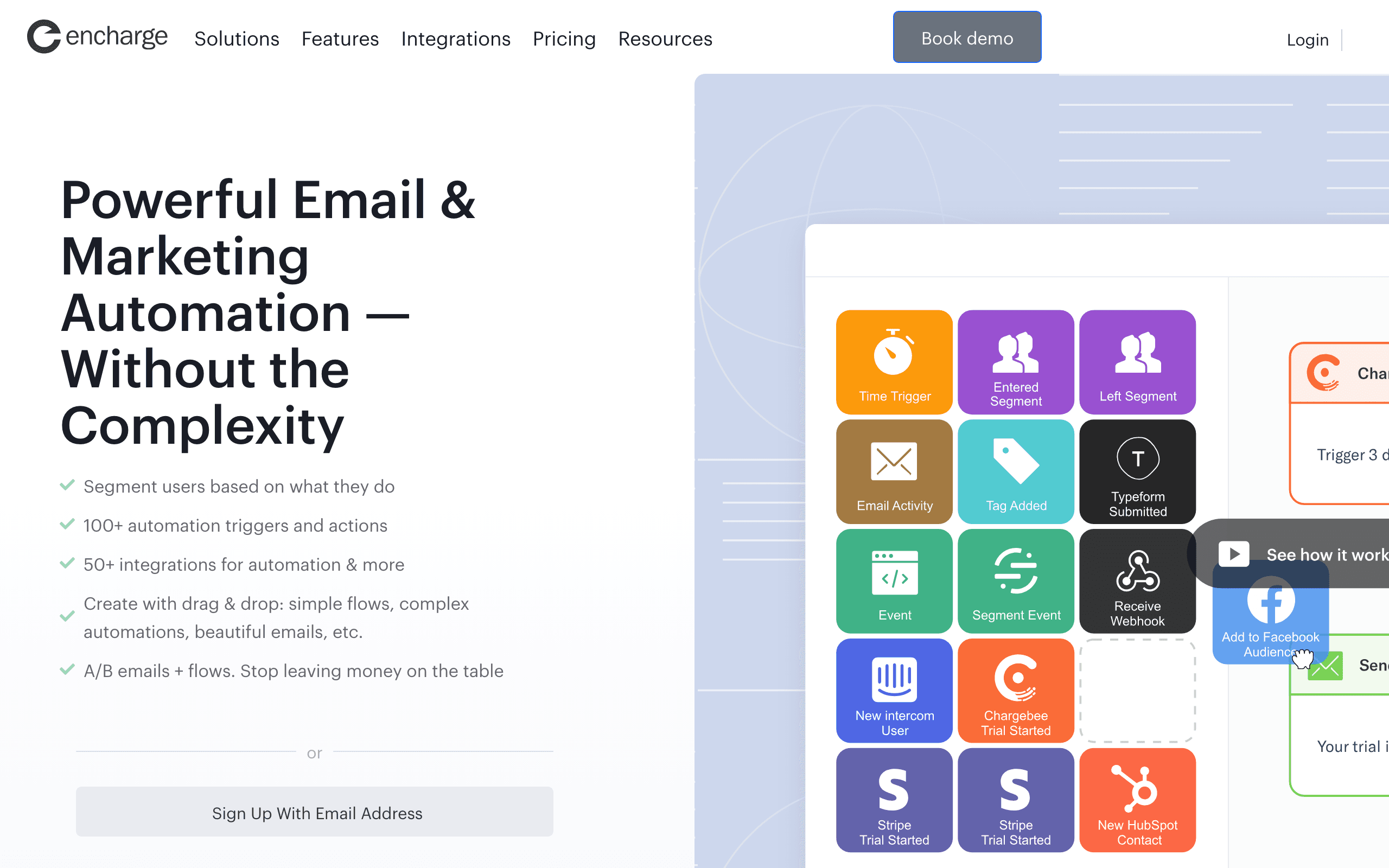
21. Encharge
Best for: Timing optimization in visual automation flows
Encharge supports engagement-based timing within its visual flow builder. You can configure delivery windows and timing rules at individual steps in a flow, using subscriber engagement history to optimize when specific emails are delivered.
The visual builder makes timing configuration transparent - you can see exactly where timing rules apply in a flow, which is useful for non-technical teams building complex sequences. The combination of visual flow editing and timing optimization within flows makes Encharge accessible for marketing-owned automation programs.
For teams that are primarily concerned with STO within specific automation flows (rather than broadcast campaigns), Encharge's flow-step timing configuration is practical and well-integrated.
STO quality: Moderate. Engagement-based within flows, visual configuration Pricing: From $79/month Pros: Visual flow builder, timing per flow step, accessible for non-technical teams Cons: Mid-range pricing, less sophisticated than dedicated STO tools, no campaign-level STO
Does Send Time Optimization Actually Work?
The Data
Most platforms report 5-15% improvement in open rates from STO. Independent studies show similar numbers. The improvement is real but not dramatic. Here is what the data actually shows:
- Open rate improvement: 5-15% relative improvement (e.g., from 20% to 22-23%, not from 20% to 35%)
- Click rate improvement: 3-10% relative improvement (smaller because clicks depend more on content than timing)
- Revenue impact: Variable. For time-sensitive offers, STO can improve conversion. For informational content, the impact is minimal.
- Unsubscribe rate: Often slightly lower with STO, because emails arrive at convenient times rather than disruptive ones
Where STO Helps Most
- Global audiences: When subscribers span many timezones, STO prevents sending at 3am for half your list
- Large lists: Per-subscriber optimization needs data volume. Lists with 5,000+ engaged subscribers see the best results
- Regular senders: The model improves with more sending history. Monthly senders get worse predictions than weekly senders
- Campaigns with flexible timing: Product updates, newsletters, and educational content where the exact send time is not critical
- E-commerce promotions: Where timing can influence purchase behavior
Where STO Doesn't Help Much
- Small lists: Under 1,000 subscribers, there's not enough data for meaningful per-subscriber predictions
- Time-sensitive content: If the email is about a sale ending today, send it when the sale is relevant, not when the subscriber typically engages
- Transactional email: Password resets and receipts should be sent immediately. STO is for marketing campaigns
- Breaking news or announcements: Time-sensitive information should be sent when it is relevant, not when the subscriber is likely to open
- Audiences in a single timezone: If all your subscribers are in the same timezone, timezone-based sending covers most of the STO benefit
STO and Apple Mail Privacy Protection
Apple's Mail Privacy Protection (MPP) pre-fetches email content for Apple Mail users, which means opens are recorded even if the subscriber never actually looks at the email. This inflates open data and can distort STO models that rely heavily on open timestamps.
The impact on STO depends on the model:
- Open-only models are significantly affected. A subscriber who never opens your emails but uses Apple Mail will appear to open every email, leading to poor send time predictions.
- Click-based models are unaffected. Clicks require deliberate action and are not inflated by MPP.
- Multi-signal models (opens + clicks + purchases + device) are partially affected but more resilient because they use multiple signals, not just opens.
When evaluating STO, ask whether the model accounts for MPP and how it handles inflated open data. Platforms that rely on clicks and conversions in addition to opens will provide more accurate predictions.
Alternatives to Platform STO
If your email tool doesn't have STO, you can approximate it:
Timezone-based sending: Segment your list by timezone and schedule the same campaign at the optimal time for each timezone. Less precise than per-subscriber STO but better than one-time-for-all. Most email segmentation tools support timezone-based segments, and our guide to sending outside business hours covers the timezone and DST edge cases that break this approach in practice.
A/B test send times: Send the same campaign at different times to random segments. Over multiple campaigns, identify the best general send time for your audience.
Day-of-week optimization: Most SaaS email performs best Tuesday through Thursday. Start there and test other days over time.
Engagement-window sending: Identify the 4-6 hour window when your audience is most active (from your analytics) and schedule sends within that window. This captures most of the STO benefit without per-subscriber modeling.
Manual cohort analysis: Export your engagement data and analyze open/click patterns by time of day and day of week. Group subscribers into 3-4 timing cohorts and create separate campaigns for each cohort. This is labor-intensive but gives you STO-like results without platform support.
STO for Automated Sequences
Send time optimization for campaigns is straightforward: the campaign has a flexible delivery window, and STO distributes sends within that window. For automated email sequences, STO is more nuanced.
The tension is between timing relevance and engagement optimization:
- Trigger-based sequences (welcome, onboarding, dunning) have an inherent time sensitivity. A welcome email should arrive shortly after signup, not 12 hours later when the subscriber's optimal time arrives. This is where behavior-based scheduling matters more than prediction: the event decides the moment, and STO should be switched off.
- Lifecycle sequences (nurture, re-engagement) are less time-sensitive and benefit more from STO. A re-engagement email sent at the subscriber's optimal time is more likely to actually re-engage them.
- Drip sequences with delays can benefit from STO on each step. Instead of "send email 2 exactly 3 days after email 1," the delay can be "3 days after email 1, at the subscriber's optimal time." This adds a few hours of variability but potentially increases engagement.
Most platforms that offer STO on automations handle this by applying timing optimization within the delay window. A 3-day delay becomes "between 3 and 3.5 days," with the exact time optimized for each subscriber.
FAQ
How much engagement history does STO need to work? Per-subscriber STO typically needs 3-5 email interactions per subscriber to make meaningful predictions. For new subscribers, good platforms fall back to cohort-level or audience-level predictions. The more interactions per subscriber, the better the predictions become. Weekly senders build usable models faster than monthly senders.
Should I use STO for automated sequences? It depends on the sequence type. For marketing sequences (onboarding, lifecycle), STO can help. For time-sensitive sequences (dunning, trial expiration), send based on the trigger event timing, not engagement patterns. For drip sequences with multi-day delays, applying STO within the delay window is a good compromise.
Does STO work with Apple Mail Privacy Protection? Apple's MPP makes open data less reliable (pre-fetching inflates opens). STO models that rely heavily on open timestamps are affected. Models that also consider clicks, purchases, and other engagement signals are more resilient. Ask your email platform how their STO model handles MPP data.
Can STO hurt deliverability? No. Spreading sends across a time window can actually help deliverability by reducing sending spikes. Email providers prefer steady sending volumes over large bursts. STO naturally smooths out your sending volume, which can improve inbox placement.
What is the minimum list size for effective STO? For per-subscriber STO, you need enough engaged subscribers to build meaningful individual models. Most platforms recommend 1,000+ active subscribers as a minimum. For audience-level STO (like Mailchimp), even smaller lists can benefit from aggregate timing recommendations.
Should I combine STO with A/B testing? Yes, but test content and timing separately. If you A/B test subject lines while using STO, the STO distributes both variants across optimal times, giving you a clean content comparison. If you A/B test send times, disable STO for that campaign to get accurate timing comparisons.
How does STO interact with send frequency? STO optimizes when each email arrives but does not control how many emails a subscriber receives. If you send daily and a subscriber's optimal time is 10am, they will get a daily email at 10am, which may feel excessive. STO should be combined with frequency capping and engagement-based suppression for the best results.
Is STO worth paying for a higher plan? For lists over 5,000 engaged subscribers, a 5-15% improvement in open rates translates to meaningful additional engagement. Calculate the value: if STO improves clicks by 10% and your email-attributed revenue is $10,000/month, STO is generating $1,000/month in incremental value. Compare that to the plan price difference.
Try smart send timing on your own list
Sequenzy applies timezone-aware, engagement-based delivery to campaigns and sequences on every plan, including the free one.
- Start free with 2,500 emails a month and unlimited subscribers
- Read how send time optimization works, then check pricing
- Related: behavior-based scheduling tools and behavioral trigger setup