
Overview
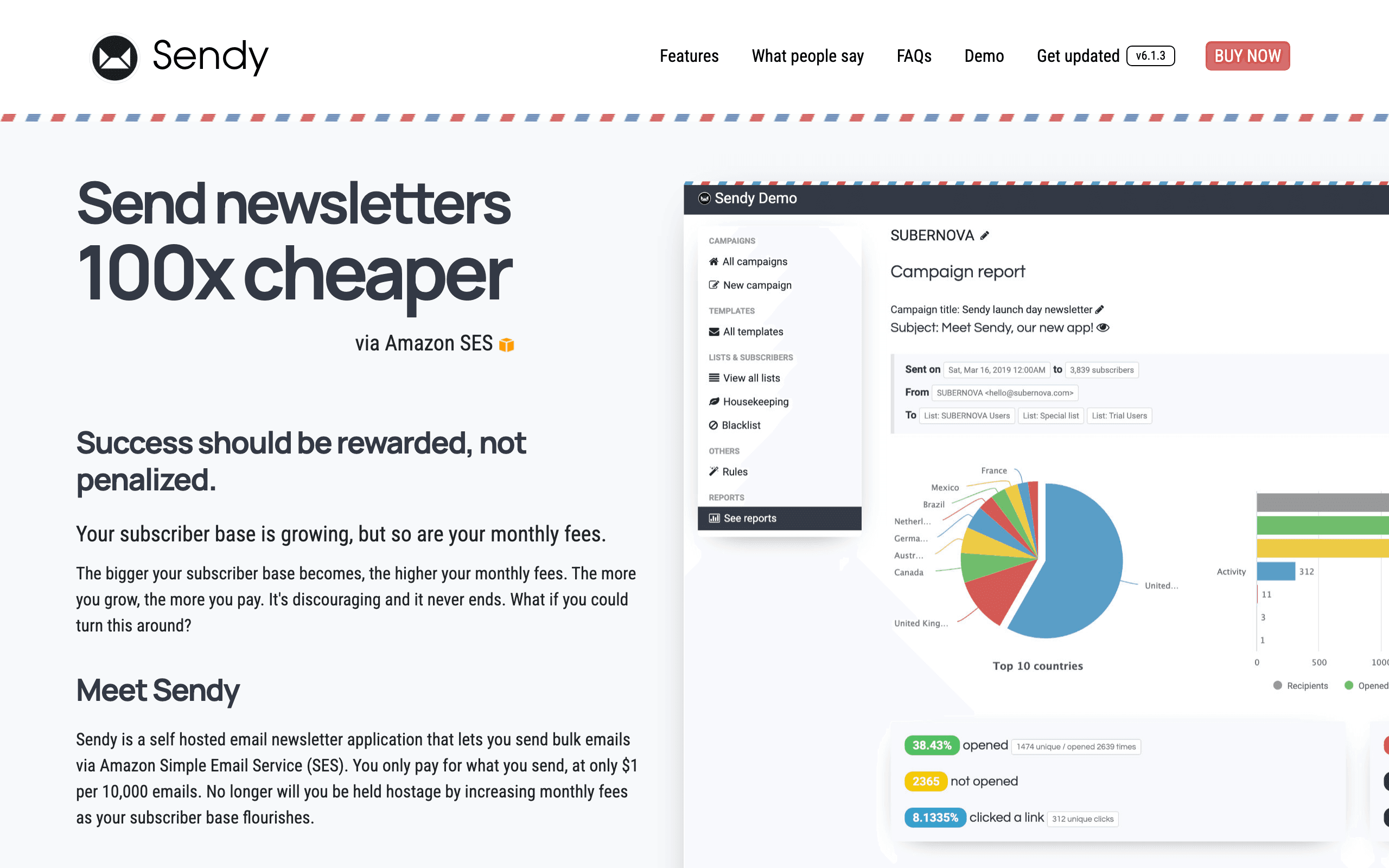
ManyReach and Sendy serve different needs in the email space. ManyReach is a credit-based cold email outreach platform. Sendy is a ultra-affordable self-hosted newsletter using Amazon SES.
The choice depends on what you need: unlimited mailbox connections (ManyReach) or $69 one-time (Sendy). For SaaS businesses specifically, Sequenzy offers purpose-built features that neither tool provides.
Pricing Comparison
- ManyReach: $99/10k credits - Credit-based cold outreach. No subscription.
- Sendy: $69 one-time - $69 one-time + SES costs (~$0.10/1k). Self-hosted PHP.
- Sequenzy: $99/month for 120,000 emails, unlimited subscribers, fully managed. See pricing.
Where ManyReach Wins
Unlimited mailbox connections
ManyReach offers unlimited mailbox connections, which is a genuine advantage for teams that need it.
Built-in warmup (Manywarm)
ManyReach offers built-in warmup (manywarm), which is a genuine advantage for teams that need it.
Automated follow-ups
ManyReach offers automated follow-ups, which is a genuine advantage for teams that need it.
No subscription
ManyReach offers no subscription, which is a genuine advantage for teams that need it.
Where Sendy Wins
$69 one-time
Sendy offers $69 one-time, which matters for teams that prioritize this.
Amazon SES (cheapest sending)
Sendy offers amazon ses (cheapest sending), which matters for teams that prioritize this.
Simple and lightweight
Sendy offers simple and lightweight, which matters for teams that prioritize this.
Battle-tested
Sendy offers battle-tested, which matters for teams that prioritize this.
Infrastructure Ownership and Control
The most significant difference between ManyReach and Sendy is who controls the email infrastructure. Sendy gives you complete ownership of your data and sending infrastructure. ManyReach manages everything on your behalf.
Deliverability and Sender Reputation
ManyReach's email deliverability strategy centers on warmup tools and inbox rotation across multiple connected mailboxes, since cold outreach carries more reputation risk than sending to people who opted in. Sendy sends through Amazon SES, so deliverability depends heavily on how well you manage your own SES reputation and authentication, since Sendy itself has no warmup or rotation features built in. Configured well, both can land in the inbox, but ManyReach automates more of that work for you.
Migration Path and Switching Costs
Switching between ManyReach and Sendy means moving between fundamentally different models: credit-based cold outreach versus a one-time-licensed, self-hosted newsletter tool running on your own SES account. Contact lists transfer via CSV, but ManyReach's mailbox warmup state and Sendy's server configuration do not carry over at all. Budget time to rebuild automations and re-warm domain reputation on whichever platform you are moving to, since neither preserves the other's sending history.
Use-case matchups
| Need | Better fit | Why |
|---|---|---|
| Cold outreach with warmup and inbox rotation | ManyReach | ManyReach is cited for cold outreach, multiple accounts, warmup, deliverability monitoring, inbox rotation, and analytics. |
| Simple self-hosted newsletter sending through Amazon SES | Sendy | Sendy is cited for one-time license, SES costs, ownership, simple newsletter sending, low server needs, and no-frills UI. |
| Lowest-cost owned newsletter infrastructure | Sendy | ManyReach is credit-based outreach, while Sendy is a self-hosted newsletter sender. |
| SaaS marketing plus transactional email | Sequenzy | Sequenzy is listed at $49/month with SaaS marketing, transactional email, and Stripe integration. |
Pricing reality
ManyReach is listed at $99 for 10k credits with no subscription. Sendy is listed at $69 one-time plus SES costs around $0.10 per 1k emails. Sequenzy is listed at $49/month for SaaS marketing plus transactional email with Stripe integration.
Sendy is cheaper for simple newsletters if you can maintain it. ManyReach is only the better fit when outbound prospecting controls are the thing you need.
Review signals
Reviews of ManyReach point to dependable email handling and good value for the credit-based pricing, with responsiveness of support flagged as something to watch before committing. That matters more for ManyReach than for Sendy, since Sendy is self-hosted and you are not relying on a vendor's support team day to day, only on your own server and SES setup. Weigh ManyReach's support track record against how much hands-on help your cold outreach campaigns are likely to need.
Sendy reviews cited here highlight value and reliable simple sending. The cautions are server maintenance, SES dependency, and limited feature set.
Best Fit by Outreach vs Newsletter Ownership
Best cold outreach platform for warmup and inbox rotation
ManyReach is the better fit when the job is outbound prospecting rather than subscriber newsletters. Warmup, multiple inboxes, rotation, deliverability monitoring, reply handling, and prospecting workflows are the reasons to choose it.
Best self-hosted newsletter tool for lowest long-term cost
Sendy is the better fit when the team wants owned newsletter infrastructure and Amazon SES economics. It works for simple campaigns if the team can handle hosting, SES production access, bounce handling, unsubscribe processing, and routine maintenance.
Best SaaS email platform for lifecycle and transactionals
Sequenzy fits teams that need marketing email, transactional messages, and Stripe-triggered lifecycle automation rather than cold outreach or self-hosted newsletters. It is relevant when customer state should drive the email program.
Migration checklist
- Export prospects, subscribers, sending accounts, warmup settings, SES credentials, templates, suppressions, bounce handling, and campaign history.
- If moving to Sendy, set up hosting, SES production access, bounces, complaints, unsubscribe handling, and list imports.
- If moving to ManyReach, configure outbound inboxes, warmup, rotation, and suppression rules separate from newsletters.
- Reconfigure SPF, DKIM, DMARC, return-path, sender identities, tracking domains, and unsubscribe handling.
- Warm up sending and verify newsletters, outreach replies, bounces, complaints, and suppressions before cutover.
Decision checklist
- Choose ManyReach if cold outbound is the job.
- Choose Sendy if simple SES-backed newsletters are the job.
- Avoid ManyReach for newsletters.
- Avoid Sendy if warmup, inbox rotation, and cold sequence controls are required.
- Choose Sequenzy if SaaS lifecycle and transactional email should be managed together.









