
Overview
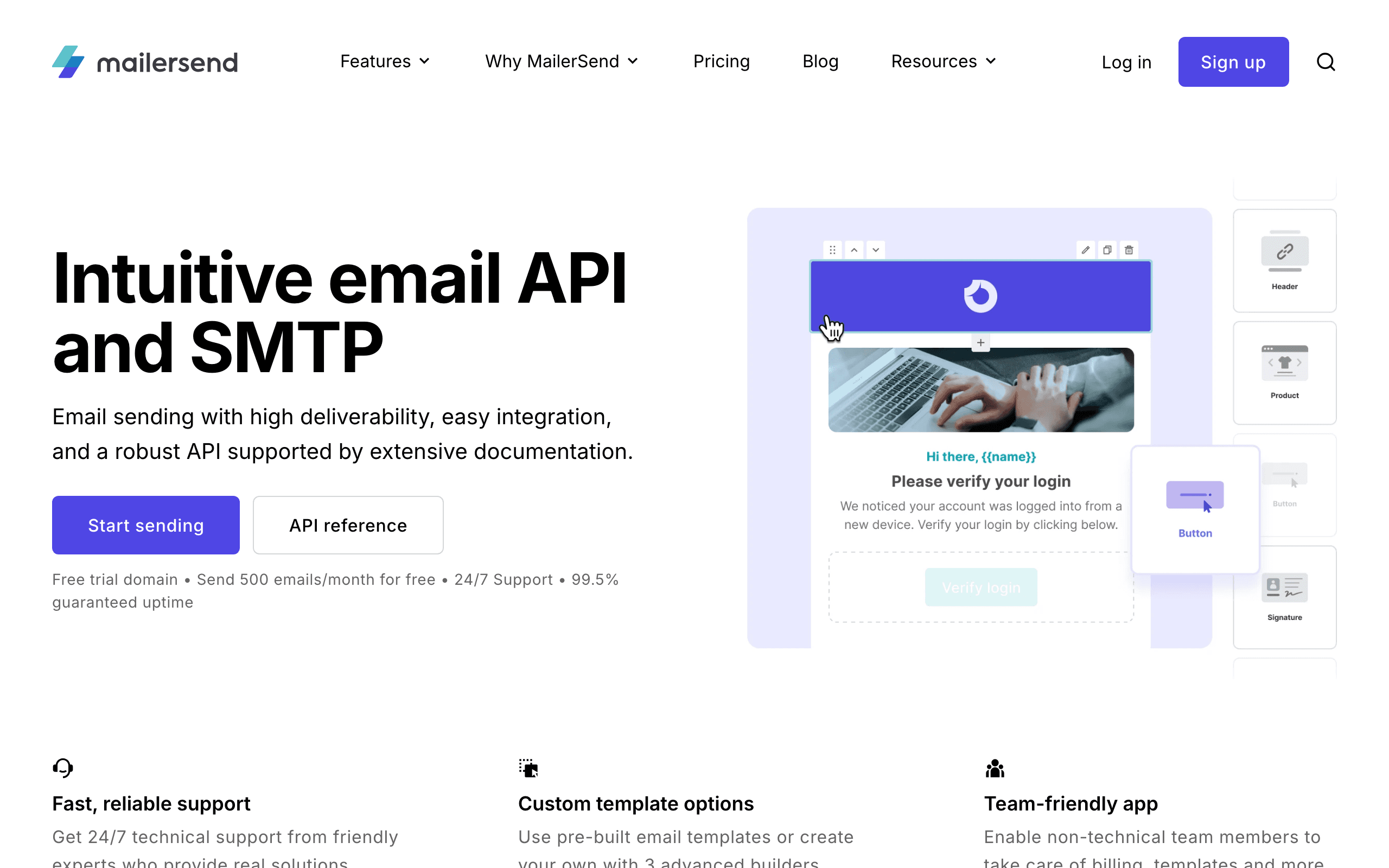
MailerSend and SparkPost serve different scales. MailerSend is modern and accessible with email verification. SparkPost is enterprise-focused with predictive analytics.
Target Market
MailerSend is accessible for SMBs with clear pricing and easy onboarding. SparkPost requires sales contact and custom pricing - clearly enterprise-focused.
Predictive Analytics
SparkPost has Signals for predictive delivery and engagement analytics. MailerSend has standard analytics. For advanced insights, SparkPost wins.
Email Verification
Both offer email verification. MailerSend includes it by default. SparkPost has it as a feature.
Making the Choice
Choose MailerSend for accessible SMB transactional. Choose SparkPost for enterprise scale and predictive analytics.
Predictive Analytics and Data-Driven Sending
SparkPost's Signals feature provides predictive engagement analytics that most email platforms simply do not offer. It can forecast which recipients are likely to engage, helping optimize send times and content. For data-driven organizations sending millions of emails, this intelligence drives measurable improvements.
MailerSend provides standard analytics that cover the essentials: delivery rates, opens, clicks, bounces. For most SMBs, these metrics are sufficient. The predictive layer becomes valuable primarily at enterprise scale where even small percentage improvements represent significant business impact.
The Acquisition Factor
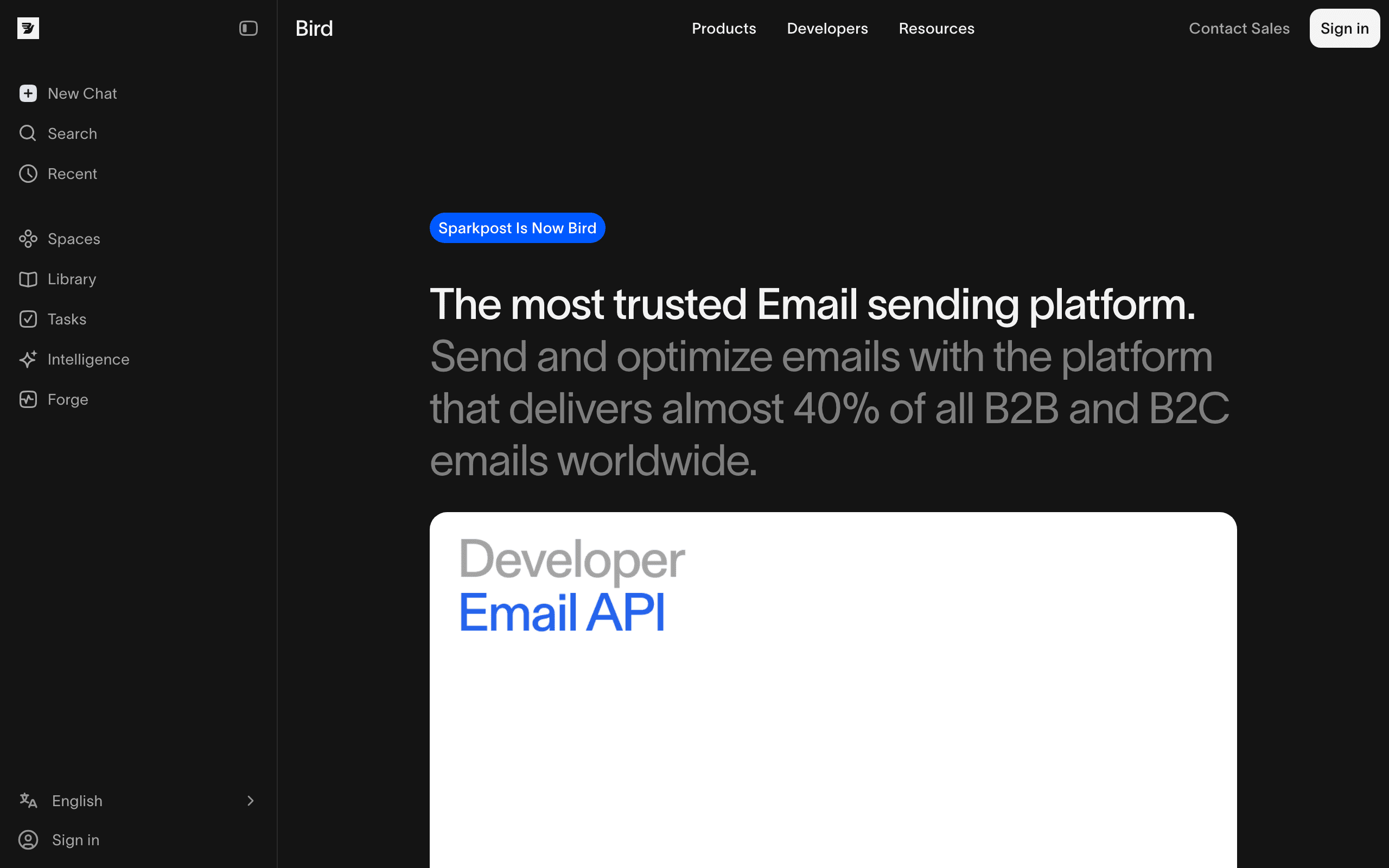
SparkPost's acquisition by MessageBird (now Bird) introduces strategic uncertainty. While SparkPost continues operating, its long-term roadmap depends on Bird's priorities. MailerSend, part of the MailerLite ecosystem, has a clearer independent trajectory.
For companies making long-term infrastructure decisions, vendor stability matters. Both platforms have corporate backing, but the nature and implications of that backing differ. Consider your comfort level with each parent company's strategic direction.
Self-Service vs Enterprise Sales
MailerSend's self-service model means you can sign up, configure, and start sending within an hour. SparkPost's enterprise focus typically involves sales conversations, custom pricing negotiations, and longer onboarding. For teams that value speed and autonomy, MailerSend's approach is significantly faster.
For organizations sending hundreds of millions of emails who need custom contracts and dedicated support, SparkPost's sales-led approach provides the personalized attention that high-volume senders require. The right model depends on your scale and procurement process.
Delivery Speed and Reliability
Delivery speed matters most for transactional mail like password resets and receipts, and both platforms build around that, but for different audiences. MailerSend keeps pricing clear and starts around $25 a month for 50,000 emails, with verification built in for smaller teams that want simplicity. SparkPost, now part of Bird, targets enterprise volume with custom pricing and features like Signals for predictive delivery analytics, aimed at senders who need visibility at a much larger scale.
API Design and Developer Experience
MailerSend's clear tiered pricing and built-in email verification make onboarding straightforward for a small team without a sales call. SparkPost requires contacting sales for custom pricing, which reflects its enterprise focus, but in exchange it offers Signals analytics and infrastructure proven at massive scale. If your team wants to self-serve and start sending today, MailerSend's accessibility wins; if you need enterprise support and predictive insight, SparkPost's process is the tradeoff worth making.
Scaling and Cost at Volume
At 50,000 emails a month, MailerSend runs about $25 with straightforward tiers and a free allowance of 3,000 emails to start. SparkPost doesn't publish a simple number at that volume, since its custom, enterprise-oriented pricing scales toward the massive sending volumes it's built for. Smaller teams generally find MailerSend's costs easier to predict, while organizations sending at genuine enterprise scale are the ones SparkPost's pricing model is actually designed around.
Use-case matchups
| Use case | Better fit | Why |
|---|---|---|
| SMB transactional email with clear pricing | MailerSend | MailerSend is easier to start and has transparent self-service tiers. |
| Enterprise-scale deliverability analytics | SparkPost | SparkPost's Signals and enterprise orientation fit high-volume senders. |
| Email verification built into the workflow | MailerSend | MailerSend makes verification a core part of the transactional stack. |
| Custom procurement and dedicated support | SparkPost | SparkPost is better aligned with large-volume enterprise buying processes. |
| Unified SaaS marketing and transactional email | Sequenzy | Sequenzy is the better fit when SaaS teams want campaigns and transactional email together. |
Best Fit by Company Size and Volume
Best transactional email service for SMB teams needing clear pricing
MailerSend is the better fit when the team wants self-serve pricing, verification, templates, and a modern transactional workflow without an enterprise sales process. It is easier to adopt for smaller and mid-sized teams.
Best email delivery platform for enterprise deliverability analytics
SparkPost is the better fit when high-volume sending, Signals analytics, dedicated support, procurement, and enterprise deliverability operations are real requirements. It suits larger senders with specialized email teams.
Best email platform for SaaS marketing and transactional email together
Sequenzy is the better fit when the team needs campaigns, transactional messages, and subscription lifecycle automation in one SaaS-focused system. It is not trying to be enterprise delivery analytics software.
Pricing reality
MailerSend is easier to price from the public tiers. SparkPost can be cost-effective at high volume, but the real number may depend on sales conversations, dedicated IPs, validation, support, and contract terms. For smaller teams, pricing clarity alone can make MailerSend easier to adopt.
Review signals
The reviews on this page point to reliability and value for MailerSend, with cautions about newer transactional-market maturity and limited marketing features. SparkPost reviews emphasize enterprise infrastructure, deliverability tools, predictive analytics, and the tradeoff of more complex pricing and rebranding under MessageBird/Bird.
Migration checklist
| Step | Moving to MailerSend | Moving to SparkPost | Moving to Sequenzy |
|---|---|---|---|
| Scope | Inventory transactional templates, domains, webhooks, and validation needs. | Inventory sending volume, analytics needs, IP strategy, and contract requirements. | Inventory campaigns, transactional templates, Stripe events, and contact fields. |
| Data export | Export suppression lists, templates, domains, and webhook mappings. | Export suppression lists, templates, streams, event webhooks, and analytics needs. | Export contacts, suppression records, lifecycle fields, and billing IDs. |
| Integration rebuild | Update API/SMTP calls and verification workflows. | Update API/SMTP calls, streams, webhooks, and analytics dashboards. | Connect campaign, transactional, and billing-triggered workflows. |
| QA | Test authentication, bounces, complaints, delivery events, and fallback handling. | Test message streams, Signals, webhooks, IP warmup, and reporting. | Test marketing and transactional paths from the same profile. |
Decision checklist
- Choose MailerSend if you want accessible transactional email with clear pricing and quick setup.
- Choose SparkPost if enterprise scale, predictive analytics, and deliverability tooling justify the complexity.
- Choose Sequenzy if SaaS lifecycle campaigns and transactional email should live in one product.









