
Overview
Flodesk and beehiiv serve newsletter creators with different priorities. Flodesk emphasizes beautiful design with predictable flat pricing. beehiiv focuses on newsletter growth with referral programs, recommendations, and monetization features.
Price Comparison
Flodesk is significantly cheaper - $38/month flat vs beehiiv's $99/month for 10k subscribers. That's 62% savings. At 50k subscribers, Flodesk stays $38 while beehiiv reaches $159. For cost-conscious creators, Flodesk's model is compelling.
Design Quality
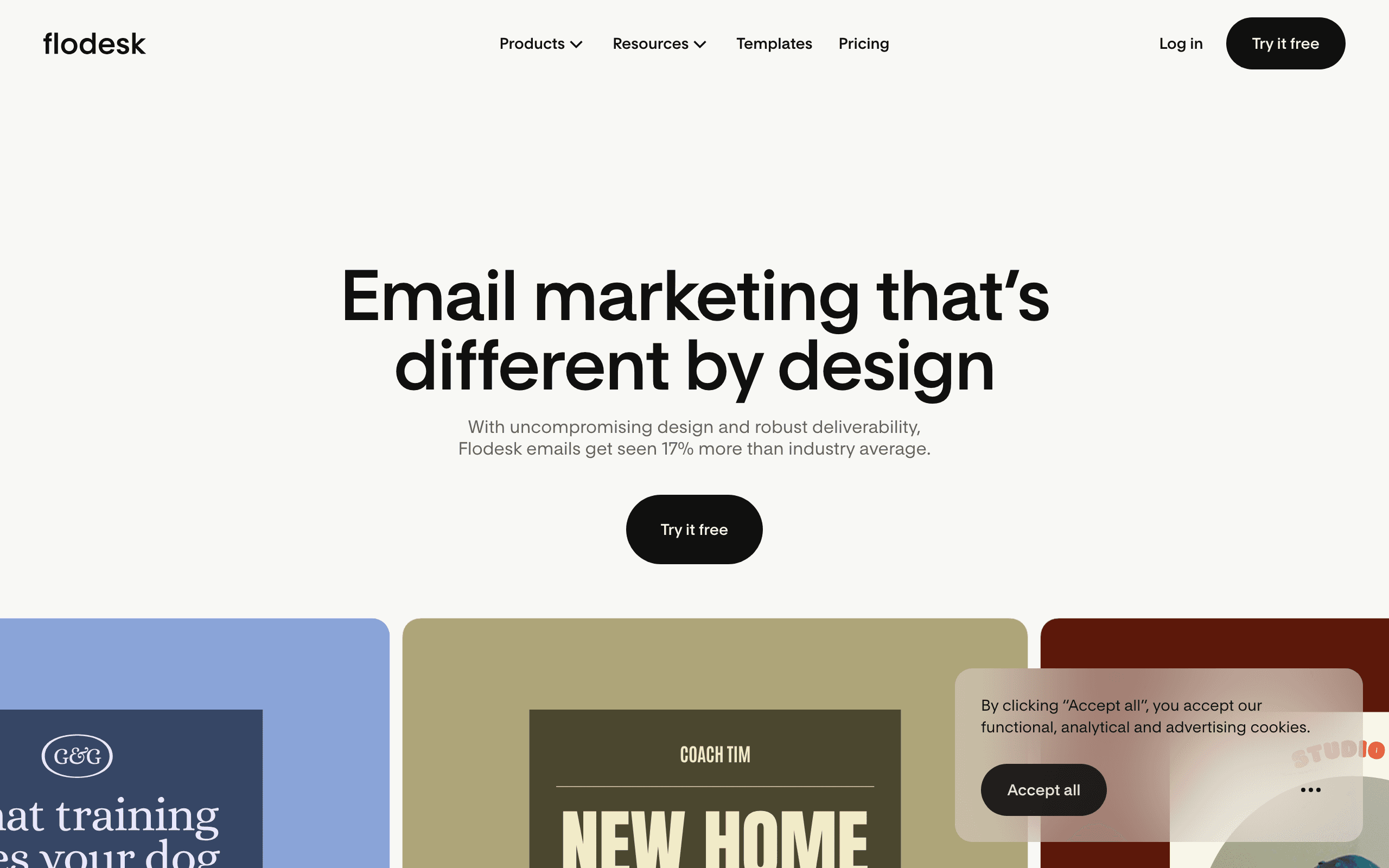
Flodesk has stunning, modern templates that make emails look professionally designed. beehiiv templates are good but newsletter-focused - they prioritize content readability over visual impact.
Growth Features
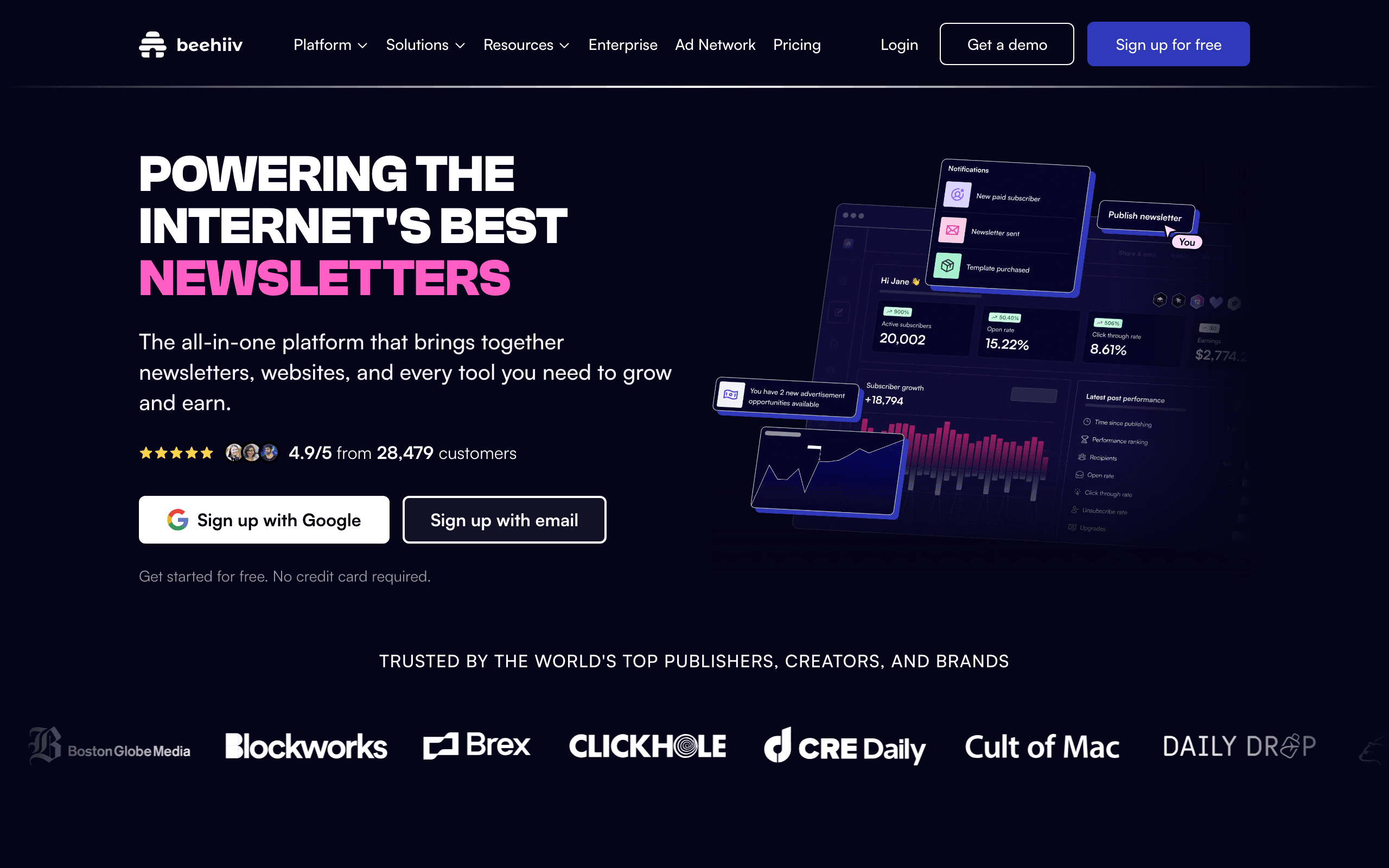
beehiiv offers referral programs, a recommendations network (Boosts), and built-in website/blog. These features help grow your audience organically. Flodesk has no growth features - it's purely for sending beautiful emails.
Monetization
beehiiv offers multiple ways to earn - paid subscriptions, ad network, and sponsorship tools. Flodesk has no monetization features. For newsletter creators wanting to earn, beehiiv provides comprehensive options.
Simplicity vs Features
Flodesk is simpler - focused on beautiful email design only. beehiiv has more to learn with growth tools, monetization, and website features. For creators who just want beautiful emails, Flodesk is more focused.
For SaaS Companies
Neither platform is built for SaaS. Both are newsletter tools for individual creators. For SaaS companies, consider Sequenzy which offers purpose-built SaaS features.
Making the Choice
Choose Flodesk for beautiful designs and predictable flat pricing. Choose beehiiv for growth features and monetization capabilities. For SaaS, consider Sequenzy.
Growth Engine vs Design Studio
The core difference is strategic: beehiiv treats email as a growth channel with built-in tools to expand your audience. Referral programs incentivize sharing, the Boosts network connects you with similar newsletters, and paid subscriptions create revenue. Flodesk treats email as a design medium where beauty and brand consistency matter most. Neither approach is wrong - it depends on whether your newsletter strategy prioritizes audience growth or brand presentation.
For newsletter businesses where subscriber count directly drives revenue through sponsorships or ads, beehiiv's growth tools are essential. For brands where email serves as an extension of visual identity - photographers, designers, lifestyle brands - Flodesk's design quality communicates professionalism that plain-text newsletters cannot match.
The Monetization Question
beehiiv offers multiple revenue streams: paid subscriptions, ad placements through their network, and sponsored content tools. These features turn newsletters into businesses. Flodesk has no monetization features - you send beautiful emails, but earning from them requires external tools. If your newsletter is a business rather than a marketing channel, beehiiv's monetization infrastructure is a significant advantage.
The trade-off is that beehiiv takes a revenue share on some monetization features, which means your effective cost includes both the subscription fee and a percentage of earnings. Calculate the total cost of ownership including revenue share before comparing raw subscription prices.
Free Tier Strategy
beehiiv offers 2,500 subscribers free, making it accessible for newsletter creators starting from zero. Flodesk requires payment from day one after a 30-day trial. For creators testing whether a newsletter will work, beehiiv's free tier removes financial risk entirely. You can validate your concept, build an initial audience, and only start paying when you have proven demand. This lower barrier to entry gives beehiiv an advantage in attracting new creators.
Review signals
The Flodesk reviews here are strongly visual-brand oriented: a photography newsletter looks polished at a flat price, but a second reviewer says Flodesk lacks referral and recommendation tools for growth.
The beehiiv reviews point in the opposite direction: referral programs and Boosts helped audience growth, while design polish is weaker than Flodesk. That makes this a growth-and-monetization decision rather than a generic newsletter software decision.
Use-case matchups
| Situation | Best first look | Why |
|---|---|---|
| Visual brand where every newsletter needs to look polished | Flodesk | Flodesk's design quality and flat pricing are strongest when presentation matters more than growth mechanics. |
| Creator trying to grow a newsletter audience from scratch | beehiiv | beehiiv's free tier, referral tools, Boosts, and website features support audience growth. |
| Publisher monetizing through paid subscriptions or ads | beehiiv | beehiiv includes monetization infrastructure that Flodesk does not provide. |
| Large visual list that sends regular branded updates | Flodesk | The flat plan can be attractive when list size grows and advanced newsletter monetization is not needed. |
| SaaS company sending product, billing, and lifecycle email | Sequenzy | Sequenzy is a better fit when email is tied to product events, Stripe, and transactional messages. |
Best Fit by Newsletter Business Model
Best email marketing tool for visual brand newsletters
Flodesk is the better fit when every issue needs to look like a polished brand asset. Visual creators, boutiques, coaches, photographers, and design-led businesses get more value from its templates and simple brand workflow than from newsletter growth mechanics.
Best newsletter platform for growth and monetization
beehiiv is the better fit when the newsletter itself is the business. Referrals, recommendations, Boosts, web publishing, analytics, ads, and paid subscriptions matter more than template polish when audience growth and monetization are the operating model.
Best email marketing tool for SaaS product newsletters
Sequenzy is the better fit when the newsletter supports a software product and needs to sit beside transactional, onboarding, retention, and Stripe-triggered billing email. That is a product lifecycle problem, not a creator newsletter platform problem.
Pricing reality
Flodesk's flat pricing is the headline advantage, especially once the list grows. But it only wins if the missing growth and monetization features are not required.
beehiiv's subscription price is higher at 10,000 subscribers, and monetization features may introduce additional effective cost through revenue share. For a serious newsletter business, that can still be worth it if referrals, Boosts, ads, and paid subscriptions drive revenue.
Sequenzy should not be compared as a newsletter growth platform. Its price is relevant for SaaS or commerce teams that need event-based email and transactional delivery, not creators choosing between design polish and newsletter monetization.
Migration checklist
| Workstream | Moving toward Flodesk | Moving toward beehiiv | Simplifying to Sequenzy |
|---|---|---|---|
| Subscriber data | Export subscribers, segments, opt-in status, forms, and suppression data. | Export subscribers, referral metadata, paid/free status, tags, and suppressions. | Export subscribers, attributes, tags, suppression status, and product identifiers. |
| Content archive | Rebuild best-performing newsletters as visual templates and branded layouts. | Import or recreate posts, newsletter archive, signup pages, and publication structure. | Rebuild campaigns and lifecycle emails around product or billing events. |
| Growth loops | Replace referrals or recommendations with external tools if needed. | Configure referral rewards, Boosts, recommendations, and website settings. | Use product, billing, and lifecycle triggers rather than newsletter-specific growth loops. |
| Monetization | Move paid newsletter revenue to an external checkout or membership tool. | Configure paid subscriptions, sponsorship workflows, and ad network settings. | Use Stripe-triggered lifecycle messaging; keep creator monetization elsewhere if needed. |
| Reporting | Track design engagement, click behavior, and list growth manually if needed. | Track audience growth, referrals, monetization, ad revenue, and engagement. | Track lifecycle, campaign, and transactional performance together. |
Decision checklist
- Is the newsletter primarily a brand touchpoint or a standalone media business?
- Does the team need referrals, recommendations, ads, or paid subscriptions?
- How much does flat pricing matter at the expected list size?
- Would losing beehiiv's website and growth loops hurt acquisition?
- Are product events or billing events more important than creator newsletter tooling?








