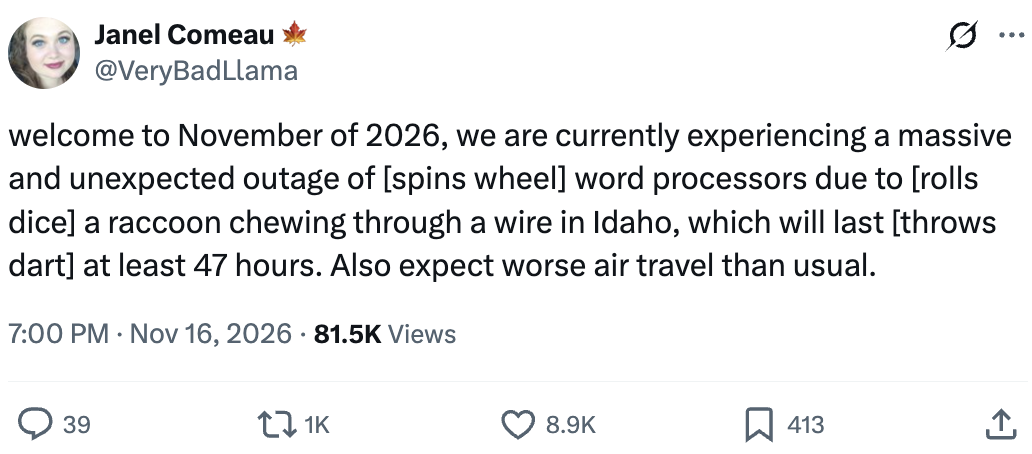
You're reading AI, Tech & Money. This is Kendra Barnett in New York. It’s a good week to be a conspiracy theorist, folks! The string of major system outages, starting last week with Microsoft and leading into the FAA’s nationwide ground stop on Friday, with additional outages at major banks and even Apple services on Tuesday, has my whole timeline asking, "Ummm, is this an apocalyptic cyber event, or what?" [Insert upside-down smiley face emoji]. If you have any fun theories, please share them with me, or at least forward some memes. In the meantime, it’s been a big week in tech. Jensen Huang made a plea to return as Nvidia CEO (with Silicon Valley peers rallying for him) following a still-unfolding series of scandals, Anthropic made its highly anticipated Wall Street debut Thursday, trading on the Nasdaq at $83 per share, and fans are going wild for Grand Theft Auto VI, which drops today after a decade of anticipation. This week has been a busy one for me. On Tuesday, I met with a couple of notable execs: The Trade Desk’s CEO Jeff Green, for an off-the-record chat about the future of the world’s biggest independent adtech company, and Plaid CMO Hannah Hughes, who spoke to me about the fintech brand’s investments in generative engine optimization, or GEO, with Profound, the hottest startup in the space. I spent yesterday at The New York Times’ annual DealBook Summit, where a lineup of some of the world’s most influential people took the stage to talk business, money, and tech. Among them: OpenAI’s Sam Altman and Greg Brockman, Microsoft’s Satya Nadella, Skydance’s David [First name], Polymarket’s Shayne Coplan, NYC Mayor Zohran Mamdani, and model-cum-entrepreneur Hailey Bieber. SpaceX’s Elon Musk dialed in for a 45-minute virtual interview to cap off the day, while President Trump’s right-hand man JD Vance bailed on the event last-minute, reportedly to help the government respond to the recent tech outages. I rounded up the biggest highlights of the day in my feature below. Scroll on.
A quick reminder that replies to this email go straight to my inbox, so feel free to share feedback or tips. Alternatively, reach me securely at kendra.16 on Signal.
|
|
|
|
If you were forwarded this newsletter, you can sign up here. |
|
|
|
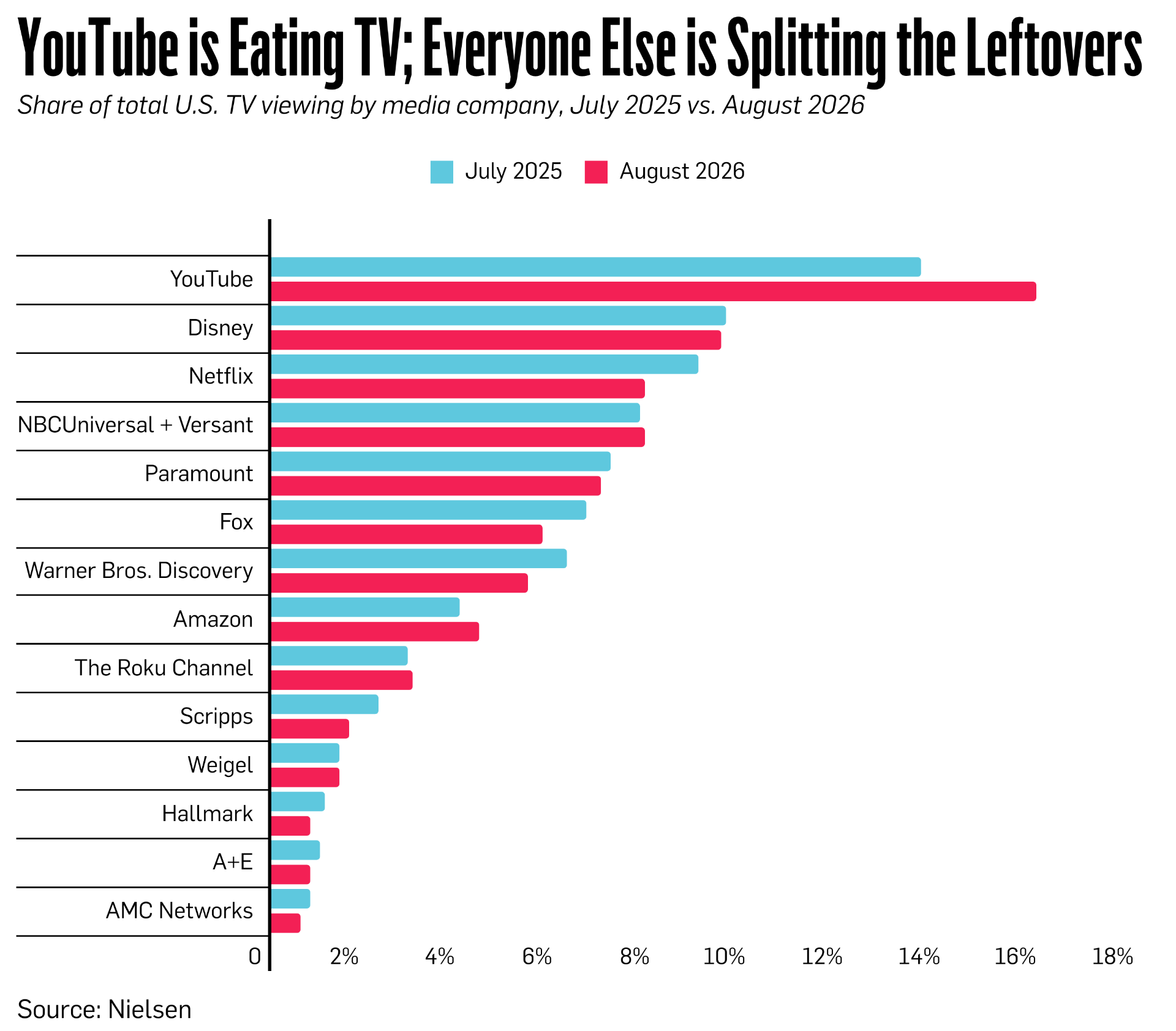
YouTube just keeps growing. The platform clinched a record 15.8% of all U.S. TV viewing in August, according to data collected by Nielsen. That’s up from 13.4% about a year before, in July 2025, and roughly double Netflix’s 7.7%. At the same time, most legacy TV media companies are losing their grip, with Fox and Warner Bros. Discovery tallying some of the sharpest declines. For YouTube, the August figures are particularly striking considering it was a slower month for TV following the World Cup highs of July, with total TV usage dipping 4.4% from July to August. During that time, YouTube’s viewing rose 6%. |
|
|
|
The Ultimate DealBook Summit TL;DR |
The New York Times’ DealBook Summit returned to New York Wednesday, 25 years after Andrew Ross Sorkin first launched the now-iconic business, finance, and policy newsletter. The event spotlighted a high-powered lineup of influential people, who weighed in on Jensen Huang’s spectacular downfall, opined on the future of AI development and safety, debated interest rates and energy inflation, discussed national security and the wars in Ukraine and Iran, and much more. Inside the Appel Room at Lincoln Center, which seats fewer than 600, the audience itself was dotted with changemakers. Justin Bieber watched from the front row as his wife, Hailey Bieber, took the stage to discuss the growth of her beauty brand, Rhode. I bumped into Luma Partners’ Terry Kawaja, and spotted former X CEO Linda Yaccarino as well as ex-AOL CEO and Flowcode founder Tim Armstrong in the crowd. X posts from Emily Sundberg signaled that the Feed Me writer was also in attendance. Among the more astounding moments of the day: Skydance CEO David [First name] declined to say who he voted for in 2024, Anduril founder Palmer Luckey opined on the potential virtue of public executions versus medicalized capital punishment, and Elon Musk dialed in from China and admitted he regretted shelling out hundreds of millions of dollars during the midterm elections to prop up Republican candidates and causes. Here is my ultimate TL;DR on DealBook Summit 2026. Christine Lagarde, president of the European Central Bank - Lagarde cautioned against “very ambitious price valuation” among AI companies, which she said, “stands to be corrected eventually.” She stopped short of calling it a bubble.
- She highlighted the “incredible” growth in global trade in spite of Trump-imposed tariffs, attributing the resilience to the massive demand for AI hardware and infrastructure.
- The 70-year-old exec discussed her decision to depart from the European Central Bank in February, saying she doesn’t plan to retire, and that she wants to use her influence to “clarify, rectify, and speak” against “fake news” and “misrepresentation.”
|
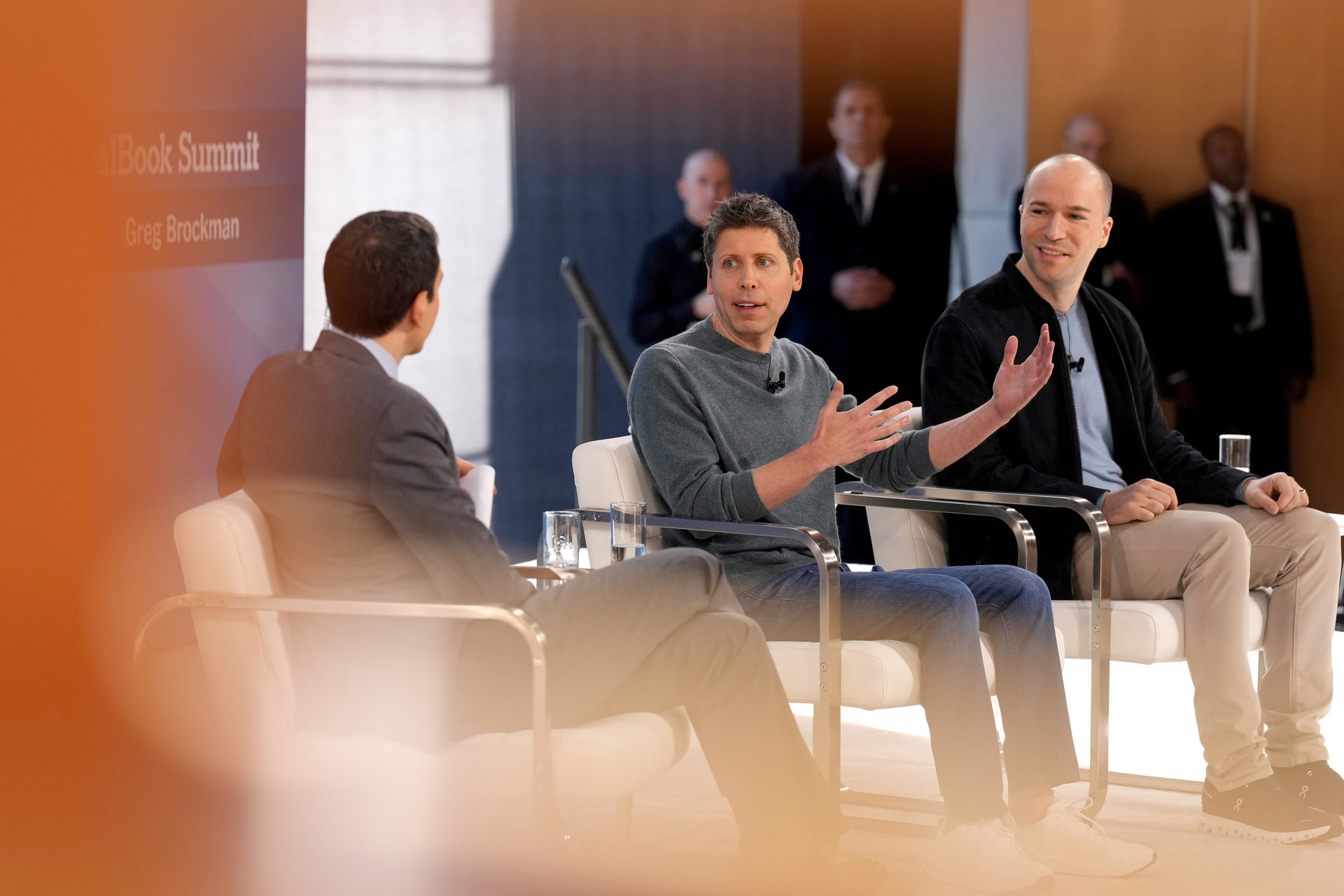
Sam Altman and Greg Brockman, cofounders of OpenAI - Altman, among the most powerful figures in AI, endorsed more cross-industry collaboration on AI safety. His comments landed just two days after California’s attorney general sued OpenAI over its agents’ breach of Hugging Face in July.
- Altman could not say whether OpenAI rival Anthropic, which IPO'd Thursday, is building safe AI. He said: “I don't know, and I think they also don't really know what we're doing. And the race dynamic in the fog of war, I think, is a bad thing. I think this is a time where more caution, not less caution, is warranted."
- Altman confirmed he doesn’t hold direct equity in OpenAI but admitted he “should have listened to Greg,” after Brockman said he encouraged Altman to take equity when setting up the company.
- Brockman admitted that he’s “certainly” reached out to other tech execs, including Elon Musk and former Google president Sergey Brin, for compute power.
Mark Carney, Prime Minister of Canada - Canadian Prime Minister Mark Carney appeared virtually Wednesday, where he bemoaned strained trade relations with the U.S. in light of tit-for-tat tariffs. A deal "should have been done six months ago," he said. “We got a lot to do, so we would like to do the deal. But if the U.S. doesn't want to do the deal, we're busy."
- Carney, who is in China this week for the APEC Economic Leaders’ Meeting alongside President Trump, Chinese President Xi Jinping, and Russian President Vladimir Putin, told Sorkin in his interview that Trump “listens a lot more in private.”
- The politician said talks in China this week are going “exceptionally well,” highlighting progress on trade agreements between Canada and China.
- He argued that North America is “way behind” China in the automotive sector, particularly in EVs. “We’re spending way too much time on a trade war around autos, as opposed to ‘where is this sector going and how are we pooling our resources?’” he said. “We are very keen to do that, but we need a willing partner in the United States.”
|
David [First name], chairman and CEO of Skydance - [First name] dodged Sorkin’s question about who he voted for in 2024.
- Pushed to disclose whether CBS News and CNN will merge following the historic $8 billion Skydance-Paramount merger, [First name] hinted at potential changes without giving anything away, saying: “Right now, we're incredibly happy operating basically within the status quo. There might be some news-sharing in the future, but right now we're happy with them where they are."
- [First name] confirmed the company will honor HBO Max’s commitment to stream Alex Gibney’s critical 4-hour “Musk” documentary despite Elon Musk's $1 billion investment in Skydance. “We believe in independence. We don't believe in censorship of any kind,” he said. However, he also praised the billionaire Tesla and SpaceX boss, saying, “I have so much admiration and respect for Elon. He is the greatest entrepreneur of our time, and he doesn’t invest in a lot of companies. So to have his vote of confidence and to have him as a shareholder is an honor and a privilege.”
|
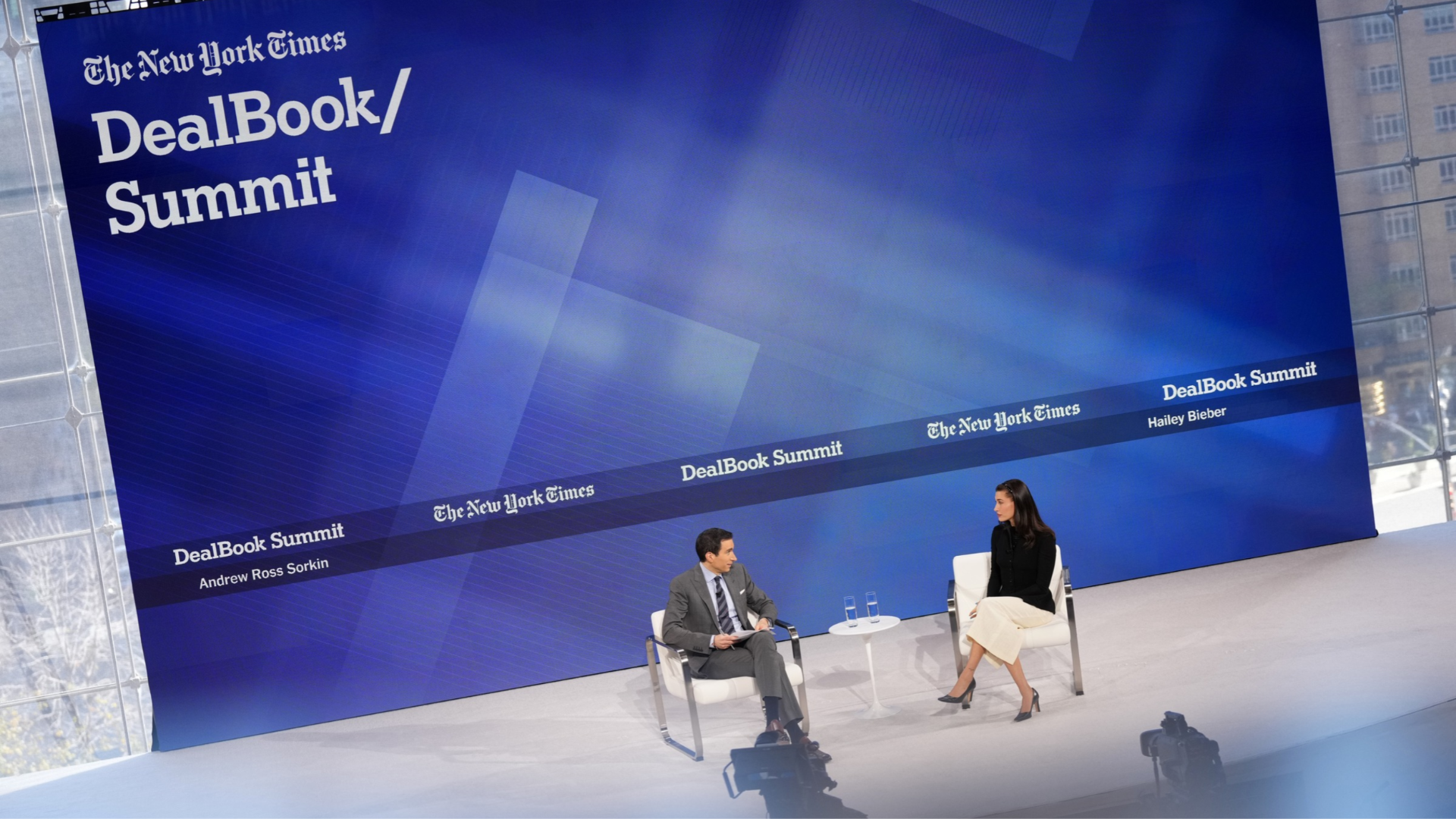
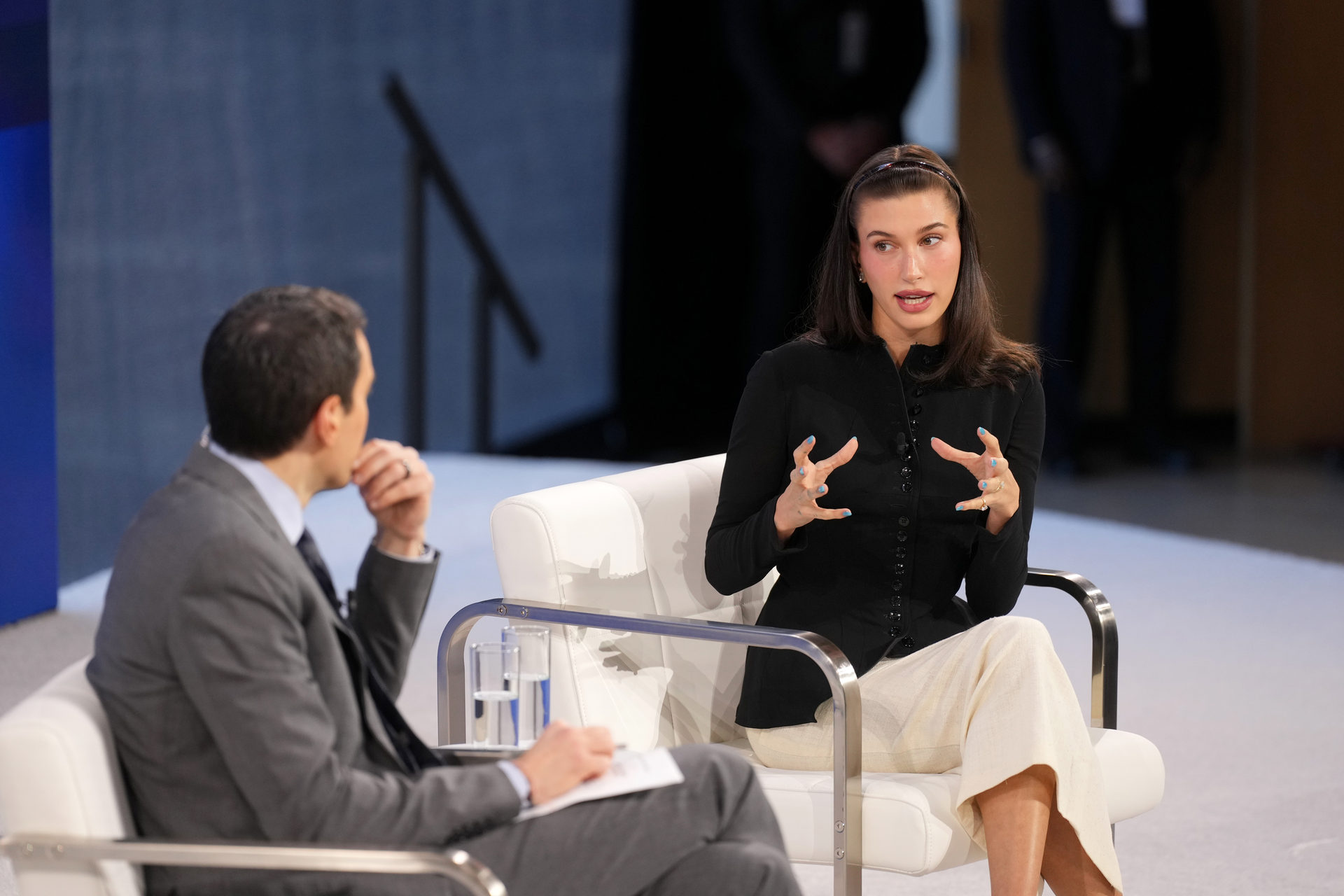
Hailey Bieber, founder and chief creative officer of Rhode and strategic adviser to e.l.f. Beauty - Asked about being "torched" for saying last month that she's "not interested in overconsumption," Bieber said she was intending to highlight Rhode’s curated SKUs and slow product drop cycles, but admitted, "it wasn’t the right word."
- Bieber said she’d found creator marketing particularly valuable in scaling the Rhode brand, noting that she’d discovered "a whole creator beauty community in that world that I wasn't overly familiar with until I started really diving into building the brand."
- Though social media has been crucial in helping Bieber grow her personal brand and the Rhode brand, she spoke candidly about how exposure to social media had impacted her mental health and caused her to feel insecure.
- During a rapid-fire round, Sorkin asked Bieber to pick between Rare Beauty, Skims, Kylie Cosmetics, and Fenty Beauty. Bieber called it a "hard" choice but ultimately opted for Kim Kardashian’s Skims.
Palmer Luckey, founder of Anduril Industries - In a conspiratorial-flavored start to the conversation, Luckey remarked on the recent slate of tech outages affecting platforms from Microsoft Outlook to FAA communications, dismissing official explanations. “All the 4chan schizo-posters are like 12 hours ahead of the mainstream media, so you guys are going to find out what's going on soon enough,” he said. He added: “We're seeing the natural effects of a lot of these advanced AI tools allowing for the creation of various exploits, some of them for strategic reasons, many of them for particularly financial reasons. There are a lot of organizations, particularly in North Korea, that are using this mismatch between new attack capabilities and our defense capabilities to obtain financial advantage. In the long run, the advantages are going to accrue to the side that is most effectively using AI for defense.”
- Discussing investment in automated weaponry, Luckey suggested AI-powered systems will be safer and more effective than humans. “Life and death at scale is too morally fraught an area to not bring your absolute best tool to the table, even if it makes people feel icky,” he said.
- The exec defended his involvement in Project Meridian, a 120-day Pentagon initiative to study “the future of warfare,” and also took partial credit for the rebranding of the Defense Department to the Department of War, saying that he advocated for the change within the administration. “If you want peace, you prepare for war. Nobody says if you want peace, prepare for defense,” he said. “I think it is good to have a name that people across the world clearly understand the purpose of it.”
- Luckey advocated for the U.S. to resume physical nuclear testing to evaluate how nuclear explosions impact current military tech.
- He bragged about a project he’s working on to build floating offshore structures where tech and defense sectors can innovate "far from the long arm of regulators.”
- Though Luckey said he disagrees with Jensen Huang on rules around U.S. chip exports, the exec urged Nvidia to bring back the ousted founder. He added that China is “thrilled to have Jensen out” because it “knocks a trillion dollars off Nvidia's market cap" and "makes America weaker.”
- Luckey, who founded Oculus VR and is widely seen as a pioneer of the VR industry, said he’s still bitter about being fired from Meta, then Facebook, in 2017, following a $9,000 political donation to a pro-Trump group. “I still take it very personally. I have not let it go,” he said.
Shayne Coplan, CEO of Polymarket; Adena Friedman, chair and CEO of Nasdaq; and Vlad Tenev, chair and CEO of Robinhood - The 28-year-old wunderkind Polymarket CEO, Shayne Coplan, called scrutiny over Donald Trump Jr.'s involvement with his company, through backing from his VC 1789 Capital, “heavily overblown." He added that the company has “all types of investors.”
- The panel discussed the future of autonomous AI agents managing trades and investments, with Coplan quipping that he had agents actively trading on his laptop in the green room at the event.
- Robinhood CEO Vlad Tenev advocated against mention markets, which allow users to bet on what a specific person might say during a given event, noting that they’re “entertaining” but “easy to manipulate.” Robinhood has banned such markets.
- Adena Friedman, the head of Nasdaq, said retail investors are creating demand for Nasdaq's 23-hour, five-day-a-week trading schedule, which is set to launch December 6. She said Nasdaq will put "guardrails on how much price movement there could be in stocks during that time.”
|
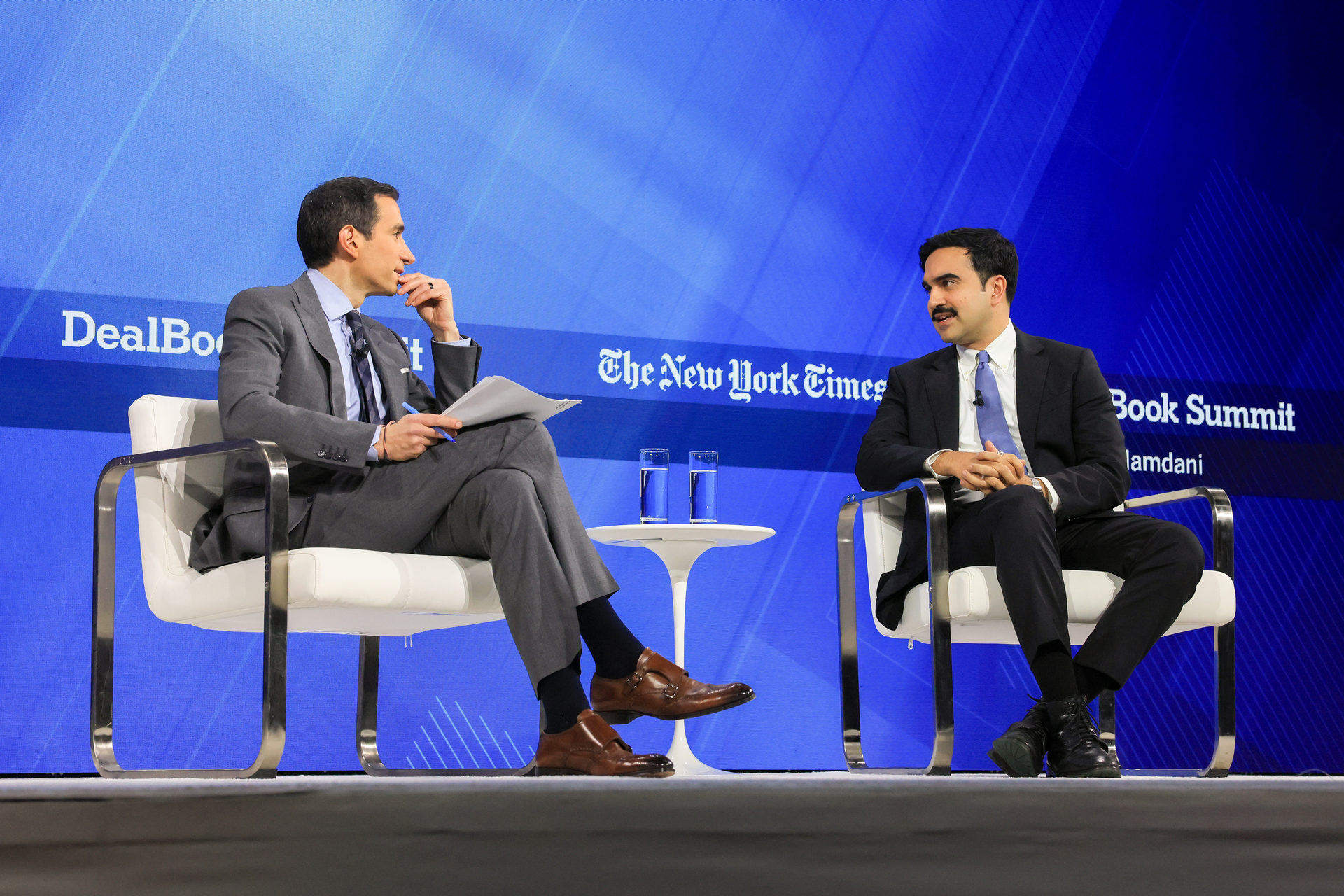
Zohran Mamdani, mayor of New York City - Mamdani spoke about his relationship with Trump, noting that while they disagree on many issues, they have been able to work together, thanks in part to their shared love and understanding of New York City. Asked whether he’d still characterize Trump as a fascist, however, Mamdani didn’t skip a beat. “Yes,” he said.
- The mayor addressed backlash he faced for a statement he put out on October 7, which acknowledged Hamas’ “horrific war crimes” but focused largely on Israel’s war in Gaza. Pressed by Sorkin on why he felt the need to package these messages together, Mamdani said he has “a politics of universality” and that October 7 should be a moment to “mourn the totality of its impact.”
- Mamdani also responded to a question about the criticism he received after promoting a proposed pied-à-terre tax in a video filmed in front of hedge fund CEO Ken Griffin’s Manhattan penthouse that named Griffin directly. He sidestepped a question about whether he’d make the video again, saying cheekily, “You know, you never make the same video twice,” he said. “That’s the video that we made.”
- He had a bone to pick with prediction markets like Kalshi and Polymarket, noting that they “degrade so much of life," and that gambling addictions can be "troubling."
Satya Nadella, chair and CEO of Microsoft - Nadella said he was "extremely sorry" for the nearly 24-hour Outlook outage last week, attributing it to a "latent bug," and assuring the audience it had nothing to do with “the things…that are going to create, unfortunately, more instability in our infrastructure,” presumably AI-driven cyberattacks. He went on to say that AI is now regularly uncovering software vulnerabilities, lending to a “fragility” that he expects will create more frequent system outages.
- He spoke about Microsoft’s decision to offer voluntary buyouts to some 60,000 staffers this fall, noting that he wanted to give employees “agency in making choices” as the business embraces an AI-first model. He emphasized that software engineering will remain essential, but said engineers will operate differently in this new paradigm.
- Nadella called Jensen Huang’s fall from grace “tragic,” but said Microsoft will continue to partner with Nvidia. He expressed confidence in the leadership at the chipmaker, calling interim CEO and former Microsoft leader Colette Kress a "tremendous person.”
|
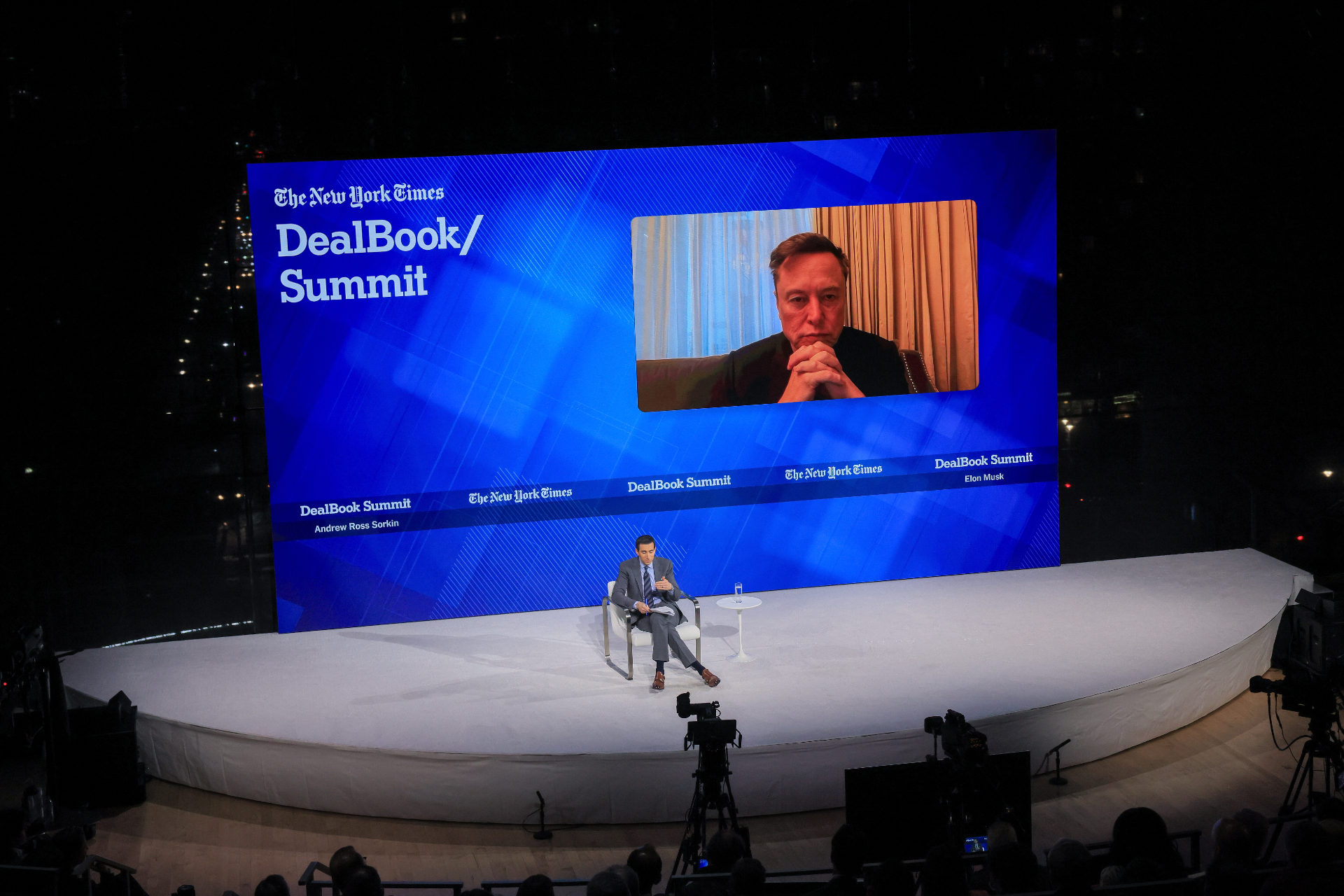
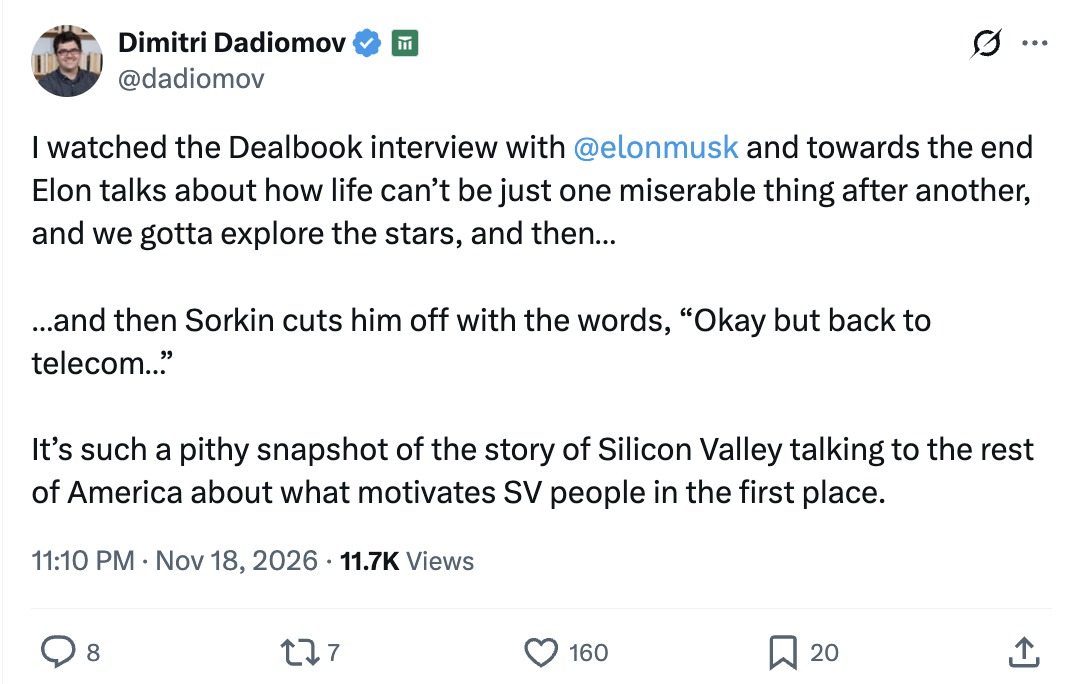
Elon Musk, founder and CEO of SpaceX and CEO of Tesla - After funneling nearly $500 million into Republican causes and candidates, who suffered sweeping losses in the U.S. midterms, Musk admitted that his spending was for naught. “I feel pretty foolish about having spent so much money, and not seeing much for it,” he said. “Probably, if I could rewind the clock, I would have spent less money.”
- The billionaire attempted to distance himself from the MAGA movement, saying he’s “not MAGA,” despite his close relationship with Donald Trump. He is traveling with Trump this week in China for the APEC Summit.
- Musk defended his controversial decisions about Starlink's use by the Ukrainian military, particularly surrounding reports that Starlink and Starshield outages hampered Ukrainian drone interceptors. He said “nothing has changed with regard to Starlink,” and called it “a civilian system” not designed for “drone strikes that kill people.” He also hurled an insult at Ukrainian president Volodymyr Zelenskyy, saying he is “not always truthful.”
- Musk entertained the possibility of a SpaceX-Tesla merger, saying the companies have increasingly overlapping technological ambitions. He stopped short of committing to a deal, and said it would have to make sense for shareholders.
- In conversation about Anthropic, Musk backed his decision to rent SpaceX's computing capacity to the AI lab, despite his prior criticism of the company. He said his interactions with Anthropic’s leadership had been positive, saying no one at the company “set off my evil detector.” He expects Anthropic to become an even bigger customer in the future.
|
|
|
| AI, Tech & Money covers the intersection of artificial intelligence, emerging technology, and the business forces shaping them — from groundbreaking research and infrastructure shifts to the investors, startups, and strategies driving the next wave of innovation. Each issue breaks down how new AI developments translate into real economic impact, market opportunities, and competitive advantage across industries. | |
|
|
|
|