US government bureaucracy is designed to punish working people |
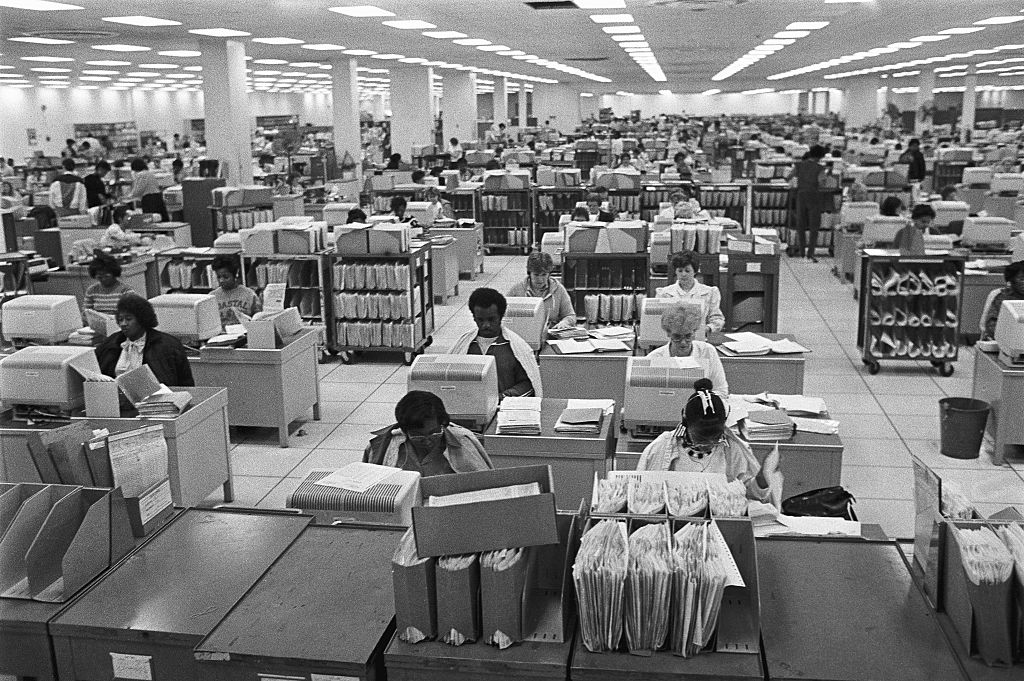
By Kelly McKowen For several years, I lived in Norway and enjoyed the privileges associated with membership in Folketrygden, or the National Insurance Scheme. One privilege that I still think about often is the relative frictionlessness of interacting with the Norwegian government. Seeing a doctor, for example, was effortless, and once my low annual deductible (as of 2026, ~$300) was paid, all testing and treatment for the year was covered without my involvement or input. My taxes were — without my prompting — prepared for me and sent for my amendment and approval. There was never anything to amend, of course. And because of the country’s leveringsfritak, or “silent acceptance” law, I did not even have to sign or submit a return. The great difference between how things are typically done in Norway and how they are done in my home country, the United States, was never clearer to me than it was one day when I had to visit the US embassy in Oslo to handle some paperwork. At that time, the embassy was housed in an angular, charcoal-colored Eero Saarinen building across the street from the Royal Palace. It was not only conveniently located but, despite its popular reputation as a “fortress,” simple and straightforward to access — entering the compound required flashing my passport and was about as easy as doing anything else in Norway. Imagine my surprise, then, when I arrived at the office where I was to complete my task: from the uncomfortable seating and oppressive lighting to the interminable wait and general feeling of disaffection, it was such an uncanny recreation of an underfunded Department of Motor Vehicles or post office that it could have been a movie set. There was even a small, cheaply framed photo of the president. The juxtaposition of this experience — which seemed designed to frustrate — and my happy dealings with Norway’s bureaucracies was, in its own way, radicalizing. I sense that Annie Lowrey, author of The Time Tax, has been similarly radicalized, albeit through extensive personal and journalistic exposure to the myriad forms in which people in the United States have their time wasted and disrespected — or “taxed,” as she puts it — in almost every conceivable interaction with the government. She is clearly and justifiably pissed, and her book endeavors to show that the problem is, though widespread and deeply rooted in a particular national history of racial exclusion and class oppression, fixable. There is a world, she argues, beyond our current patchwork of fool’s errands and wild-goose chases. |