 | |||||||||
 | |||||||||
| ► Watch the podcast now | |||||||||
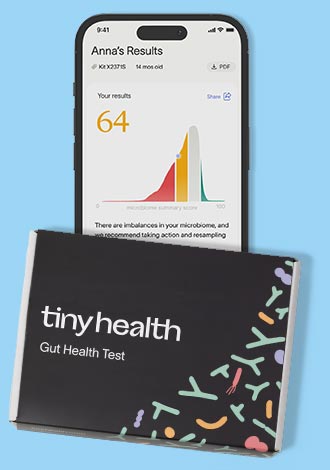
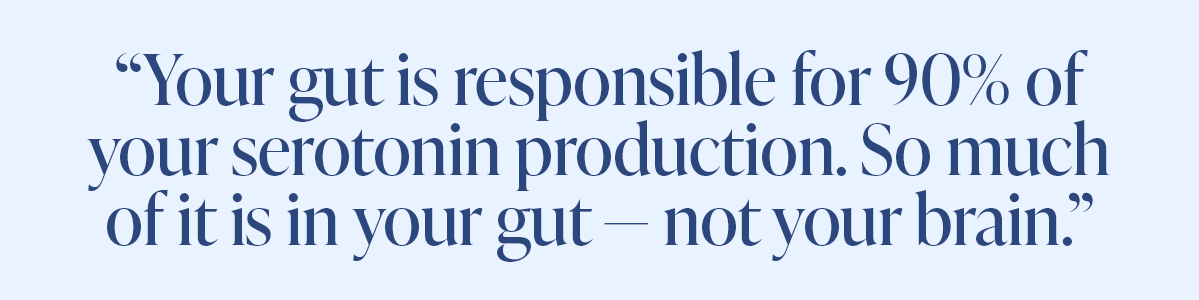
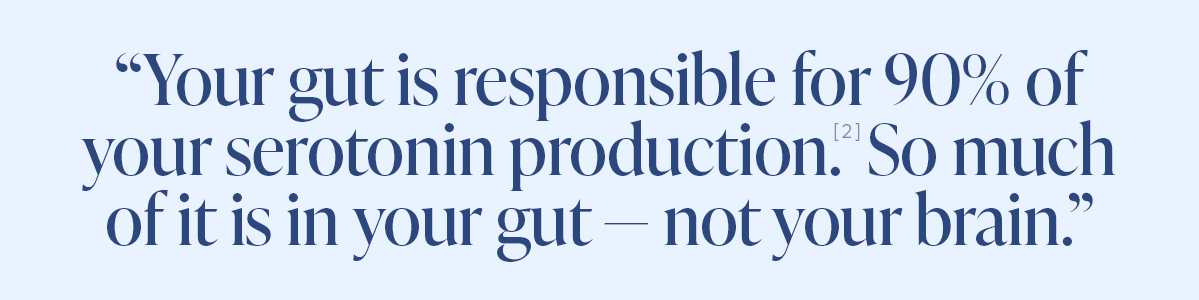
| Microbiome expert and Tiny Health founder Cheryl Sew Hoy explains the surprising science connecting gut bacteria to how well your family rests. Her research, sparked by her daughter’s fractured sleep, points to a surprisingly direct chain. She explains that 90% of your body's serotonin is made in the gut, not the brain.[1] This makes your gut the upstream source of melatonin, the hormone that governs sleep. | |||||||||
 | |||||||||
 | |||||||||
| C-section babies and those exposed to antibiotics early often lack bifidobacterium — the key bacteria for infant gut health and immune training.[2] Without it, babies can experience disrupted sleep. [3] Fortunately, Cheryl's experience tells us that restoring the right probiotic strain and making early interventions can course correct. She says: | |||||||||
 | |||||||||
| The relationship runs both directions: poor sleep triggers inflammatory molecules that degrade the gut, creating a cycle.[4] But the gut and brain are physically linked via the vagus nerve [5] — meaning calming tools like breathing, meditation, and mindfulness can activate the parasympathetic nervous system and feed back into gut health too.[6] The good news: the gut is malleable — especially in those early years — and the tools to shift it are simpler than most parents think. | |||||||||
| |||||||||
| | |||||||||
| ► Watch the podcast now | |||||||||
| |||||||||
| |||||||||
| |||||||||
| [1] Yano et al. "Indigenous bacteria from the gut microbiota regulate host serotonin biosynthesis." Cell 161(2):264–276 (2015). [2] Chen et al. "Impact of Maternal Intrapartum Antibiotics, and Caesarean Section with and without Labour on Bifidobacterium and Other Infant Gut Microbiota." Microorganisms 9(9):1847 (2021). / Dai et al. "Gut Microbiota and neurodevelopment in preterm infants." Microorganisms 13(9):2213 (2025). [3] Kumar & Bandi. "The sleep–gut–brain axis and its role in early childhood development." J. Pediatr. Neurosci. 21(1):35–43 (2026). / Kerff et al. "The gut microbiota and sleep in infants: a focus on diurnal rhythmicity patterns." Gut Microbes Reports 3(1):2649096 (2026). [4] Sun, Fang, Wang, Liu. "Sleep deprivation and gut microbiota dysbiosis: Current understandings and implications." Int. J. Mol. Sci. 24(11) (2023). [5] Hwang & Oh. "Interaction of the vagus nerve and serotonin in the gut-brain axis." Int. J. Mol. Sci. 26(3) (2025). [6] Gerritsen & Band. "Breath of life: the respiratory vagal stimulation model of contemplative activity." Front. Hum. Neurosci. 12:397 (2018). / Laborde et al. "Vagal tank theory and the role of slow-paced breathing in the regulation of the autonomic nervous system." Neurosci. Biobehav. Rev. (2022). [7] Mukhopadhya & Louis. "Gut microbiota-derived short-chain fatty acids and their role in human health and disease." Nat. Rev. Microbiol. 23(10):635–651 (2025). [8]Smith et al. "Gut microbiome diversity is associated with sleep physiology in humans." PLOS ONE 14(10):e0222394 (2019). [9] Woo & Kim. "Effects of slow-paced breathing and humming breathing on heart rate variability and affect." Physiol. Behav. 299:114972 (2025). / Jensen et al. "Modulating heart rate variability through deep breathing exercises and transcutaneous auricular vagus nerve stimulation." Sensors 22(20):7884 (2022). | |||||||||
| BetterSleep Health, LLC ©2026 155 East 44th St., Floor 17, New York, NY 10017 This email was sent to you@example.com Unsubscribe • Privacy Policy • Terms of Service |