Hello, and welcome back to On Background—this is ADWEEK senior media reporter Mark Stenberg, reporting to you live from Lisbon, where lashing rain and high winds from Storm Charles have shuttered the city and cancelled the second day of Web Summit. The news broke on Tuesday evening that the conference would officially have to suspend operations due to potential safety concerns. I was at a private dinner at Prado Wine Bar, hosted by the agency Code and Theory, when the chief marketing officer of Qualcomm, Don McGuire, abruptly shared the official email, telling the table, “We’re all free!” To my left, Tusar Barik, the senior vice president of marketing at New York Times Advertising, immediately began making arrangements to book an earlier flight out of the city. So now, instead of a second day of source meetings at the Web Summit speakers lounge, I and nearly every other panelist, all of whom are staying at the same hotel, are laid up in our rooms. There are worse fates to be suffered, of course, but I do sympathize with anyone who traveled all the way here to participate in programming that has since been cancelled. Luckily for the readers of On Background, I packed in a full day of meetings on Tuesday, as well as dispensed with my moderating duties, so we have a great newsletter this week, despite the best efforts of Storm Charles. (Scroll down to the bottom to see a photo from my panel with Jackie Jantos, the CEO of Hinge.) For my feature story, I spoke with the executive editor of The Washington Post, Matt Murray, about the tumultuous year the publisher has had, its newfound stability under the recently appointed chief executive Jeff D'Onofrio, and its revenue strategy for the new year. Our conversation unearthed a few little scoops, particularly as it relates to some of the commercial traction the publisher has seen lately. I also learned that D'Onofrio is referred to internally as “Jeff D.,” owing to the presence of another prominent Jeff at the organization. Similarly, in Quote/Unquote, I spoke with the chief executive officer of Le Monde, Louis Dreyfus, who shared the stranger-than-fiction origin story of its licensing deal with OpenAI. While protests over economic inequality are still roiling much of Paris, Dreyfus has done his small part to keep the newsroom content—the publisher uses revenue from its OpenAI licensing deal to pay its staff an annual bonus. I also shared a few notes on some of the more interesting developments in the industry lately, including a slate of leadership changes and layoffs at Slate and City Cast, both of which are owned by Graham Holdings—itself the former owner of The Post, as fate would have it. The Associated Press and Morning Brew Inc. also make an appearance, both of which notched some notable victories in the last week. Finally, as always, I included a few of my favorite stories of the week at the bottom of the newsletter, this week featuring stories from The Verge, The New Yorker, and The New York Times. Replies to this email go straight to my inbox, so feel free to reach out with tips, pitches, and feedback. You can reach me at mark.stenberg@adweek.com or on Signal at 210-705-3284. If you are not yet subscribed to On Background, you can click here to do so for free. |
|
|
|
If you were forwarded this newsletter, you can sign up here. |
|
|
|
City Casting Call (EXCLUSIVE): The cofounder and chief executive of City Cast, David Plotz, is stepping away from the nationwide network of city-based podcasts after six years, according to the company. As part of the transition, the publisher is naming cofounder and former chief creative officer Andi McDaniel as its new chief executive. Last October, I wrote about the recalibration afoot at City Cast, which was shuttering certain markets, expanding others, and tweaking its editorial strategy. At the time, it was generating around $5 million but had not yet reached profitability. Continued: The leadership change comes at an intriguing moment: City Cast is backed by Graham Holdings, which also owns Slate. In late October, Slate named its editor in chief, Hillary Frey, as its new CEO, replacing Dan Check; then, last week, it laid off a small number of staff, according to an inside source. It would appear that some end-of-year housekeeping is underway at Graham, which—after selling The Washington Post to Jeff Bezos in 2013—has struggled with some of its media holdings. In 2023, after paying $348 million for the media company Leaf Group, which itself would shutter in 2025, Graham Holdings president and CEO Timothy J. O’Shaughnessy admitted to investors that they had “overpaid” for the asset. “I screwed this one up,” he wrote in a shareholders letter at the time. AP Up (EXCLUSIVE): The Associated Press had a big week last week. In addition to penning a content licensing agreement with Anthropic, the first of its kind for the artificial intelligence firm, the publisher also grew elections revenue by more than 80% compared to the 2022 midterms, according to the company. The AP saw its highest traffic since the 2024 election, with over 23 million pageviews, a sixfold increase over election night in 2022. Multimedia Brew: The New York Times veteran Nina Lassam joined Morning Brew Inc. as its first senior vice president of multimedia on Wednesday, MBI chief executive Robert Dippell shared on LinkedIn on Tuesday. Lassam worked at The Times for nearly a decade, where she helped build out its now robust audio and video offerings. The hire underscores just how seriously Morning Brew Inc. is taking its podcast, social video, and creator franchise efforts.
|
|
|
|
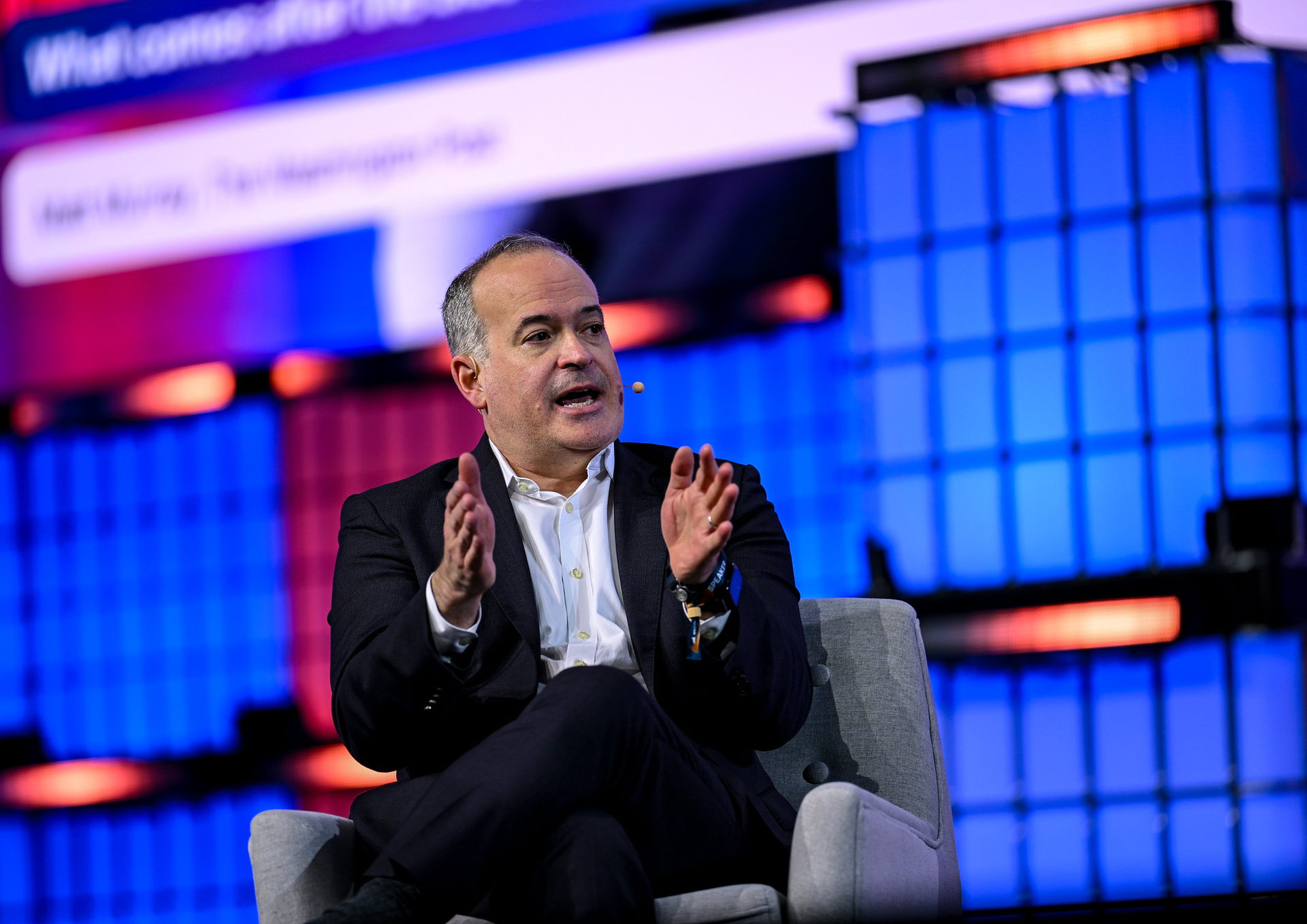
Louis Dreyfus is the chief executive officer of Le Monde, the largest news publisher in France. Under Dreyfus, whom I spoke with at the Web Summit conference in Lisbon, the Le Monde newsroom has grown from around 310 journalists to nearly 600 and now has 720,000 subscribers—620,000 of which are digital-only. It stands out among European news publishers for its ongoing efforts to expand its subscriber base in the U.S., which I have written about in the past, as well as for its embrace of artificial intelligence. It was the first French publisher to sign with OpenAI, and it has since struck deals with Perplexity and Meta. In our conversation, Dreyfus shared a number of surprising elements, including the unlikely way in which the OpenAI deal originated, what Le Monde did with the licensing revenue it gained from the deal, and why it has avoided the fallout from Google Zero. This interview has been edited. Mark Stenberg: Le Monde was the first French publisher to sign with OpenAI. How did that happen? Louis Dreyfus: In fall 2023, I saw that Sam Altman was speaking at Station F, so I went. When they took questions from the room, I raised my hand and said: “I’m the CEO of Le Monde. Seventy-five percent of my revenue comes from readers. You need reliable data, and you give it to users for free. If you want Le Monde to keep publishing reliable news, we need to negotiate.” He said he knew Le Monde and would be happy to. Three months later, we had a deal. Mark: What have the partnerships actually delivered? Louis: First, a significant and sustainable revenue stream at a time when advertising in Western Europe is slow. Second, a new audience, as the readers click through far more than people coming from Facebook, and they convert to subscriptions. And I decided to redistribute a share of the licensing revenue from the deal to the newsroom, so every journalist at Le Monde gets an annual bonus from it. Mark: Anthropic has largely avoided these kinds of deals. Have you spoken with them? Louis: Our last conversation was almost a year ago. They said it was too early and that their focus was B2B, not general news. I believe that will change, though, as they prepare to go public and investors will ask whether their data is stolen or legitimate. The more surprising holdout is Mistral, a French unicorn backed by the French government that refuses to sign a licensing deal. Mark: Google rolled out AI Overviews in France this summer. What impact have you seen? Louis: It launched in mid-July, and we haven’t seen a drop in audience. I was in London last week, and British publishers said the same about general news. They lost traffic on evergreen content, food, automotive, and consumer electronics. |
|
| |
THE LEDE: The Washington Post Nears Breakeven After ‘Hundreds and Hundreds of Millions’ in Losses In an interview at Web Summit in Lisbon, executive editor Matt Murray makes the case that The Post is poised for a rebound in 2027 |
|
|
|
After years of steep losses, layoffs, and leadership churn, The Washington Post is within striking distance of breaking even financially, according to executive editor Matt Murray. In a conversation at the Web Summit conference in Lisbon, Murray argued that the publisher is poised to turn a corner in 2027. While that won't be easy, The Post has recently begun rebuilding its commercial momentum, stacking up a handful of revenue wins alongside a string of editorial scoops. In the third quarter, direct advertising sales at The Post notched their strongest year-over-year growth since 2021, while programmatic revenue was up 48% year over year as of September, according to a company spokesperson. Meanwhile, the newsroom is hiring again, adding James Politi from the Financial Times, Nancy Cook from Bloomberg, and Ian Ward from Politico, among other additions. The Post is also relaunching its Ben Bradlee award, an internal designation that honors the work of an outstanding reporter. On Tuesday, the award will go to Hannah Natanson, whose home the FBI raided in January, according to Murray. The Post will also be recognizing Heidi Levine, the photojournalist who was attacked by Israeli settlers in the occupied West Bank last month. In the Q&A below, Murray reflects on five years of turmoil at The Post, the first few months of the D’Onofrio era, and his plan to own post-Trump Washington. This interview has been edited for length and clarity. Mark Stenberg: How did election night go? Matt Murray: We had a good night, and we wanted and needed that. This whole year has been about getting the layoffs behind us, but more than that, getting five years of turmoil behind us. The layoffs were terrible, but they were a kind of climax to a long stretch of buyouts and staff turnover. We hoped they would punctuate it, and that seems to be what happened. The rest of the year has been about stability, core coverage, and breaking scoops. Mark: You were recruited to The Post by Will Lewis, who left in February after much controversy. How does the leadership style of his successor, Jeff D’Onofrio, stack up? Matt: I’m cautious here. Will is a friend and somebody I’ve worked with for a long, long time, so I don’t want to make too much of a contrast. But we had some deep-seated challenges in how we were organized and how we understood our audience. We didn’t have great data. When I arrived two and a half years ago, too much of the newsroom was still oriented toward print. We had more foundational work to do than people realized. Jeff brings a low-drama, data-oriented focus on fundamentals. He’s very calm. He’s about the journalism, but he knows he’s not a journalist. He’s a business guy, and he relies on us. We haven’t had any clashes about that. Mark: Where does the business stand? Matt: I’ll be honest. We had years of losses, and steepening losses. That’s the truth. We’re a private company and don’t share the figures, but it was hundreds and hundreds of millions of dollars. Now we’re within striking distance of break-even, and I expect next year will be our best year in seven years. We’ve done the right-sizing we needed, which was tough. Mark: Layoffs might reduce costs, but where do you see growth coming from? Matt: The Post has got to be about Washington, and I didn’t think we were dominant enough there in reach and comprehensiveness. We’ve had real successes this year: the ballroom, the Kennedy Center, the monuments. But how do we own post-Trump Washington? The whole city has been oriented to Trump for 10 years, and he’s still the center of the action. But last week was about millennials and Gen Z coming to the fore. I’m an older guy, and I’m trying to understand the world through their eyes. This is the first time in my lifetime that the boomers are receding and the next generations are rising. That’s the audience we want for news. Mark: What editorial changes are you making that will help drive new business? Matt: One thing we’re trying to do better is understand franchises. We suspended our daily podcast because costs overran the revenue, but now we can sell on the ad side, including through a partnership with Acast. The Post talked for years about [advice columnist] Carolyn Hax having a podcast. She has one now, and it’s taking off quickly. Personal finance reporter Michelle Singletary has one too. We’re reviving a version of the daily podcast, and we have at least half a dozen people for whom we can find that sweet spot of newsletter, podcast, and writing. Mark: People poke at The Post for not acquiring properties the way The Times does, which has recently set its sights on Letterboxd. How do you see that? Matt: The Times deserves enormous credit for how they reoriented the entire company and how it interacted with the newsroom. It took them many years. In hindsight, it seems inevitable, but it wasn’t. Our company struggled during that decade. We had successes in the more open internet age, like Facebook partnerships, and of course we had a Trump bump. We went from something like 35,000 subscriptions before Trump to 3 million. In the long run, we probably need our version of that model, with the journalism at the center. But we’re still getting the Post itself where it needs to be. |
|
|
|
"Who could have guessed that the guy who was out here signing titties might not have great judgment about how to behave around women?" |
— The Verge reporter Elizabeth Lopatto, on you know who READ MORE |
|
|
|
"Can the internet as we know it survive without a reliable flood of search traffic?" |
— The New Yorker’s Kyle Chayka, on what the decline of search means for the open web READ MORE |
|
|
|
"I think an adult death is perhaps two or three times worse than an infant’s death." |
— Anthropic founder Dario Amodei, exercising effective altruism in a 2010 blog post READ MORE |
|
|
|
"In five, 10 years, we’re going to look back and be, like, Why the fuck is LeBron James doing these ads?" |
— Gambling researcher Isaac Rose-Berman, on the normalization of sports-betting READ MORE |
|
|
|
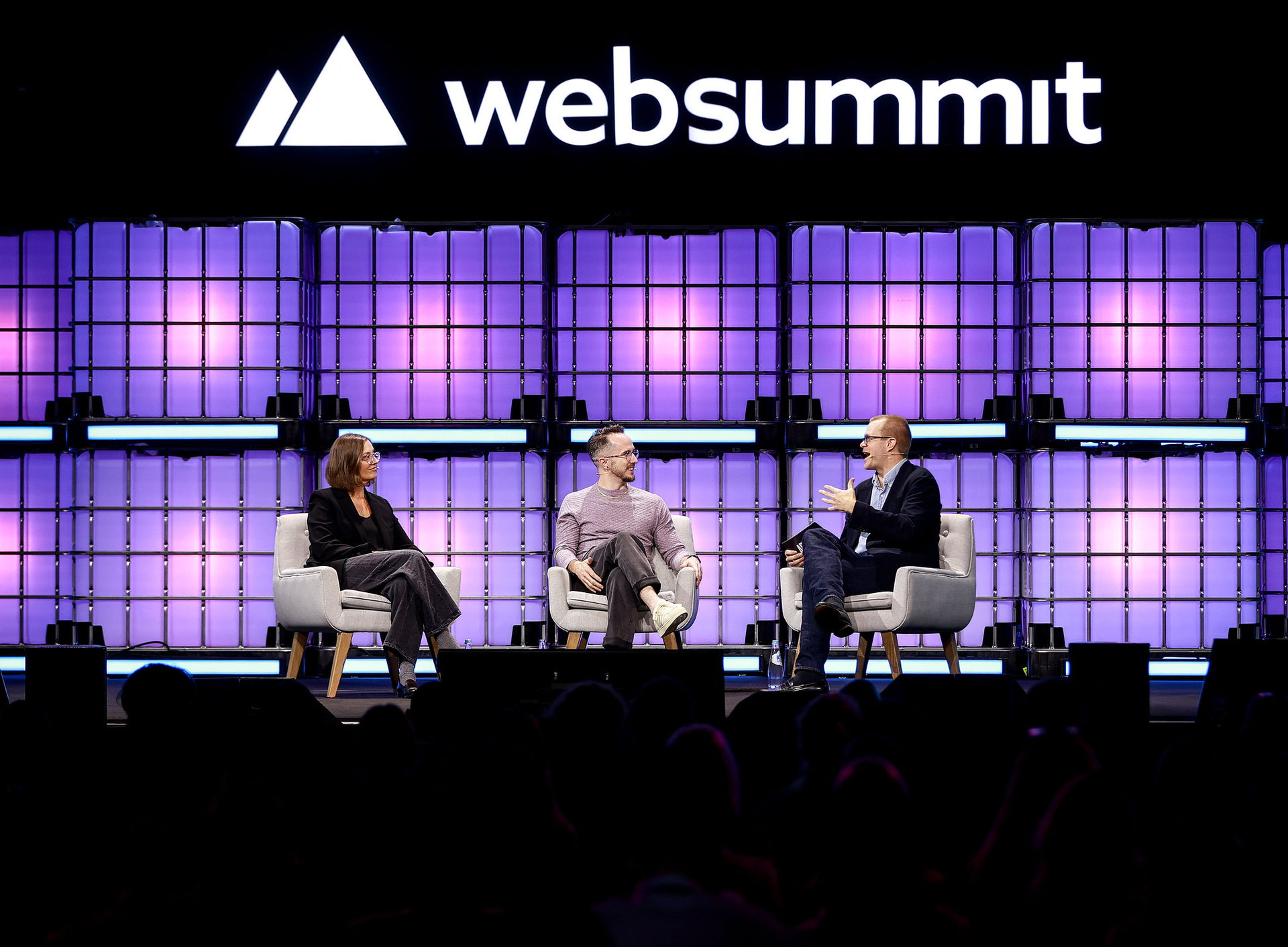
At the Web Summit conference in Lisbon, speaking with Hinge CEO Jackie Jantos (left) and Sylvain founder and CEO Joey Camire (center) |
|
|
|
Mark Stenberg is Adweek's senior media reporter covering the business of digital and print media and publishers, including their advertising, marketing and editorial strategies. Before joining Adweek Mark was a reporter for Business Insider. | |
|
|
|
|