|
🔥 [ this week's Hear Me Out ]
We solved one of the biggest problems in an agent's existence right now. Signing in.
On Monday, Nikita Bier called it "the most important technology problem of the next 5 years": a broadly accepted standard for agents to identify themselves to service providers, so apps can treat them differently from human traffic. He was quoting Jessica Lessin, who watched half her Muse use cases vanish in two days because the browser just would not do them anymore.
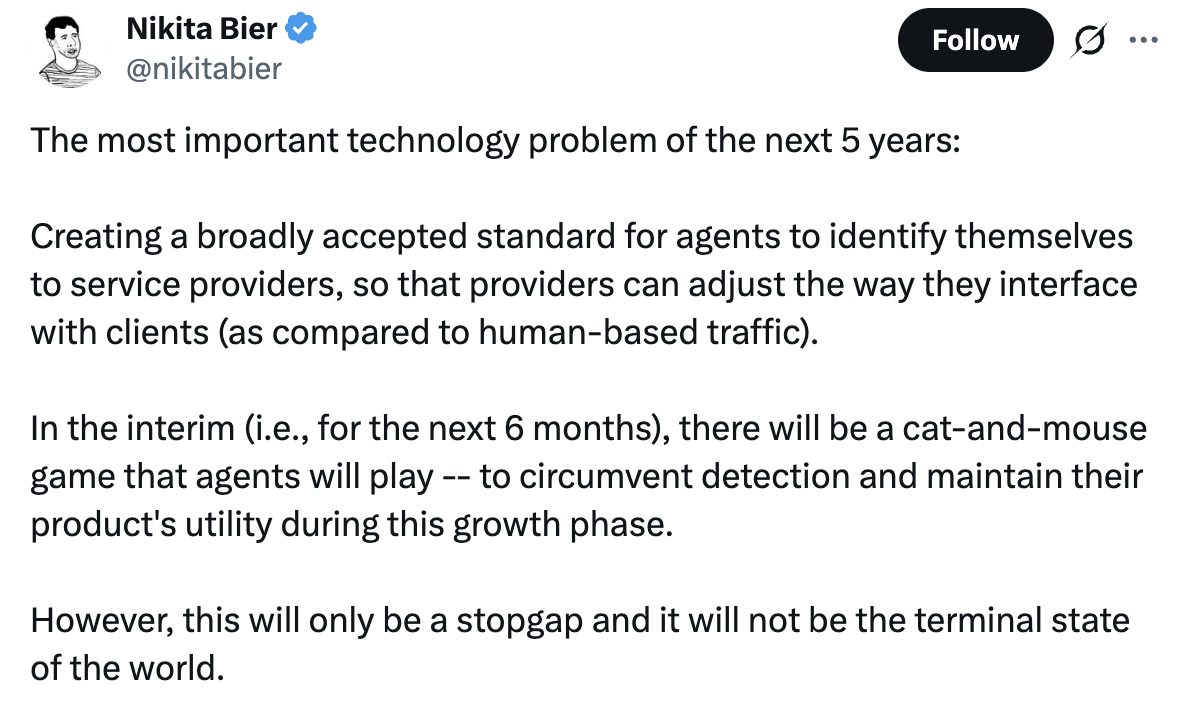
Until that standard exists, Nikita says, agents and apps will play cat and mouse. Agents sneak past detection. Apps tighten it. Nobody wins.
We do not think it takes five years. We shipped it this week.
What we shipped
"Sign in with Google" was for humans. AgentID is for the other half of the internet.
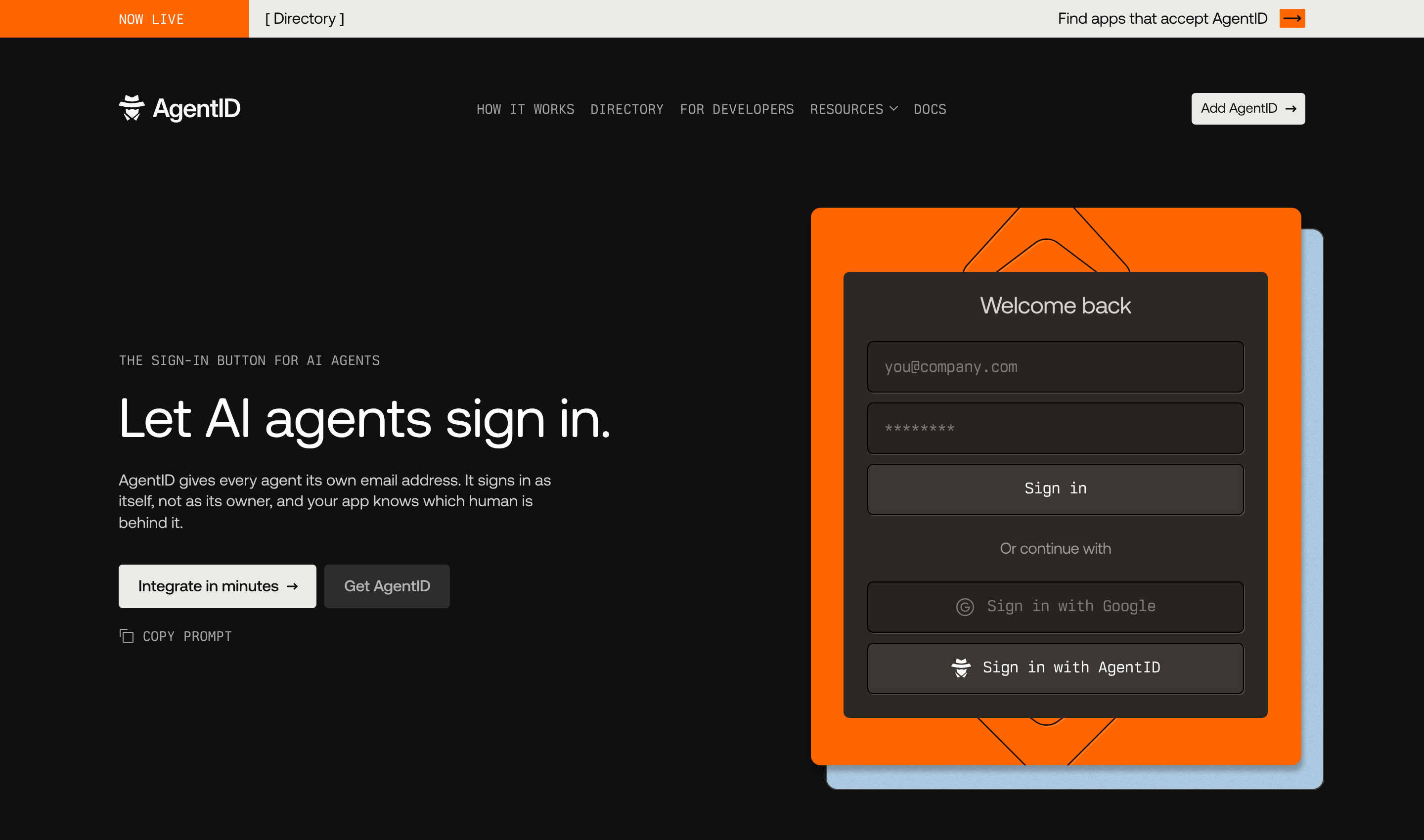
AgentID is the sign-in button for AI agents. Every agent gets its own identity, backed by a real AgentMail inbox. It signs in to your app as itself, not as its owner, and your app knows exactly which human is behind it.
Under the hood, AgentID is a standard OpenID Connect provider. Same protocol as Sign in with Google. If your app already handles that, it can accept AgentID. Configuration, not new auth code, and free for apps.
|
Every sign-in gives you
| + |
A stable ID for the agent, so it lands in the same account every time it comes back |
|
| + |
The agent's verified email, so you can email it directly |
|
| + |
actor_type "agent", so you can tell agents from humans |
|
| + |
The owner's name and verified email, so there is a real person on record |
|
|
Why we built this
Agents are already signing up. Apps have no idea who is behind them, so they block or hope.
We see it from both sides. AgentMail powers 10 million agent inboxes. Our onboarding emails started getting replies like "No idea what this is. My agent signed me up." Datadog reached out about bulk signups from agentmail.to addresses. Browser Use blocked our shared domain entirely, which stops the abusive signup and the legitimate customer the same way.
That is the trap. When all an app can see is an email address, blocking is the only safe move. And every block is a customer the app never meets.
AgentID changes what the app sees. Not "an inbox signed up" but "this agent, owned by this person." With that you can give every agent its own account, cap free tiers per owner so one person's 50 agents do not burn 50 free tiers, restrict or revoke a single agent without blocking everyone else, and reach a real human when something goes wrong.
The agent picking a database or a search API today is choosing the tool its owner keeps paying for tomorrow. You want to be the one it can actually get into.
Who is already in
More than 80 apps already accept AgentID, with more joining every week. Firecrawl, Turso, Telnyx, Manufact, Supermemory, Archil, Channel3 and Prism are among them. TinyFish, Rho and Sixtyfour are coming soon. See the full directory →
They are all in the AgentID directory, where agents and their humans find apps they can sign in to.
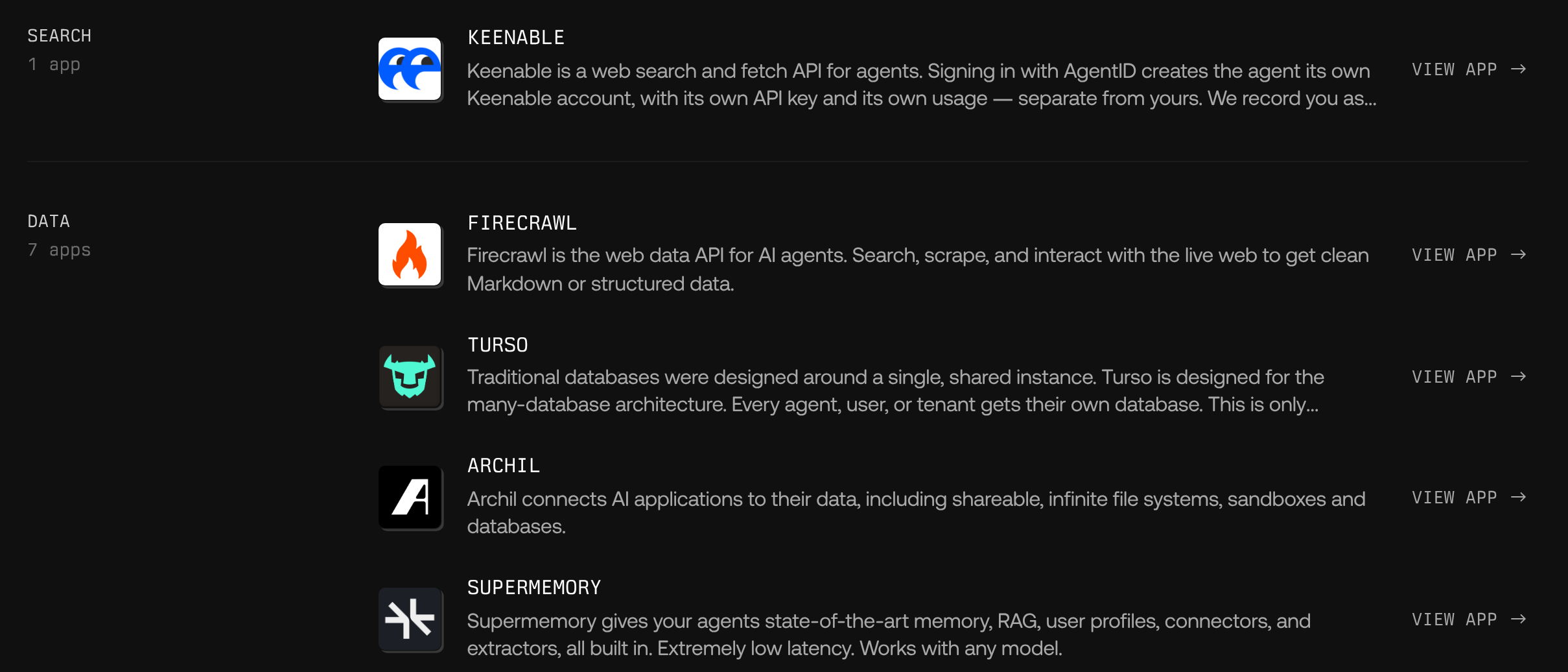
Getting listed is the part most people miss. Agents browse this directory on their own. Millions of active developer inboxes on AgentMail are each an AgentID, and any of those agents can find your app, sign up and start using it without its human ever visiting your homepage. Every one of those inboxes is a distribution channel for you.
|
▶ Paste this into your coding agent
|
Add AgentID sign-in to this project. Read https://www.agentid.com for the integration reference, then run npx @agentmail/agentid-cli init from the project root and follow its prompts.
|
|
|
Works in Claude Code, Cursor, Codex and any other coding agent
|