Friend,
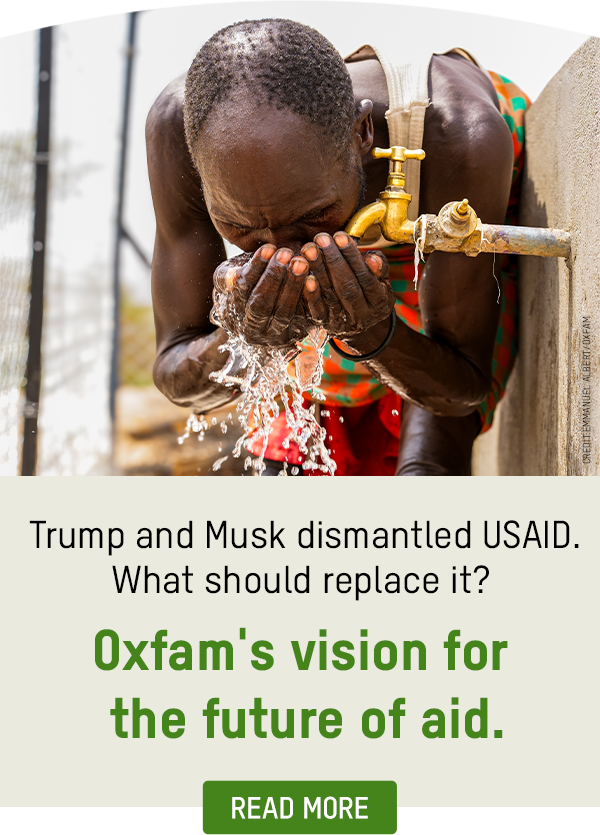
As a new Congress prepares to take office, lawmakers will help shape the future of U.S. funded lifesaving aid. That comes at a pivotal moment. Over the last two years, President Trump and Elon Musk led the dismantling of USAID, and instituted sweeping cuts to lifesaving humanitarian and development programs around the world. For millions of people, that has meant losing access to services that help communities stay healthy, safe, and resilient.
But where do we go from here? How can we build a stronger and more effective aid system for the future? And how can we make sure people who are suffering have a say in how their needs are met?
Oxfam has more than 80 years of experience working around the world to save lives and support long-term development. Along the way, we've learned an important lesson: Aid is most effective when it puts people and communities at the center.
Drawing on decades of experience and research into what has and hasn't worked in U.S. foreign assistance, Oxfam is helping to shape a vision for a stronger future of aid. While the challenges facing the world have changed, lasting progress still depends on communities having the resources, power, and opportunity to shape their own futures.
Here are Oxfam’s principles for the future of aid:
- Shift power to local leadership: People facing poverty, conflict, and crisis should have the power and resources to shape the decisions that affect their lives. The future of aid should be driven by the needs, expertise, and leadership of the people it is meant to serve.
- Put people’s needs first: Aid should be guided by communities’ priorities, not short-term political interests or transactional deals. Resources should be directed where they are needed most to reduce suffering, tackle inequality, and support communities to thrive.
- Provide flexible funding that supports local priorities: Communities and governments need the flexibility to address their most pressing challenges as needs evolve. Funding should support long-term plans, align with country priorities, and help strengthen the institutions and systems that make lasting progress possible.
- Build long-term resilience, not just emergency response: Aid should do more than respond to emergencies. It should help communities prepare for future shocks, strengthen local systems, and create the conditions for countries to shape their own futures and reduce the need for ongoing support.
The goal isn’t to rebuild U.S. foreign assistance exactly as it was. The goal is to build something better: a more effective system that saves lives, supports long-term development, strengthens local leadership, and gives people the power and resources to shape their own futures.
Where do we go from here? As Congress considers the future of U.S. foreign aid, now is the time to shape what’s next. Explore Oxfam's recommendations for building a stronger and more effective aid system.
Together, we’ll create a more equal world.
Sincerely,
Oxfam America