Friend,
In Buurhakaba, Somalia, Sokorey once supported her family by farming and raising livestock. Then years of drought killed her animals, dried out her farmland, and forced her family to leave home for a displacement camp.
“The biggest challenge we have now is a lack of food. There is no survival without it,” she says. “Now we are cooking only one meal a day, if we are lucky to get any food.”
Sokorey’s experience reflects a much wider crisis. Approximately 5.4 million people in Somalia are expected to face severe hunger between October and December 2026. Almost 26,000 displaced people in Baidoa are projected to experience the most severe level of hunger for an individual or household.
If conditions deteriorate, displaced communities in Baidoa could face famine.
The crisis has been made worse by devastating humanitarian aid cuts. The United States, historically one of Somalia’s largest humanitarian donors, has withdrawn lifesaving assistance, while funding shortages have forced health and nutrition facilities to close just as hunger and malnutrition are increasing.
But famine is not inevitable. Acting on early warnings, funding humanitarian assistance, and ensuring families can access food, clean water, and nutrition services can prevent a hunger crisis from becoming a famine.
This World Food Day, learn what famine means, why communities in Somalia are at risk, and how timely action can save lives.
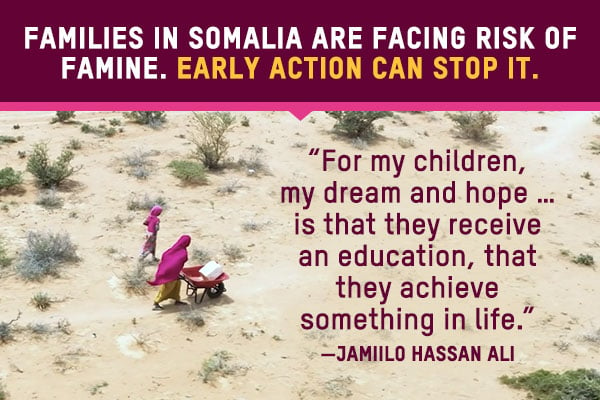
Families facing extreme hunger are also trying to protect their livelihoods and build a better future for their children. As Jamiilo Hassan Ali, interviewed in the Buurhakaba region, says: “For my children, my dream and hope for the future is that they receive an education, that they achieve something in life, reach a high level and become productive.”
Read their stories and learn what can be done to help prevent famine.
Thank you for standing with families confronting hunger and inequality around the world.
Sincerely,
Oxfam America