|
Next week, a new four-part documentary from filmmakers Ken Burns and Lynn Novick will trace the history of crime and punishment in America, drawing in part on a vast archive of photographs depicting the justice system and the people who have encountered it.
In producing “Crime and Punishment in America,” the filmmakers and their team sifted through roughly 16,000 images, ultimately selecting nearly 1,400 for the series.
Earlier this summer, Novick spoke with me about a handful of those images, which are embedded below. You can see the full list of photographs we discussed here, and see more from the series when it premieres on PBS on Monday, Nov. 16.
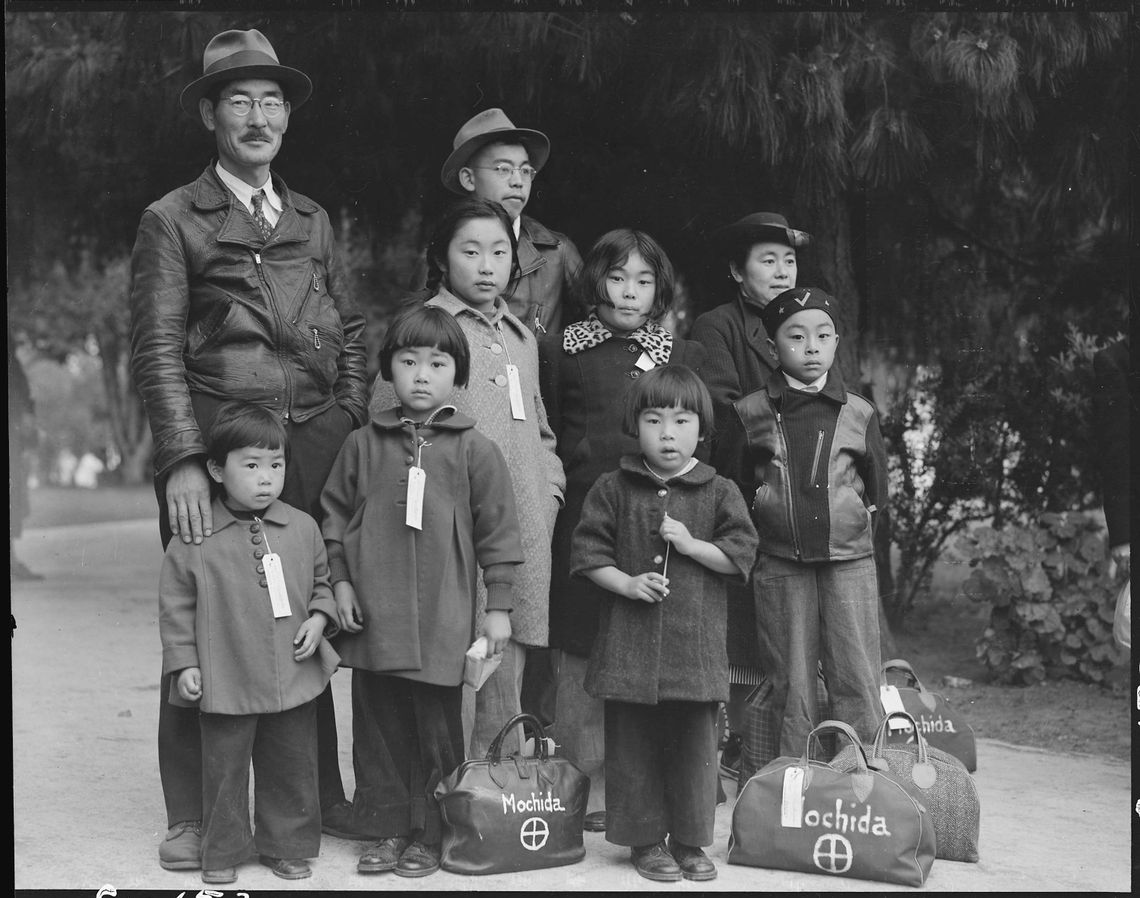
Why was it important to include internment in this film about the history of crime and punishment?
We put it in because it raises a lot of questions about what is a crime, and who is a criminal. These are people essentially being incarcerated, not because of something they’ve done or a crime they’ve committed but because of who they are.
There’s dignity in that photograph. And I wonder, when you’re selecting photographs to tell a story, how do you think about, on the one hand, the value in showing people’s dignity and their humanity, but on the other hand, not letting the abject cruelty sort of slink by us, because there’s something so visually almost normal about an image like this — at least until you notice that the children are literally tagged.
We think a lot about how much time we spend on a picture like this. How we frame it, what music you’re listening to, what we’re saying. We’re trying to give the audience a chance to really see it and recognize that these are people.
I think we often “see the universe in a grain of sand,” as William Blake said. You can understand those 100,000 people [taken to internment camps] by seeing this one family. Where, if we showed you 100,000 people, it would just be a mass, and you wouldn’t really be able to get it.
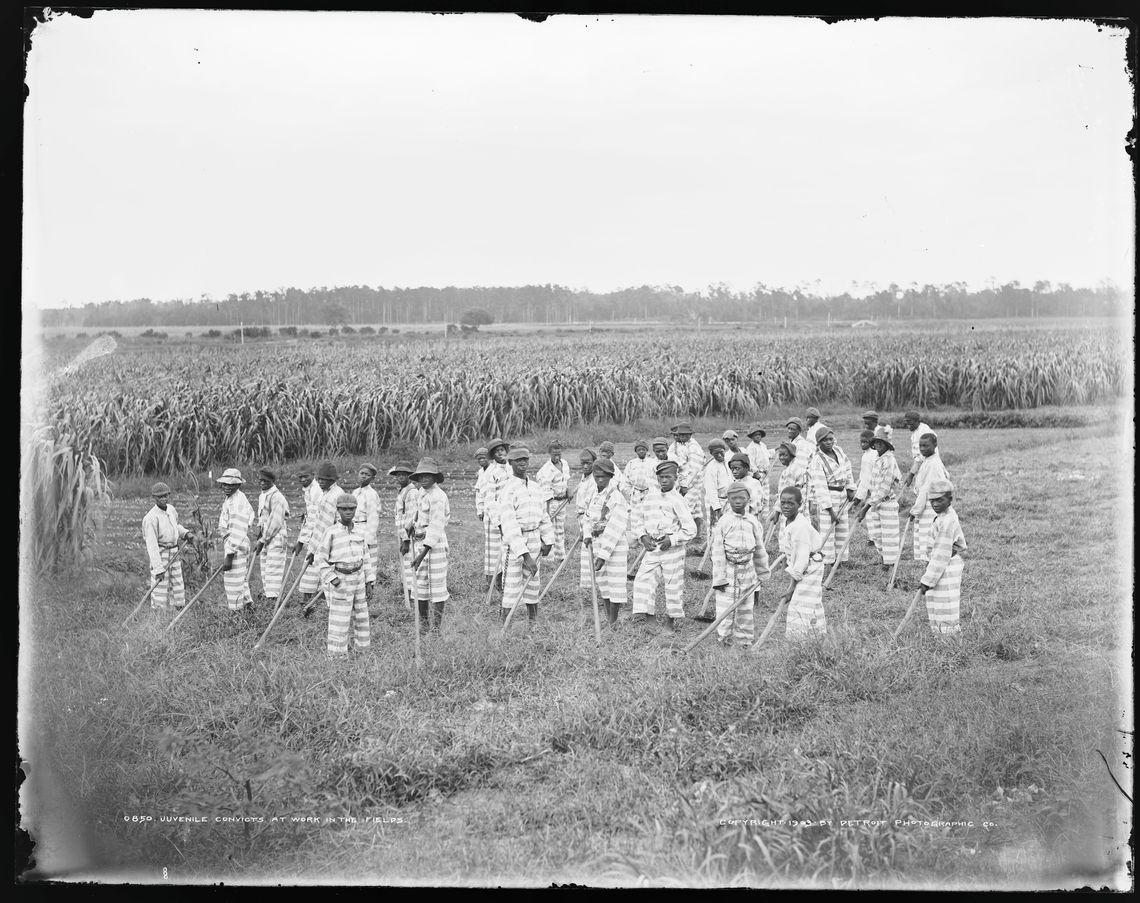
Many people know, at least loosely, about the era of “convict leasing,” after slavery officially ended, where many Southern states enacted vague minor laws like “vagrancy” and used them to force freed Black Americans into labor. But I’d never seen an image like this of children apparently caught up in that system. What do we know about this image and how it came to be?
I wish we knew more. We know it came from the Detroit Publishing Co. They sent photographers all over the country to take pictures of, just, American life and then they sold the pictures. So it wasn’t because, “We’re doing a story on children in convict leasing.” It’s just, “Here’s a picture of life in the American South.” I struggle to find words to go along with what was the impulse for taking this picture and selling it.
Since our knowledge about this image is limited, what do you take from spending time looking at it?
Their relationship to the camera is quite profound. It’s hard to tell how old they are. Some of them look like maybe they’re 12. The way they’re looking at the person who’s taking their picture and at the camera — I feel that they’re presenting a rebuke or a challenge.
I struggle to find an adjective, but I urge your readers to take a lot of time to look at this picture and look at their faces.
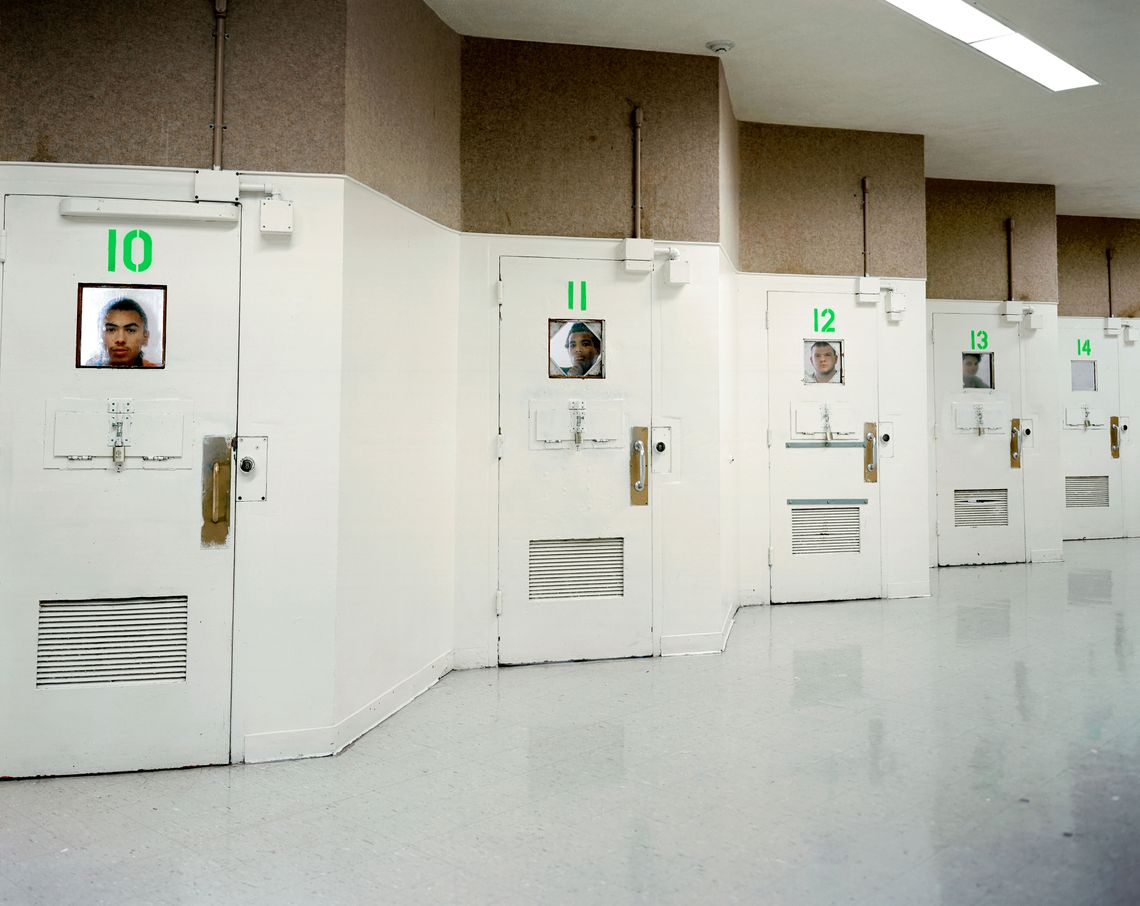
This is a picture of a place that is formally described as a “school,” where we see young people in what you might describe as the height of captivity. What does this tell us about the tension between care and control?
In our history of incarceration, we have tilted much more toward custody and control than any kind of care at all. And we often tell ourselves that we are doing something that is, in theory, constructive for the people that are inside these places. That we’re going to help them.
And that was not new as of the 1990s, right?
No — The first juvenile institution in America was created in New York City in the 1830s, and it was called the House of Refuge.
The name suggests that’s going to be a place where you would be safe and taken care of. And it was filled with young children, boys and girls who were largely immigrants or people of color. And this place had promised to provide them with education, instruction and discipline. And to some degree that did happen. But it was also, according to people who were sent there, a place of torture and torment and forced labor.
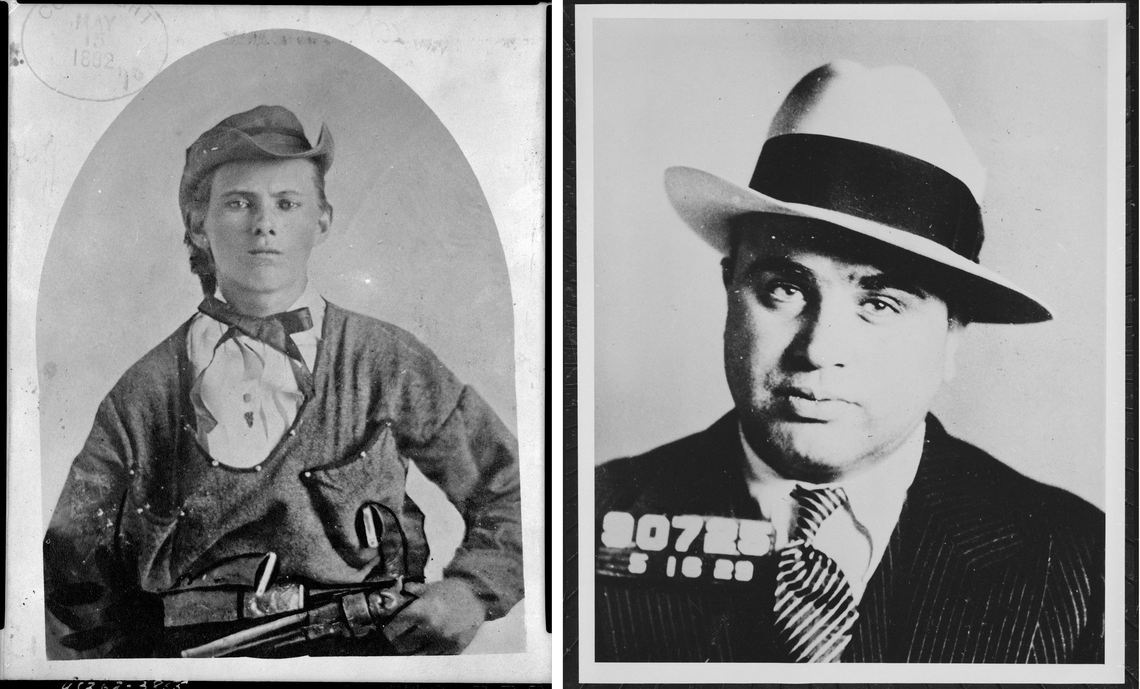
In the documentary, you look a lot at the public fascination with crime, and part of that is the American mythology around outlaws. Tell me more about why these two men became famous — indeed, infamous — as criminals in the ways that they did.
Post-Civil War, there were many people in the area where Jesse James was operating who were not happy with how the war turned out, and who didn’t feel that the elites were at all concerned about their lives and livelihood.
And James claimed to be a Robin Hood, who’s the archetypal outlaw. But Robin Hood steals from the rich and gives to the poor, at least in mythological terms, and that’s not what James was doing. But he claimed he was, and that resonated for a lot of people.
Al Capone, I would say, looms as large in the 20th century as Jesse James in the 19th in our understanding, maybe even more. There’s a lot of overlap here in that he also cultivated a public image and a public persona. He loved to be in the newspaper. He liked to have his picture taken.
Click here to continue reading this conversation with Novick and to see the full selection of images from the series.
|