BUNNYSHELL PRODUCT UPDATES What's new in BunnyshellWe've shipped several updates to Bunnyshell, including support for GitHub stacked PRs, new environment lifecycle controls, and improvements to Docker builds and configuration workflows. Here's what's new. GitHub stacked PRs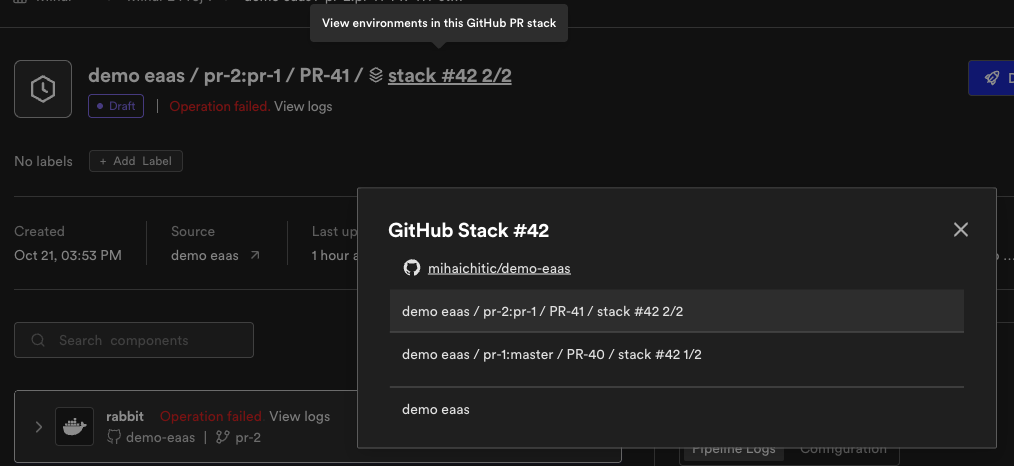 Bunnyshell now supports GitHub stacked pull requests. Each PR in a stack gets its own ephemeral environment, including PRs targeting other feature branches instead of the primary branch. You can view all environments belonging to a stack directly from the environment details page. As PRs are merged and the stack changes, Bunnyshell updates the associated environments and their stack positions. Existing ephemeral environment settings, including automatic deployment and cleanup on PR close, also apply to stacked PRs. More control over environment lifecycleAvailability Rules now support Auto-undeploy and Auto-destroy, alongside the existing timeframes and auto-stop options. These controls let you automatically stop, undeploy, or destroy environments based on your configured rules, reducing unnecessary infrastructure usage. We've also improved how ephemeral environments respond to PR changes:
Both workflows now work without closing and reopening the pull request. Docker build additional contextsBunnyshell now supports Builds can reference additional contexts from local directories, Git repositories, container registries, and other Bunnyshell components. This makes it possible to share build dependencies across multiple services without duplicating Dockerfile stages or publishing intermediate images separately. Faster configuration savesSaving Repository and branch validation now runs in parallel instead of sequentially, significantly reducing the time required to save complex configurations. Other improvements
What should we improve next?We're continuing to improve Bunnyshell based on how you use it. If there's something missing from your workflow or something we could make better, just reply to this email. We'd love to hear from you. Best,
|
