Not feeling excited about turkey this year, but don't know where to turn? May I suggest a feast centered around the humble duck? |
|
|
|
Free yourself from the tyranny of turkey |
About six years ago, I had a realization that weighed on me heavily. As my parents and I had a back-and-forth over the phone about what to purchase for our Thanksgiving dinner, including what size of turkey should be procured and how we’d go about laboriously roasting it (a task which, truthfully, we often outsourced), a light bulb flickered on in my head: None of us actually liked turkey all that much, so why were we making it?
With Thanksgiving just one week away, I’m sure many of you are having similar thoughts as you plan your menu for the annual holiday that makes overeating akin to a contact sport. And look, there are many holiday traditions I can get behind. I love participating in a whimsical Easter egg hunt, retrieving the Toblerone bars and TJ Maxx-sourced manicure kits tucked into my Christmas stocking every year, and making elaborate Halloween costumes referencing incredibly niche cultural moments. But I don’t like being bullied into eating stuff I don’t enjoy. And you’re telling me that on the last Thursday in November, every year, we should spend hours — perhaps even days, when you factor in defrosting — making a bland bird that’s not all that good?
Now, I’m aware that announcing that turkey sucks is akin to thinking you’re singularly special because you like Hawaiian pizza, which is to say: It’s played out. But I really think this deserves some consideration before we all go out and buy an army of turkeys that will add frustration to an already-busy day of cooking. Nearly two-thirds — 63 percent — of Americans prefer Thanksgiving sides over the turkey itself, according to a report by Campbell’s. That means we’re talking about a dramatic cooking project that is ultimately still outshined by green bean casserole and stale bread soaked in chicken broth (I like both fine, for what it’s worth).
|
|
|
|
The standard supermarket turkey is a Broad Breasted White, a bird bred to grow rapidly and produce a hell of a lot of, well, breast meat; Americans love their white meat. It’s roughly three times the size of a wild turkey in overall mass, with, accordingly, about three times as much breast meat. While the vast majority of all meat in America comes from industrial farming practices with an array of troubling realities, it’s never sat right with me that commercially raised turkeys struggle to reproduce naturally; their exaggerated body proportions make them clumsy and top-heavy, resulting in the need for artificial insemination to keep up the industry running. (Sorry for using the word “insemination” in a food newsletter, but it’s true!) All of this is in service of producing more white meat, which I don’t even care much for, anyway.
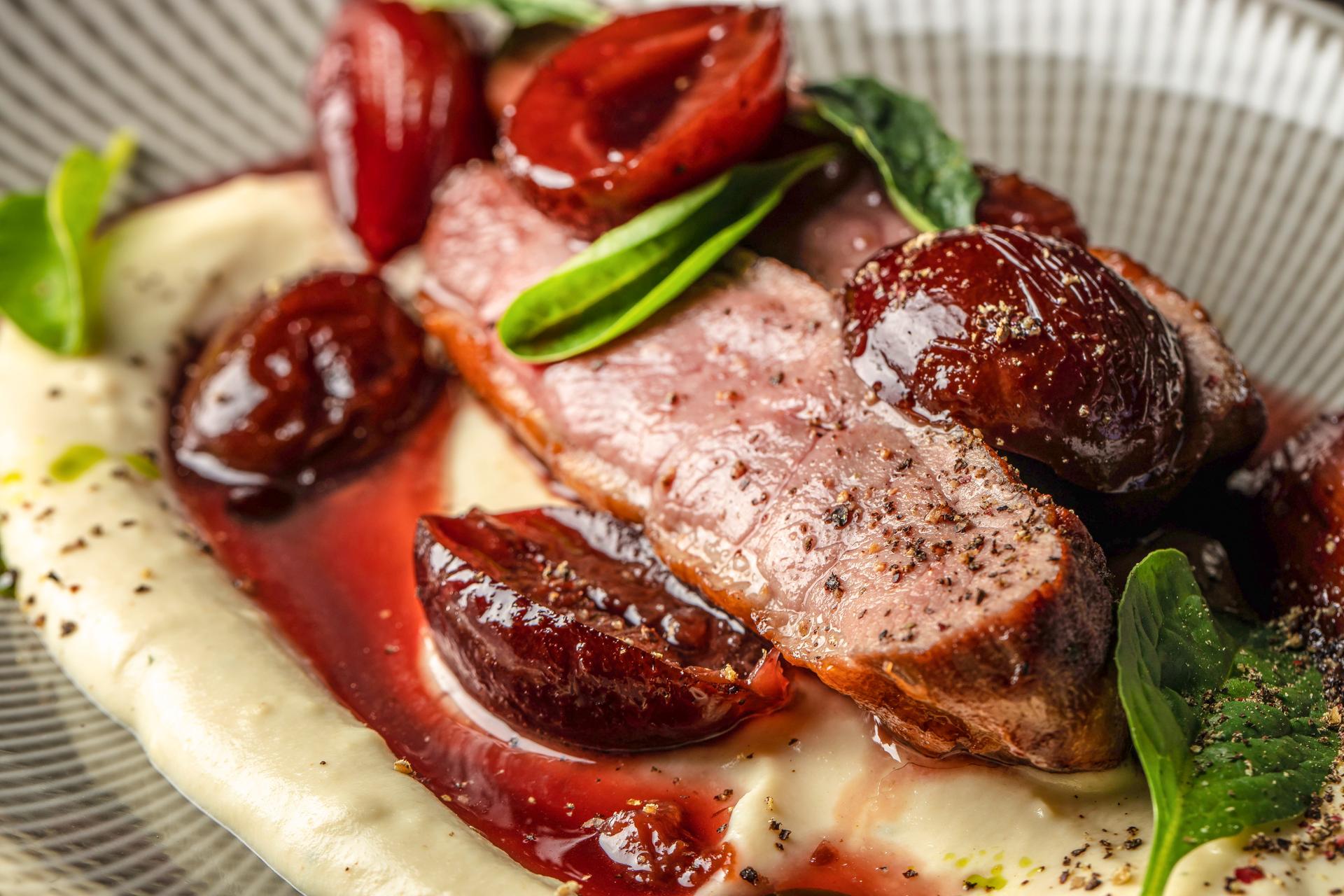
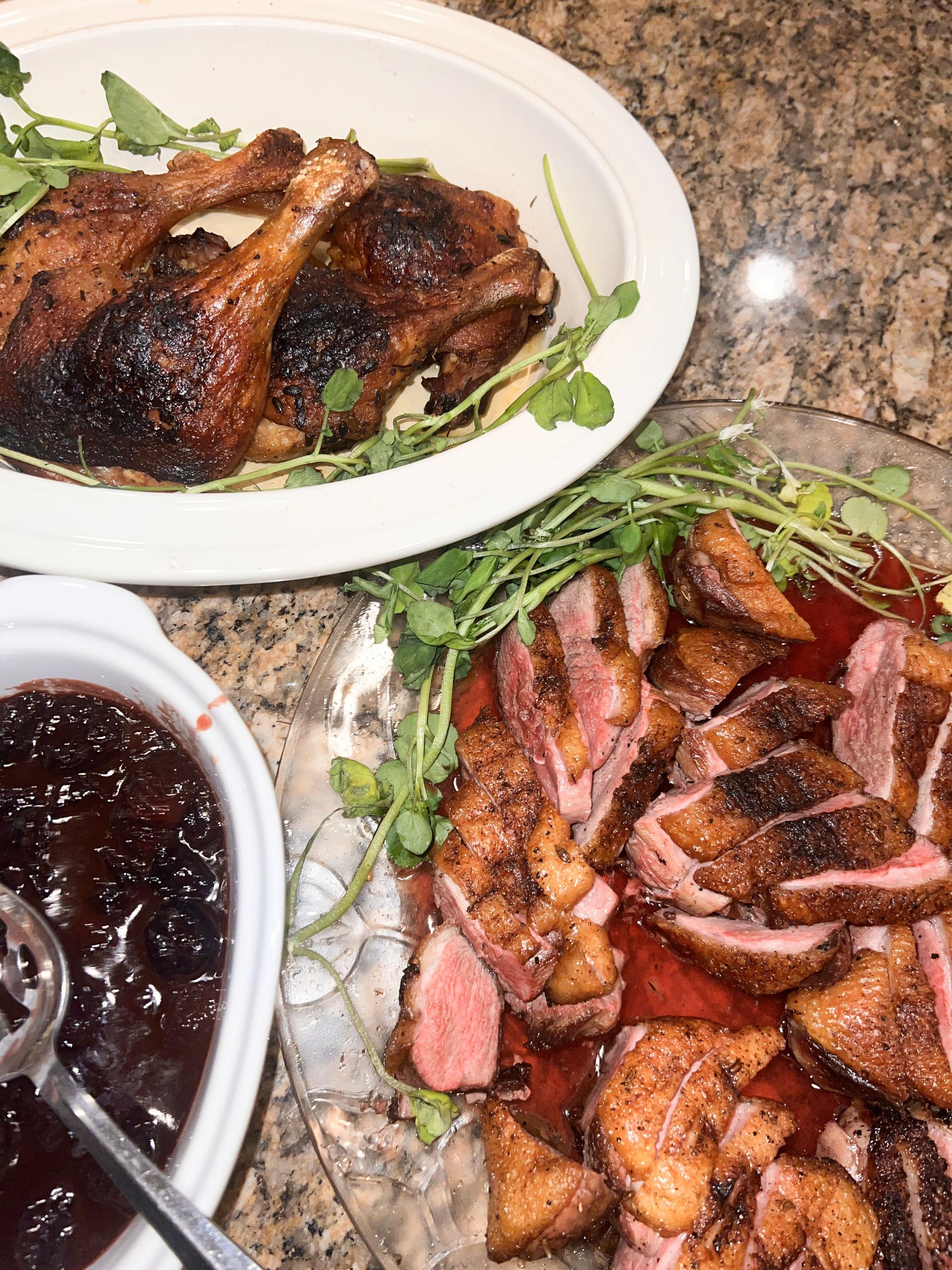
Instead, every year since my family’s initial revelation that we’re low-key a bunch of turkey-haters, we’ve celebrated what we call Ducksgiving. The menu has varied in terms of sides and accompaniments, but the centerpiece is always seared duck breast and confited duck legs, typically served with wild rice, chanterelle mushrooms, and a cherry sauce with kirsch and red wine. Juicy, fatty, and rich, duck is the sort of meat that is a bit too decadent and gamey to eat every day, but is perfect for a celebratory feast. We love it, and haven’t missed turkey one bit.
|
Turkey is what I get in my ‘healthy’ sandwich I eat on a Wednesday to counteract the fact that the night before I went out for steak frites. It has no emotional weight to me, nor decadence. Duck, on the other hand? Eating it makes me feel like a 16th-century king swathed in velvet robes. We also tried a steakhouse format for Thanksgiving one year — prime rib with horseradish, wedge salad, whipped potatoes, creamed spinach, and shrimp cocktail — and it was also a hit.
I’m hardly the first person to question turkey’s supremacy. A Purdue University study published last year found that while 86 percent of respondents planned to serve turkey at Thanksgiving, another 30 percent planned to serve pork (likely ham), 24 percent planned to serve beef, and smaller percentages planned to serve fish, chicken, and other meats. Turkey’s dominance clearly continues, but there’s plenty of room for other proteins at the table. Besides, at the 1621 harvest feast we now associate with the first Thanksgiving, they were probably eating “wildfowl” (most likely duck or goose) and venison, anyway. We love a ritual, but there’s no reason the holidays can’t be customized to optimize pleasure and variety.
If you’re going to spend all day preparing an extravagant meal, shouldn’t the centerpiece be something you actually love eating? Join me for Ducksgiving. All are invited to the table. |
|
|
|
|