The witching hour is nigh, the jack-o’-lanterns are grinning, and somewhere deep in the bowels of production, a bug you fixed six months ago has risen from the dead. October is upon us again, which means it's time to write a spooky opening for the Flight Deck. We've raided the mobile engineering crypts and summoned the release management warlocks to stitch together a monstrous collection of dispatches from the other side (of your screen). Draw the curtains, light a black candle, and keep a wooden stake close at hand to quickly jam into the rollback button, as the shroud between a healthy and busted deployment is thin, and something wicked this way ships.
Come along with us in this 36(66)th edition of the Flight Deck as we look at a time when a feature flag took down a critical feature in one team’s Android app, dig into how to make Xcode and agents share incremental builds, and give you a tour of our brand-new feature: Triage by Runway. Don’t worry, despite our opening paragraph, this newsletter is not haunted.
Six years ago, Shopify went all in on React Native and declared it the future of mobile development. One year ago, they said its “future was bright, and they planned to keep investing in it.” Last month, they said to forget all that because Actually Native is now the future and the best way to build mobile apps. Why did they change their minds? Gergely Orosz looks at why: the cost of maintaining two codebases is no longer higher than the performance gains from going native (it’s because of AI, obviously).
Starting in April of next year, every iOS app submitted will need to include screenshots for iPhone Duo, or it’ll be rejected. Which also means every iOS app will need to be designed for use on iPhone Duo, or it’ll be rejected. Apple has published three steps to “make your app shine” on Duo. What are those steps? They wrote an entire article about them (among many other helpful Duo focused articles) that you can find at the link above to ensure your app is prepared for our foldable future.
A fun thing you can do with feature flags is forget about them at a crucial moment. Perhaps you launched a new version of your live chat behind a feature flag and deprecated an API that the old version of the chat depended on, but then didn’t enable the feature flag in production, so that no one had access to the new chat and everyone was stuck on the old chat which simply broke since it no longer had access to the API it needed. That’s exactly what happened to Nav Singh. Learn how this happened, how his team discovered the problem, and how they fixed it. Well, you already know how they fixed it, but you can learn the rest in his in-depth retrospective.
Serg Dort was getting tired of watching code build in his AI agent, then switching to Xcode to check it, only to watch it build again. It wasn’t the worst thing in the world, but the more he did it, the more annoying it became: he had to wait 20 seconds, 60 seconds, 100 seconds for an already built build to build again. Learn how he fixed this by sharing build locations and cache (along with a couple of other things).
In the past month, there’s a good chance you gave an agent the OK on code you didn’t fully read or even understand, and that your PR reviewers didn’t fully read or even understand either. This probably turned out okay. Maybe there was a bug, but aren’t there always? In an era of software development where velocity is everything, Addy Osmani considers what should replace reading every line of code, because something does need to replace it, it can’t just be nothing.
Go figure
How does company leadership perceive mobile engineering in 2026?
51% of mobile EMs say non-mobile leadership perceives mobile engineering as higher-risk than web or backend. Only 5% say lower-risk. The remainder say risk is about the same.
AI multiplied the code your mobile team writes (at least 10x, right?), and every release now carries more changes, more risk, and more coordination than the release process was built for. In this live panel, mobile engineering leaders Chrystian Vieyra Cortés of Thomson Reuters, Juan Sandoval of Mercado Libre, Leah Vogel of Salesforce, and Gabriel Savit of us share what they've changed to keep shipping fast without letting quality slip.
Perhaps you’re tired of clicking links, so we’ll really sum up this one article for you: Put kickoff and version bumps on a schedule, guard build selection, move App Store Connect work onto automations and approvals, and land every release with a phased rollout, health thresholds, and a hotfix or rollback path you prepared in advance. Apple reviews most submissions in under a day; nearly everything else in the cycle is on your side and can be scheduled, automated, or gated for review. Sounds so easy in this one paragraph. Read our post for more details.
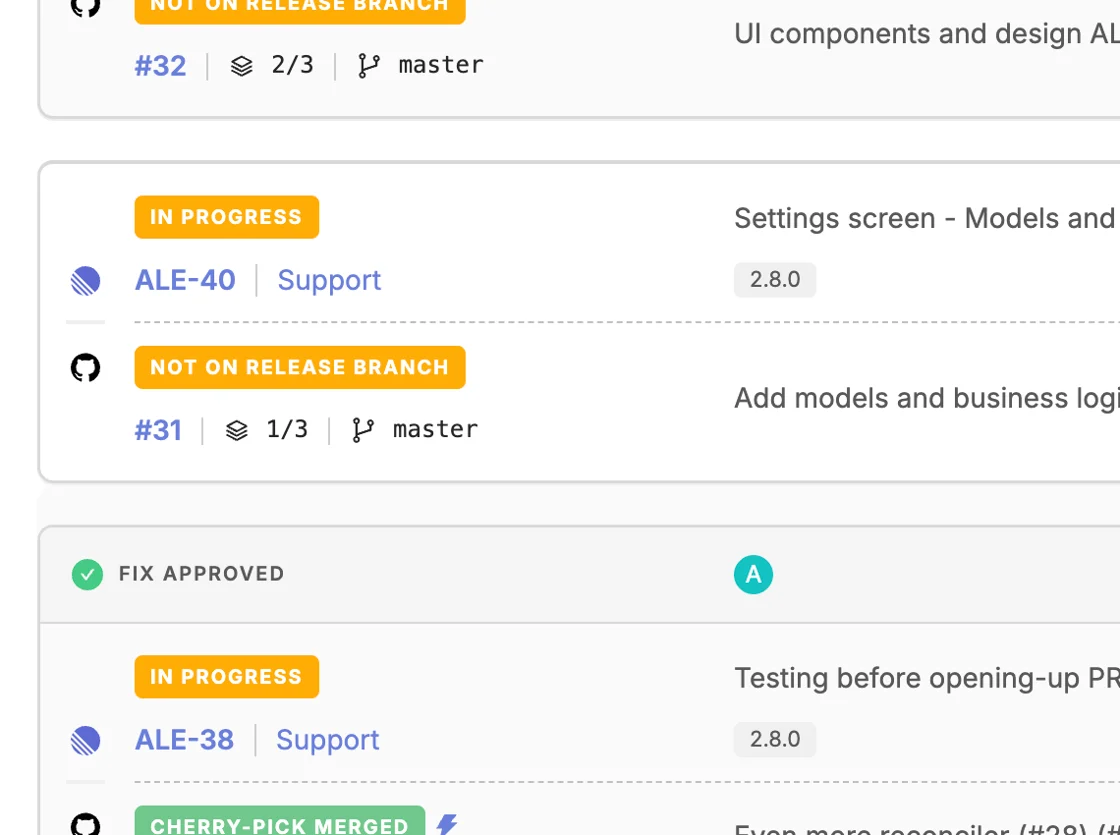
Introducing Triage by Runway Bugs, crashes, QA regressions, angry app reviews and less angry beta feedback; mobile teams have no shortage of problems and no shortage of places to try to keep track of all of those problems. Enter Triage, a new centralized inbox that automatically consolidates issues from across your mobile development and release lifecycle. Triage helps every stakeholder on the team, from release captains to leadership to QA to AI agents, spend less time figuring out what’s wrong and who should fix it, and more time shipping new things. Because problems aren't just going to sort themselves out, especially if no one is reading anyone else’s PRs anymore.
Runway featured feature
Triage isn’t the only feature we’re featuring today. Runway recognizes stacked pull requests in GitHub, and we surface visual references to stacks and PR ordering within stacks on Feature Readiness items. Importantly in the fix request context, Runway understands that each PR in a stack ultimately lands on the base branch at the bottom of the stack, so you can create fixes based on stacked PRs and cherry-pick them just like the non-stacked case.
When merging PRs (if you’ve enabled the corresponding automation), Runway can now take into account whether your repo enforces a merge queue and will add Runway PRs to the queue instead of trying to merge them directly. These PRs will merge in the order they joined the queue, and only after their checks and approvals pass.
Events
Runway has been busy traveling the world, and we have been continuing to do so during this spookiest of months.
Just last week we were atSwiftLeeds/KotlinLeedsin, you guessed it, Leeds. We were also at droidcon Berlin the week before that, so if you have the technology to travel through time, use it and come meet us in either place.
Next up, we’ll have a short travel break before returning to the UK fordroidcon Londonfrom December 10th to 11th.
Hope to see you at one of these!fi But now you’ve arrived at the end of this newsletter. Feeling a little scared after how spooky the beginning of this newsletter was? Calm your nerves by reading through one of our previous35 installments.
Please note that any typos or formatting issues in this email were done on purpose for aesthetic effect, maybe as part of an inside joke you didn’t get, and definitely not an embarrassing accident.
Runway, 169 Madison Ave, #11098, New York, NY 10016, United States