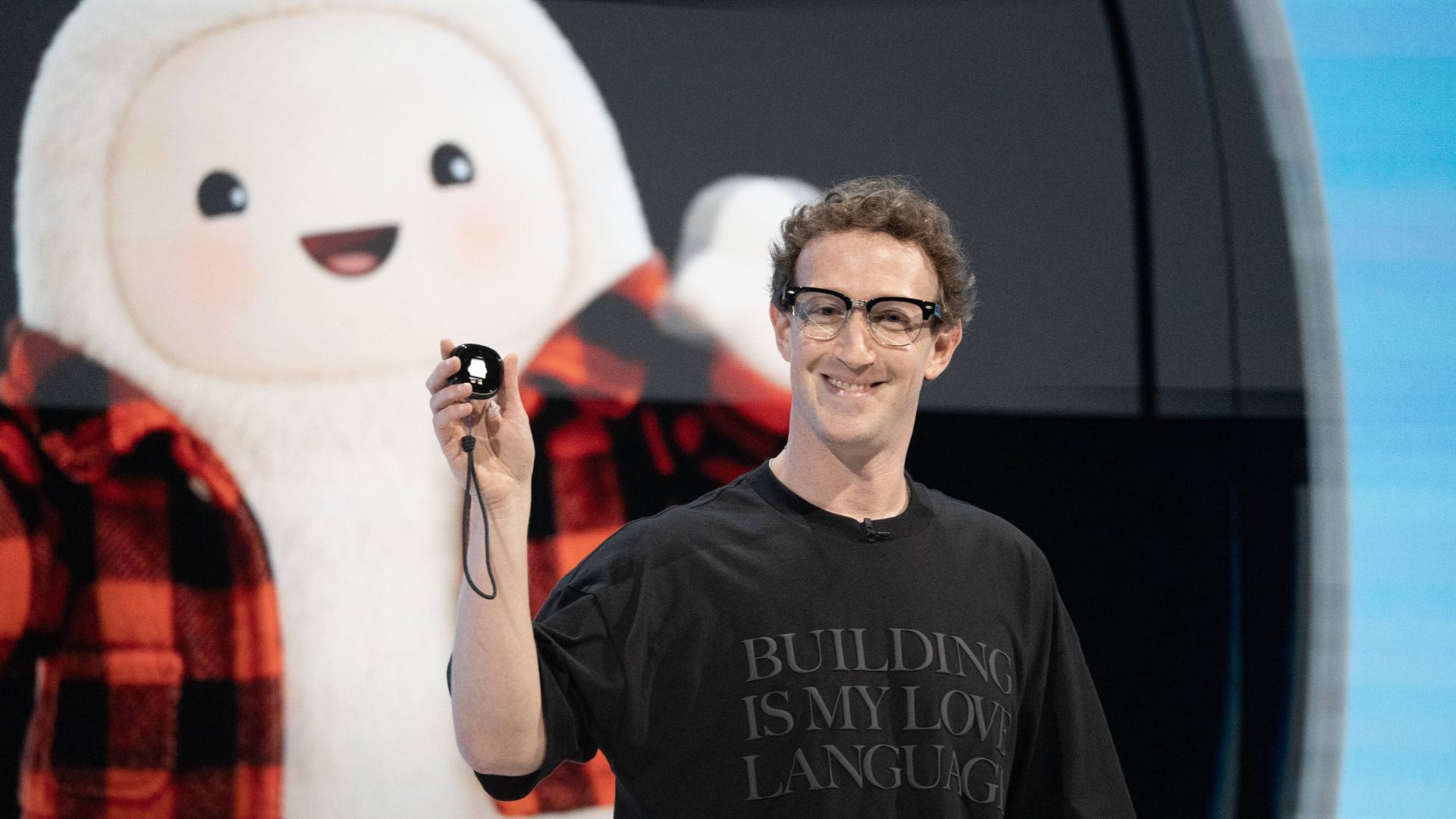
Meta’s on a hot streak. On Monday the tech giant unveiled two frontier models: Muse Wonder and Muse Wonder Full. They represent Meta’s first true entry to the frontier. In benchmark tests evaluating coding, reasoning, and writing capabilities, the two models achieved scores comparable to cutting-edge models from Anthropic and OpenAI, Meta reported.
The cutely packaged Muse personal assistant took off like a rocketship after its launch last month under wunderkind Alexandr Wang. The mobile app for the AI agent reached five million downloads faster than ChatGPT did, and could hit 100 million users in six to 12 months, per Evercore’s Mark Mahaney. Able to complete tasks and shop autonomously on behalf of users, the bot is already the top source of AI-agent traffic on the web, generating over 2.3 times more requests than all other agents combined, per recent findings from Human Security.
The new frontier offerings, Muse Wonder and Muse Wonder Full, extend Meta’s efforts to cash in on its hundreds of billions of dollars in AI investments. Meta offers access to Muse Wonder on a pay-per-token API basis, while Muse Wonder Full is tied to premium subscription tiers costing $20 or $100 per month.
The push could help the tech company diversify its revenue streams beyond paid advertising, which today generates nearly 98% of Meta’s total revenue.
That’s not to say that the company isn’t pouring investment into its core ads business still. Ahead of Advertising Week New York this month, Meta announced a slate of upgrades to its AI tools for advertisers. Advertisers can now use natural language prompts to update creative, ad targeting parameters, and budgets within the system. Plus, a new Meta sales agent can pull from a brand’s website, ad content, and social posts to build interactive shopping experiences through which users can chat with a bot, shop, and add products to their cart without exiting Meta’s platforms. (Amazon, it’s worth noting, has blocked Muse from shopping on its site since 21 Sept.)
The company is also encouraging advertisers to embrace Muse. A new update lets the agent connect to Meta advertising accounts and more than a dozen business tools, including Slack, Asana, Shopify, Klaviyo, and Canva.
Outside of Muse, Meta allows marketers to plug in their own third-party agents and AI tools to run Meta campaigns (via a Model Context Protocol hookup).
But that’s not to say it wants just anyone in its ecosystem. Late last week, it blocked TikTok’s U.S. minority owner and former majority owner ByteDance—as well as third parties running TikTok-linked campaigns—from advertising on its platforms in the U.S., Canada, Japan, and a handful of other countries. And taken with Amazon’s blockade of Meta’s Muse, platforms are increasingly closing themselves off against each other’s traffic, be that human or bot.
It’s a blow to the video-sharing app, which has spent more on ads on Meta platforms than any other advertiser in the U.S. so far this year, according to Sensor Tower data. (Though all things considered, the volume amounts to just 1% of total ad spend on Meta, per the data.)
Meta told Bloomberg: “We don't have to run ads from a competitor whose goal is to pull people off our apps,” and called the move “a normal business practice.”
Tensions between the platforms have been rising since Meta reached an $18 billion settlement with state attorneys general in August and agreed to introduce more stringent child safety protections on Instagram and Facebook—then subsequently pressured its competitors, including TikTok and YouTube, to put similar changes in place. It was a move some PR pros and legal experts thought might work. TikTok, for its part, didn’t warm to the approach. It barred ads from Meta demanding the updates and wiped dedicated Instagram links from user profiles on its app, according to Bloomberg.
In any case, it’s a timely pressure campaign on TikTok: In July, regulators found the platform in violation of EU rules around child safety and addictive design features. As a result, the company could be hit with a fine of up to 6% of its annual revenue.
In the U.S., meanwhile, some lawmakers criticized TikTok for backing out of a bipartisan roundtable last month with the House Select Committee on China. The company cited ongoing litigation over child safety as the reason for its absence, though committee leaders noted the meeting’s main focus concerned national security and data privacy.
The spat between Meta and TikTok is only intensifying now thanks to Meta’s new block on TikTok and TikTok-linked ads (even as some claim to see Meta ads for Muse on TikTok).
While a traffic war may play out over the coming months, there’s an immediate ripple effect for advertisers, who aren’t necessarily concerned with Meta snubbing a rival, but take issue with Meta deciding where paying advertisers can send their own customers. As David Nyurenberg, svp of digital at InterMedia Advertising, told my colleagues and me: “If I'm a brand paying Meta to reach consumers, why should Meta get to decide whether I can send them to a TikTok campaign or creator partnership?”
For now, it would seem, Meta feels it doesn’t need the dollars it’s leaving on the table, even as it barrels ahead with plans to shell out up to $145 billion this year, much of that on AI infrastructure and compute.
At least its Muse push could provide some padding; the agent could generate roughly 8% of Meta’s revenue by 2030, or approximately $36 billion, according to one Deutsche Bank analyst.
The company’s stock popped this week on the heels of its Muse Wonder and Muse Wonder Full announcement. The tech titan is set to report third-quarter earnings on October 21.