A roundup of what we shipped, improved, and polished across Hookdeck products in September. ͏ ͏ ͏ ͏ ͏ ͏ ͏ ͏ ͏ ͏ ͏ ͏ ͏ ͏ ͏ ͏ ͏ ͏ ͏ ͏ ͏ ͏ ͏ ͏ ͏ ͏ ͏ ͏ ͏ ͏ ͏ ͏ ͏ ͏ ͏ ͏ ͏ ͏ ͏ ͏ ͏ ͏ ͏ ͏ ͏ ͏ ͏ ͏ ͏ ͏ ͏ ͏ ͏ ͏ ͏ ͏ ͏ ͏ ͏ ͏ ͏ ͏ ͏ ͏ ͏ ͏ ͏ ͏ ͏ ͏ ͏ ͏ ͏ ͏ ͏ ͏ ͏ ͏ ͏ ͏ ͏ ͏ ͏ ͏ ͏ ͏ ͏ ͏ ͏ ͏ ͏ ͏ ͏ ͏ ͏ ͏ ͏ ͏ ͏ ͏ ͏ ͏ ͏ ͏ ͏ ͏ ͏ ͏ ͏
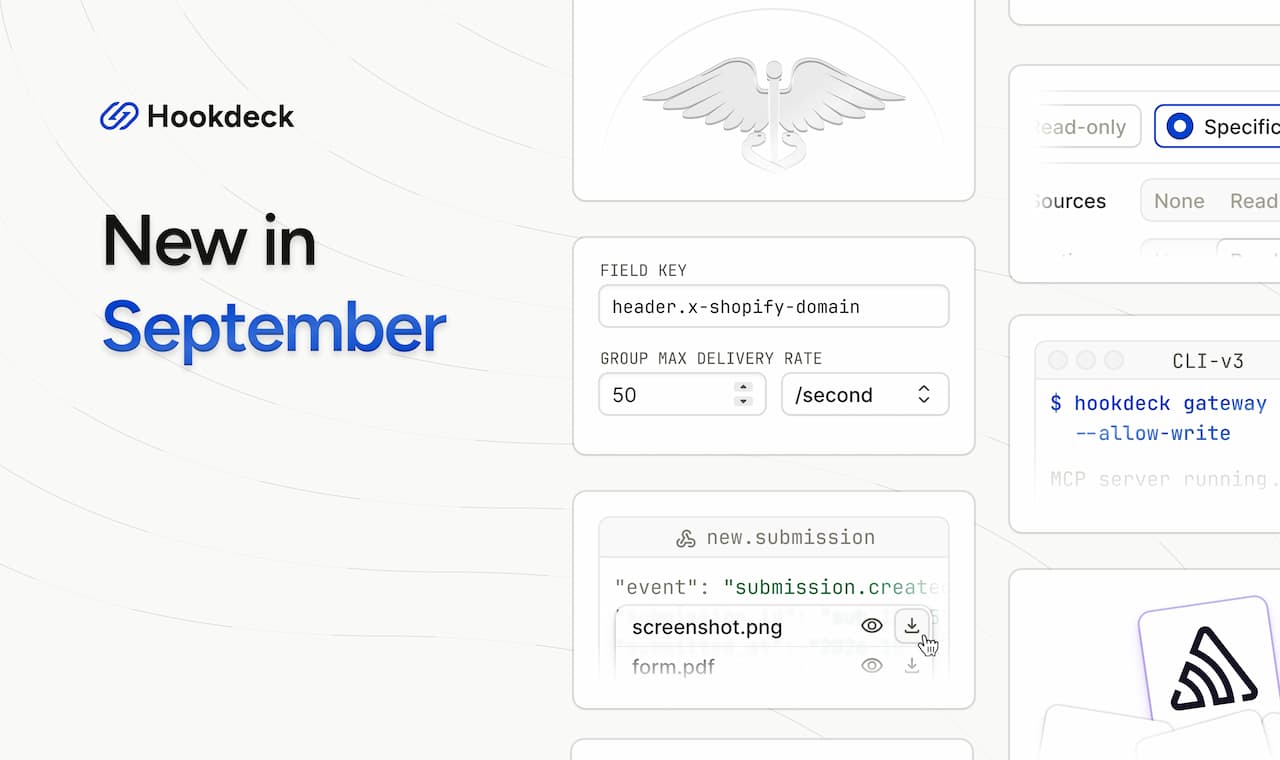
Multi-tenant webhook infrastructure has a noisy-neighbor problem: one high-volume tenant slows delivery for everyone else. Delivery Groups, available on all Event Gateway plans, solve this by partitioning events by a key you define. Whether it's a payload body field, header, query param, or path, each unique value gets its own delivery group and rate.
|
Outpost tenants can now receive events on two new destination types: AWS EventBridge and Cloudflare Queues. Create them through the API like any other destination type. Both are available in v1.6.0.
Thanks to @pryzmatical for contributing.
|
You can now use `hookdeck outpost` commands in CLI to manage tenants, destinations, and deliveries on a managed Outpost project. We also added Gateway write mode. Pass `--allow-write` when starting `hookdeck gateway mcp` and the agent can create, update, retry, cancel, mute, and dismiss, not just read. See the full v3.0 changelog.
|
|
|
|
|