In this episode of Just the Facts, Steve Ballmer discusses the US healthcare system. In 2024, about one in five Americans were covered by Medicare, the federal program designed for seniors and some people with disabilities. Enrollees paid almost $4,200 each in 2023, and other payers, including the government, paid around $14,900.
Just over half of Americans received coverage through their jobs in 2024. People with this type of plan paid about $3,150 on average in premiums and out-of-pocket expenses in 2023, and employers paid another $5,765. Adjusted for inflation, the amount workers pay has risen 47% in 20 years.
Medicaid, the government health program for individuals with limited income, covered one in four Americans in 2024. The year before, beneficiaries paid about $230 out of pocket with no premium, and the government paid nearly $9,600.
About 7% of Americans bought their own insurance in 2024, nearly 90% through ACA marketplaces. People with this option paid around $3,300 on average in 2023, with the government covering another $4,400, mostly through tax credits and subsidies.
After the expanded ACA tax credits expired last year, premiums rose 56%, and marketplace enrollment fell by 1.2 million, though it remains near an all-time high. Some switched to lower-cost alternatives, and others left because they lost eligibility for the tax credits entirely.
Do you have other questions about healthcare costs in the United States that government data might be able to answer? Let us know at info@usafacts.org. |
|
this newsletter to a friend! |
|
|
|
Are wages keeping up with inflation? |
|
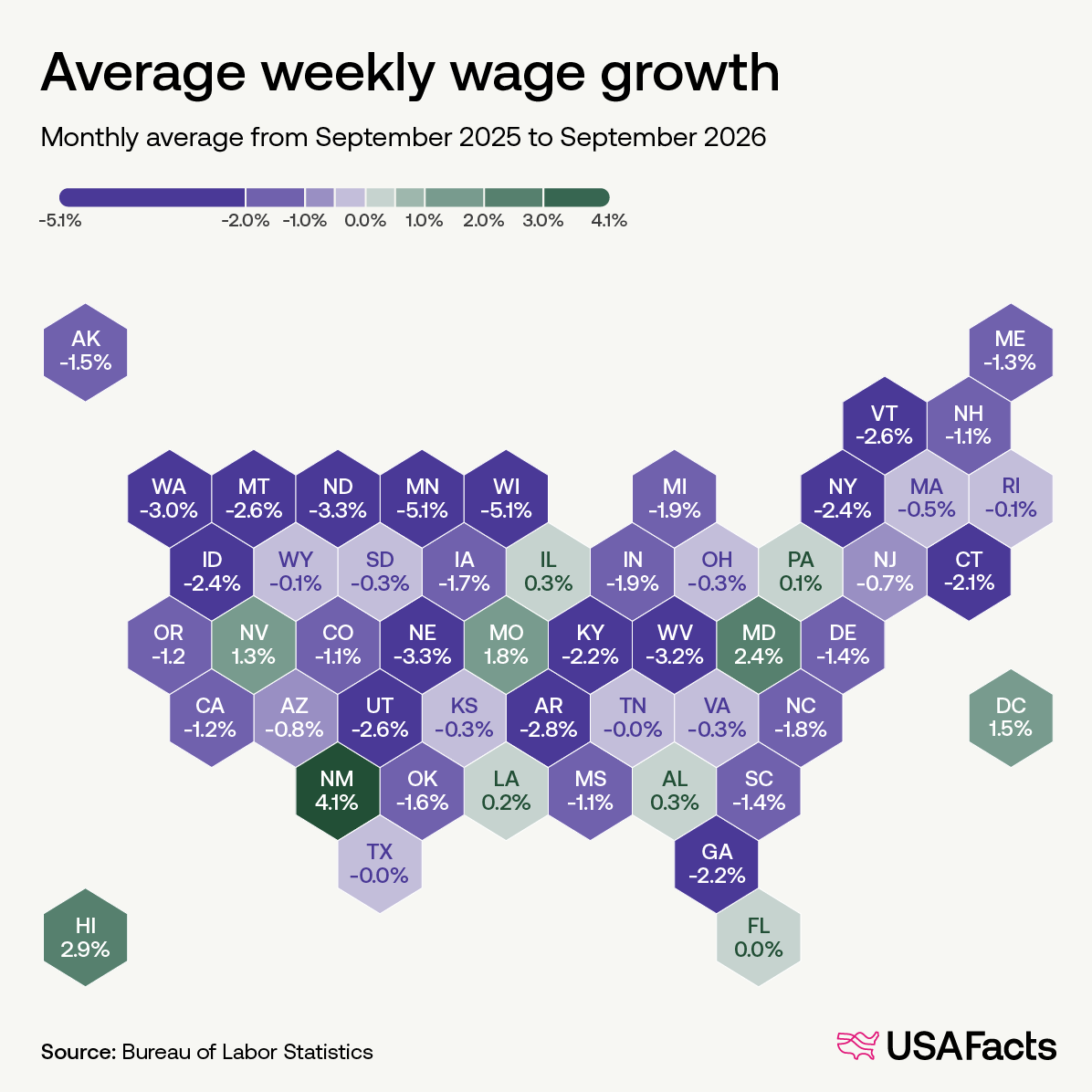
When wages grow faster than inflation, workers can afford a little more each year, but when prices rise faster, the same paycheck stretches less far even if the dollar amount goes up. Historically, wages have usually come out ahead, though the gap has swung in recent years from higher wages in the pandemic to the inflation spike of 2022. The two are nearly neck and neck in the latest data. Wages grew 0.11 percentage points slower than inflation from September 2025 to September 2026. Nominal wages — the literal dollars earned regardless of the cost of living — increased by 3.6% while inflation stood at 3.7%.
We can measure inflation’s effects on wage growth by comparing the nominal average weekly wage to its inflation-adjusted equivalent. The nominal average wage grew from $1,255 to $1,301. That’s $46 more a week by the end of the 12 months. Accounting for inflation, real wage growth was -0.11%, or a decline of $1 per week.
Wage growth outpaced inflation in 10 states and Washington, DC, during this time. New Mexico had the highest real wage growth at 4.1%. In the other 40 states, wages didn’t keep up with inflation. Wisconsin had the steepest negative real wage growth at -5.1%.
|
|
May 2020 had a record-high gap, with wages increasing 7.5% over the previous year while inflation was at 0.1%. The Bureau of Labor Statistics (BLS) says this increase was due to lower-wage workers losing jobs during the pandemic rather than wages rising overall. The biggest negative gap was in June 2022, when nominal wages grew by 4.8% year over year while inflation hit 9.1%.
The BLS has published average weekly wage data since March 2006. Average wages outpaced inflation in 72.2% of the reported months.
Track a dollar’s value over time with our inflation calculator. Simply enter the dollar amount for your local gas prices, recent concert ticket purchases, college tuition, etc., and select a past year for a comparison.
|
|
What’s gerrymandering and how does it work? |
|
Last week, voters in every Congressional district voted for House reps. Some of those districts were new as of this election. In the newest episode of Crash Course: Big Questions on US Government, we’ll look at districting, including which kinds of gerrymandering are legal and which aren’t. We’ll also learn why it’s getting harder to draw district lines without giving one party an unfair advantage over another. |
|
Votes are still being counted in the Alaska and Mississippi Senate races. We've compiled the timelines for each state’s election certification system. Since 1913, less than 53% of senators appointed to fill vacancies have retained their seat in a general election. Last Tuesday, one appointed senator, Ashley Moody, won her general election. Appointed senators Darline Graham and Jon Husted lost theirs. Learn more about senate appointments. Ready for a challenge? See if you can ace the weekly fact quiz. |
|
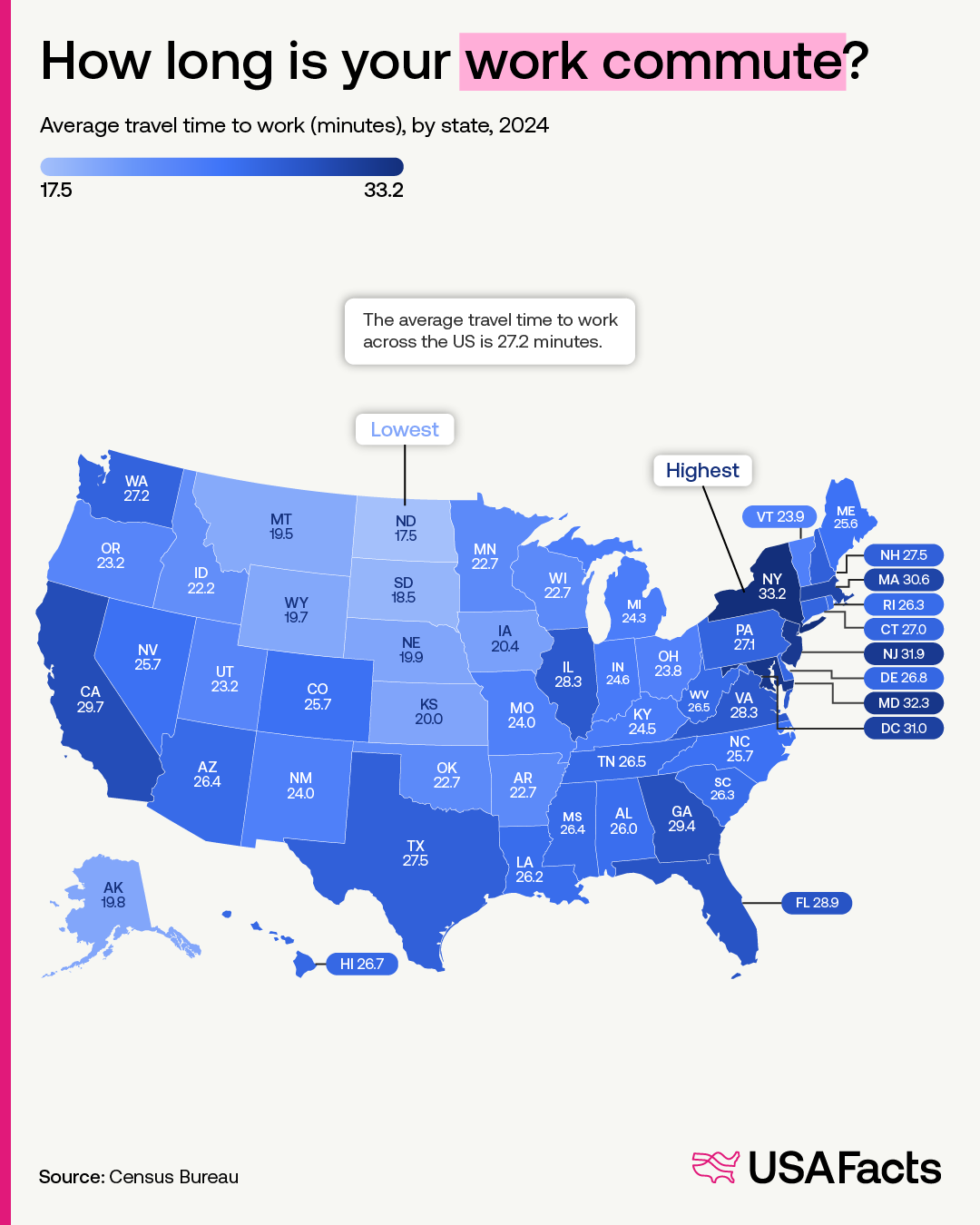
Are you reading this on your way to work (if you’re driving, eyes on the road!)? The average commute time for Americans is about 27 minutes. New York workers have the longest commute at 33 minutes, while North Dakota has the shortest: just over 17 minutes. If you're carpooling or have a few more stops on your route, you can see this data on Instagram. |
|
Was this email forwarded to you? Sign up for your own weekly issue of the USAFacts newsletter. |
|
|
|
|