Is global growth exposing the limits of your content operation?
As global businesses expand, the systems behind their content come under more pressure, and that is forcing tougher choices about how work gets done. This month, Wellhub shares how it is scaling multilingual marketing content, while Raja Rajamannar explains why Mastercard dropped its name from its logo. We also hear how the CEO of Day Translations responded when a client left for an AI alternative, and get Jason Hemingway’s take on the systems global content now depends on. For anyone considering a platform change, we cover the seven questions teams need to answer before sign-off.
Wellhub builds a stronger model for global content
As global marketing grew, Wellhub’s Localization Director, Josevi Abad, and his team wanted more control over the systems behind its multilingual content operation. They began moving away from agency dependency, using their own data to automate more of the work and build an operation the business could rely on. Multilingual output increased by 77% without increasing headcount. “Phrase has given Wellhub the foundation to scale global content in a way that works for the business.”
Most global campaigns are still created centrally, then reworked market by market. InCMO Alliance, Phrase CMO Jason Hemingway argues that this model is costing businesses time and weakening customer relevance. He looks at what changes when market context is built into the brief from the start, and why AI makes that approach easier to scale. Jason offers advice to “Design for global from day one.”
Why content is harder to control as companies grow
Every new market, audience and channel multiplies the amount of content a global business has to manage. LT-Innovate shares insights from Jason Hemingway on why that growth is exposing weaknesses in the systems global content depends on. He looks at what companies need to change as that complexity increases, and leaves leaders with a simple question:
“Is your content built to travel, and do you have the infrastructure to ensure it arrives intact?”
Raja Rajamannar spent more than 12 years as Mastercard’s Chief Marketing and Communications Officer. Taking the company name off its logo was one of the boldest calls of his tenure. He explains how the team tested the idea globally before taking it to the board, and why he believed Mastercard no longer needed its name in the logo.
“It could have gone wrong. And that would have been the end of my career at Mastercard for sure.”
Sean Hopwood, Founder and CEO of Day Translations, built the business without outside investment. When a client cancelled on a Friday for an AI alternative, his team spent the weekend adapting a service they were already developing. It was ready by Monday, and the client returned.
"It's the perfect example of adaptation. Make an adjustment, find out what the client wants and give them what they want."
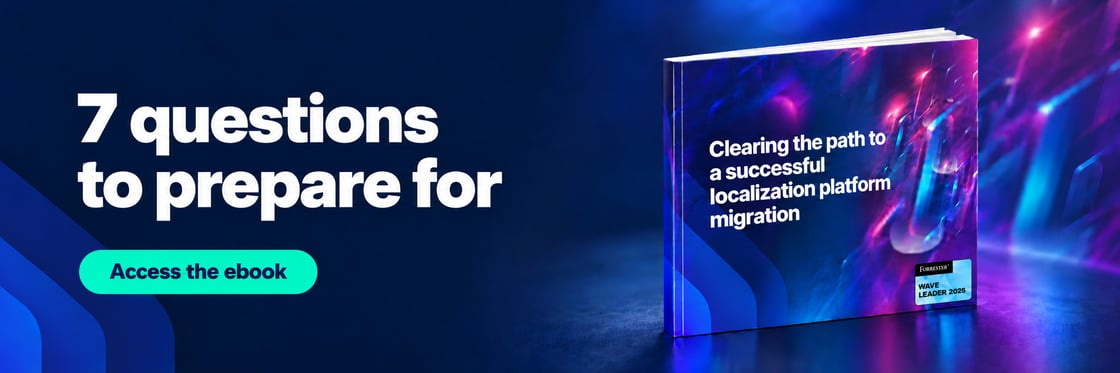
Changing localization platforms? The seven questions you’ll need to answer internally
Our new guide covers the questions that usually come up before a migration gets approved, including whether AI could do the job instead. The answers come from Phrase experts who hear these questions every day. You’ll also find talking points to help you make the case internally and guidance on how long a large migration can take.
Content output is rising faster than the operating models built to manage it. Yet many businesses still treat global content as a series of projects, restarting the process every time a campaign or market is added. In this article I examine why this approach becomes harder to sustain as volume increases, drawing on insights from technology leaders and examples of companies already changing how they operate.
tcworld brings together thousands of professionals working across technical communication, with more than 100 exhibitors showcasing the technology changing how content is created and delivered. Visit the Phrase team at Booth 2C10. Use code Fair26Phrasefor complimentary admission to the tekom fair.
Phrase is proud to be a Gold Sponsor of Language Intelligence 2026, with Martin Švestka, Director of Product Management at Phrase, delivering the keynote,"The Rise of Language Intelligence". Martin will explore why language is becoming a critical part of enterprise AI and what businesses need to make it work across markets. You can also meet the Phrase team at our table in the foyer.