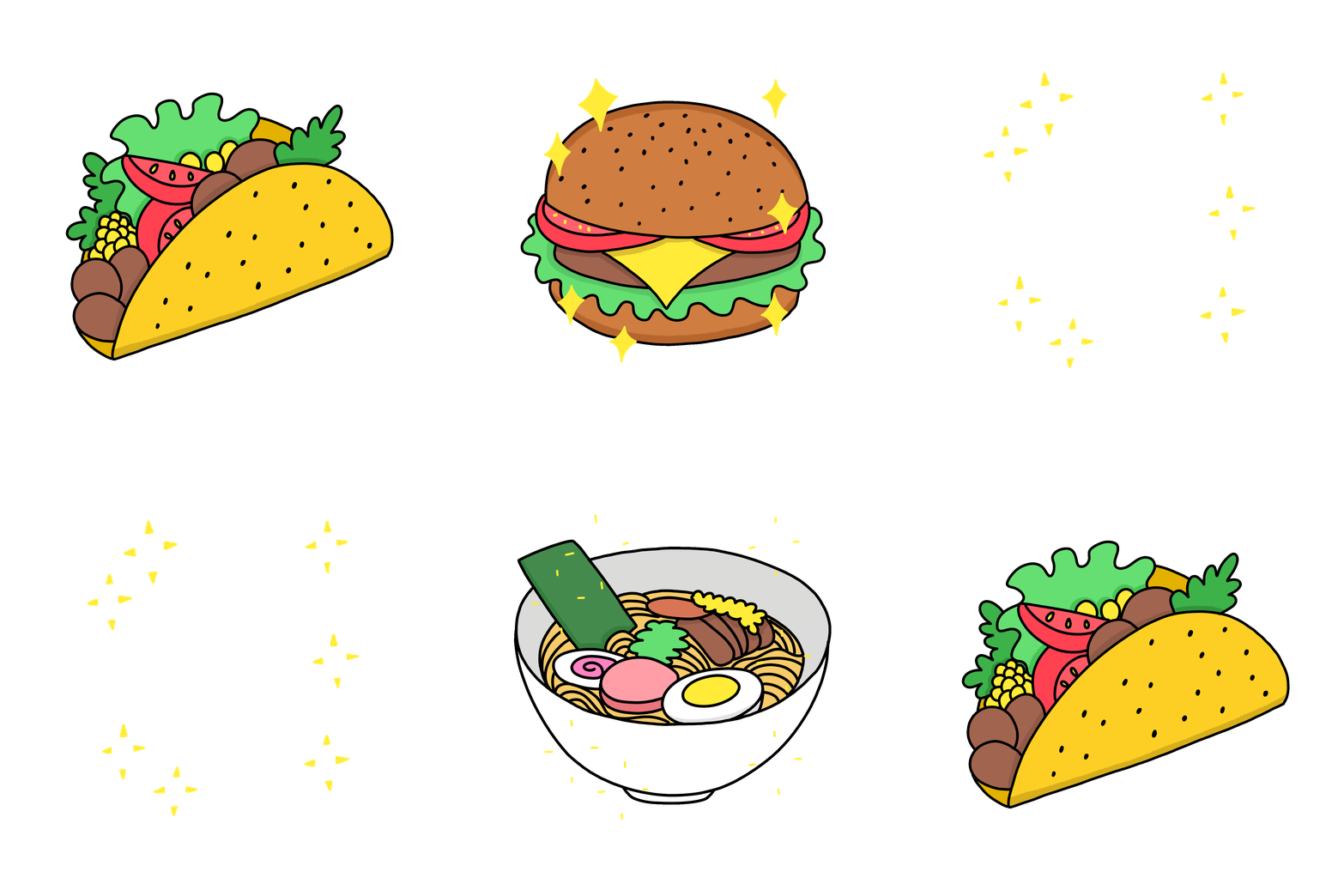
There are people whose entire job is to make you hungry by sending you pictures of food. Think about that for a second. Somewhere, a grown adult is getting paid to argue whether a gummy bear looks more appetizing at a 37-degree angle. Another is sitting in a meeting debating the impact of a cheese pull. (Do not even get me started on muckbang videos. Luckily, this is an email about emails, not videos... thank god.)
Food emails have the impossible task of making you taste something with your eyeballs. No smell, no flavor, no satisfying crunch. Just pixels, persuasive copy, and a disturbingly intimate close-up of a piece of food you have never examined that close before.
Maybe that is why Food has become one of the most-loved categories on Really Good Emails lately. The creativity is getting ridiculous (in the best way), and we are even nominating Food as a category for our next Annual Email Awards next month. So grab a snack, preferably something that would concern your dentist, and feast your eyes on some emails that have absolutely no business making you this hungry. |
|
|
|
And now, a quick ad break: |
|
|
|
Articles worth reading so you can stop thinking about food: |
| |
|
|
| Nonprofit welcome emails: Turning subscribers into supporters |
Most nonprofit welcome emails say thanks for subscribing and then awkwardly ask for money. But what if the goal was not an immediate donation? Tim Yeadon explains how to build welcome sequences around the behaviors that actually turn subscribers into supporters. A lesson that applies to just about any brand trying to build a relationship before asking for someone's wallet. |
|
|
|
|
| Revenue shows movement. Margin shows if it was worth it. |
Congratulations! Your email campaign made $50,000. Unfortunately, after discounts, shipping, and returns, you may have made approximately three dollars. Petros Fotiadis makes the case for measuring retention success by contribution margin instead of revenue, because selling more stuff is not particularly impressive if you are giving away the profits. |
|
|
|
|
| Spam complaint rate: Thresholds and reduction strategies |
Apparently, it only takes a handful of people clicking "Report spam" to start ruining your sender reputation. Gmail recommends keeping complaints below 0.1%, which is a remarkably small margin for error when you are emailing thousands of people. Omnisend breaks down the thresholds, what causes complaints, and how to stop subscribers from telling their inbox providers that you are the problem. |
|
|
|
|
| The psychology behind emails people actually read |
Turns out people are getting pretty good at recognizing when marketers are trying to manipulate them. Fake urgency, mysterious subject lines, countdown timers that magically restart tomorrow. Jenn Kjellman explores the psychology behind what earns attention, from curiosity and relevance to timing and storytelling. Because tricking someone into opening your email is not the same as making them want the next one. |
|
|
|
|
You know what to do: hit reply, and we'll tally up the votes. Then we'll try to figure out what it means. |
Question: What does your preferred work snack say about you? |
A. Chips. I need everyone on this Zoom call to hear me chewing. B. Chocolate. I am emotionally compensating for something. C. Trail mix. I enjoy paying $14 for raisins. D. String cheese. I am just a giant toddler with a salary.
E. Nothing. I survive entirely on deadlines and resentment. Have a snack habit that deserves its own psychological evaluation? Hit reply and confess. We are not qualified to help, but we are extremely interested. |
|
|
|
Thanks for reading and learning since September 2026. |
| |
|
RGE started in 2014 and is
now part of Beefree. |
|
| If you want to send us gifts, fan mail, or anything that does not include stalking or us waking up with you in our living room — you can find us at: |
 | C/O Beefree, 450 Townsend St, Suite 1, San Francisco, CA 94107, USA |
|
|
|
|
|