|
|
|
NOVEMBER 2026
|
An identity revolution is underway
|
|
|
|
Enterprise governance was built around two kinds of actor. People got broad, role-based permissions and the judgement to use them well. Workflows got narrowly scoped API keys to do one predictable job. Agents fit neither.
|
|
At first that didn’t matter much. Agents worked alongside a person who watched each step, so it could reasonably borrow their credentials. That’s increasingly no longer true. OpenClaw, Hermes, Grok Bot and Dots now run for hours without anyone watching, making their own decisions. They need the reach of a person, but the limits of a workflow.
|
|
|
|
To see agent identity running against your own IdP, follow the links below
|
|
|
|
|
|
|
|
|
|
|
What an agent's identity has to carry
|
|
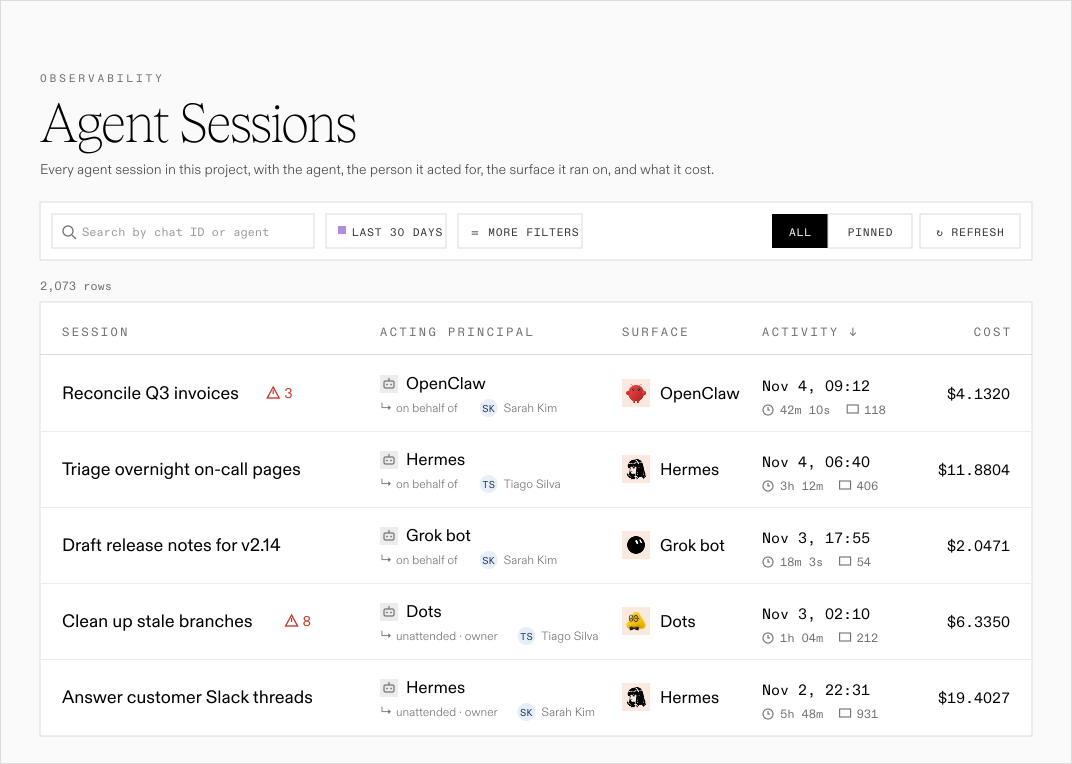
People’s permissions are built on who they are. Agents’ permissions have to be built on what they’re doing. The same agent can start a session for one person and one job, then another for someone else entirely, so access tied to the agent itself is either too broad or too brittle. Speakeasy scopes every session to its task: who created the agent, who’s driving it, what it was started for, and the call it’s about to make.
|
Who created it
|
Every agent has an owner: the person who registered it and is accountable for what it does.
|
|
|
|
|
|
What it intends to do
|
|
The task it was started for, so permissions can be scoped to that and nothing wider.
|
|
|
|
|
|
|
|
|
|
|
|
|
|