|
|
|

|
Oct 21, 2026
|
|
|
|
|
Supported by
|

|
|
|
|
|
Happy Wednesday! Elon Musk says SpaceX and Tesla have formed special committees to explore a merger. OpenAI buys Orchestra Bio, a startup that builds AI agents for drug development. Salesforce is buying marketing software maker Braze for nearly $5.7 billion.
|
|
|
Elon Musk said Tuesday SpaceX and Tesla have formed special committees to explore a potential merger. This is the first step toward what would be the largest mergers of all-time, bringing together Musk’s sprawling empire of electric cars, rocket launch, satellite and AI businesses. Tesla currently has a market cap of nearly $1.5 trillion while SpaceX is trading around $2 trillion. Musk, who is chief executive officer of both companies, said he thinks there’s a lot of merit to combining the companies. A merger of two public-traded companies would require a 50% vote from Tesla’s shareholders, he said on a call to discuss SpaceX’s results. Musk is a controlling shareholder of SpaceX but not Tesla. There’s no guarantee that the two companies will pursue a tie-up. “Because I’m a conflicted party I can’t be in on these discussions. I don’t think we should assume that a merger is a certainty,” Musk said. Shares of Tesla are up 1% after Musk’s comment. Shares of SpaceX are trading 5% higher after it beat analysts’ expectations on revenue growth.
|
|
|
OpenAI is buying Orchestra Bio, a startup that builds AI agents to help biotech and pharmaceutical companies with drug development, the AI lab announced on Tuesday. The acquisition is an early move toward a goal long-touted by OpenAI executives of using the company’s technology to help with biological research and drug discovery. Founded in 2022 by Ashoka Rajendra, Orchestra Bio uses agents to help with tasks like monitoring the drug manufacturing process for issues that may cause delays, and tracking studies relevant to development. In April, OpenAI launched Rosalind, a model specialized in biology and drug discovery. According to the company, Orchestra’s team and technology will work closely with the team currently working on Rosalind. “Together, we aim to build agents that help teams connect scientific findings with the studies, decisions, and next steps needed to advance a potential medicine,” OpenAI said in a press release.
|
|
|
Salesforce said Tuesday it has agreed to buy customer engagement platform Braze for about $5.66 billion including debt. Braze, which was founded in 2011 and went public a decade later, is a longtime competitor of Salesforce’s Marketing Cloud product, which businesses use to communicate with customers via email, text messages and push notifications. Braze’s ability to ping customers in specific situations, like when they’ve abandoned an online shopping cart, could help Salesforce upgrade Marketing Cloud, according to a current Salesforce employee. The deal price represents a roughly 58% premium to Braze’s closing price Monday. Salesforce has been on an acquisition spree lately. This year alone, it struck deals to buy customer service startup Fin for $3.6 billion, content maker Contentful and customer research startup Listen Labs.
|
|
|
DeepSeek has open-sourced DeepInfer, the in-house framework for running its own models. The move reveals some of the technical secrets behind how the Chinese AI developer achieves high efficiency and low compute costs when running its models at scale. Access to DeepInfer is likely to help third-party AI inference platforms that host DeepSeek models, such as Fireworks and Baseten, run DeepSeek’s latest models more efficiently and earn higher margins. But DeepInfer could also have a broader impact. Other AI labs in China and the U.S. could study DeepSeek’s open-source framework and learn how to increase the inference efficiency of their own models, developers say. DeepInfer supports Nvidia’s Blackwell chips as well as Huawei’s Ascend 950 chips, DeepSeek said. DeepInfer, however, doesn’t reveal everything. DeepSeek, for example, hasn’t open-sourced some of its proprietary techniques, such as those for managing memory and controling how the model distributes traffic across servers. While DeepSeek’s revenue is minuscule compared to OpenAI and Anthropic, the Chinese company is achieving healthy margins. Its gross margin for the business of selling access to its models in the first seven months of this year was 82.9%, higher than both Anthropic and OpenAI during similar periods, The Information previously reported.
|
|
|
Netflix reported its slowest quarterly revenue growth in three years on Tuesday, with revenue rising 11.8% to $12.9 billion in the third quarter, in line with its own expectations. The streaming company now expects revenue to increase 13% to $51.5 billion for the full year, slightly below the midpoint of its previous forecast range of 13% to 14%. Shares fell 5% after hours. The report follows Netflix’s shake-up of its top leadership, including the departure of chief content officer Bela Bajaria, announced last week, and reported cuts of 6% of its workforce. Free cash flow rose to $2.88 billion in the third quarter, from $2.66 billion in the same quarter a year ago. It lowered its 2026 free cash flow forecast to about $12 billion from $12.5 billion, citing a real-estate transaction closing in the fourth quarter. Netflix makes the vast majority of its revenue from subscriptions, but it has been expanding its advertising business since November 2022, when it launched cheaper, ad-supported tiers. On Tuesday it lowered its 2026 advertising revenue forecast to about $2.7 billion, from approximately $3 billion previously, citing a slower-than-expected rollout of some advertising product capabilities. It plans to launch its ad supported tier in 15 additional countries in 2027, beginning in March. Netflix viewers in the U.S. have been spending less time watching the service in recent years. In a letter to shareholders, the company acknowledged “investor concern” about its view hours growth but said engagement remained healthy, citing members’ response to price increases in line with expectations.
|
|
|
Meta Platforms’ chief global affairs officer, Joel Kaplan, is set to leave the company next year, a Meta spokesperson said, after more than 15 years at the company in which he helped strengthen ties with Republicans including the Trump administration. Kaplan has overseen Meta’s global policy operations during a period of significant growth, political scrutiny and controversy. He joined Facebook in 2011 as vice president of U.S. public policy and was promoted to lead global public policy in 2014. Before joining the company, he served as deputy chief of staff for policy under President George W. Bush. Axios earlier reported Kaplan’s planned departure. At Meta, Kaplan helped shape the company’s relationships with lawmakers and regulators worldwide, navigating disputes over content moderation, privacy and regulation. He became chief global affairs officer in 2025, succeeding Nick Clegg, and has played a central role in defending Meta’s business interests and political strategy. Kaplan’s departure will mark a significant change in Meta’s leadership as the company continues to navigate complex political issues, regulatory challenges and concerns around privacy.
|
|
|
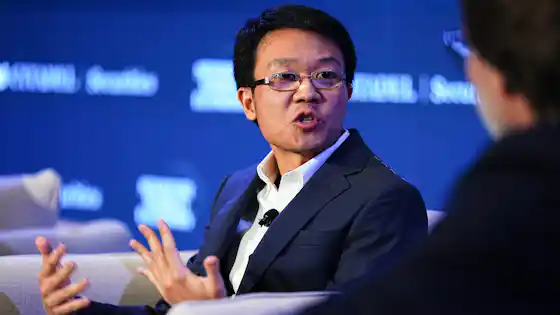
Compute Labs, a startup founded on the vision of bringing more capital to the market for graphics processing units, has started a matchmaking service for companies looking to buy the chips and lenders willing to lend against them. The move comes as a range of financial firms and startups are building out marketplaces and more standardized contracts around GPUs. To connect lenders and borrowers, Compute Labs has created a technology platform that uses agentic AI to standardize deal structures, perform due diligence on specific terms, and evaluate the experience of management teams, among other elements required by lenders. All told, the company says the technology can reduce the manual screening time needed to analyze a deal down from weeks to minutes, though humans remain in the loop for final review. The company has a pipeline of $10 billion in deals, and is on track to close $1 billion this quarter, CEO Albert Zhang said in an interview. To date, the startup has worked on roughly $200 million of deals. “We learned our lessons and we closed a few deals, but then the demand got so overwhelming,” Zhang said. The technology started as an internal tool that they decided to set up “a standalone platform,” he said, “so that we can do the matchmaking more efficiently.” Compute Labs has relationships with over 40 lenders, and roughly 80 neoclouds, according to Zhang. Compute Labs has raised $4 million in funding led by Protocol Labs.
|
|
|
Mike Clayville, the former Amazon Web Services enterprise sales chief who played a key role in expanding its business with Fortune 500 firms before departing for Stripe six years ago, is back in the fold. Clayville recently rejoined Amazon as a vice president under Peter DeSantis, a senior vice president who oversees foundational AI models, custom chips and quantum computing, according to a person with direct knowledge of the hire. Clayville’s new title, and the nature of his role, couldn’t be learned. Clayville first joined AWS in 2013 and spent seven years there as vice president of worldwide commercial sales and business development, helping the cloud provider strike major agreements with companies like GE and Pfizer. Those kinds of deals helped AWS cement its status as the industry’s leading cloud provider and paved the way for other large businesses to move more of their computing to the cloud. Clayville left AWS in 2020 to become chief revenue officer at Stripe, and was promoted to chief customer officer in 2023. After leaving Stripe in early 2024, Clayville helped recruit AWS executives to work at Omniva, a data center startup founded by Amazon, Microsoft and Meta Platforms veterans.
|
|
|
A collection of giant insurance firms bought more than $740 million of CoreWeave debt connected to a cloud-computing contract with Meta Platforms in the second quarter, highlighting how insurance money and the AI infrastructure boom are becoming intertwined. Those purchases were made by a group of companies that include American General Life Insurance, Fidelity & Guaranty Life and Security Life of Denver, which have their portfolios managed by Blackstone, a key financial backer for CoreWeave. Businesses like CoreWeave need to find buyers of their debt to fund their many data center projects. In turn, insurers are looking for higher-yielding debt that comes at investment-grade quality. The CoreWeave debt earned its investment-grade rating because it is tied to Meta’s ability to keep paying CoreWeave—an important distinction because CoreWeave’s traditional corporate bonds haven’t typically earned such high status, putting them out of reach of investors like those insurance companies.
|
|
|
|
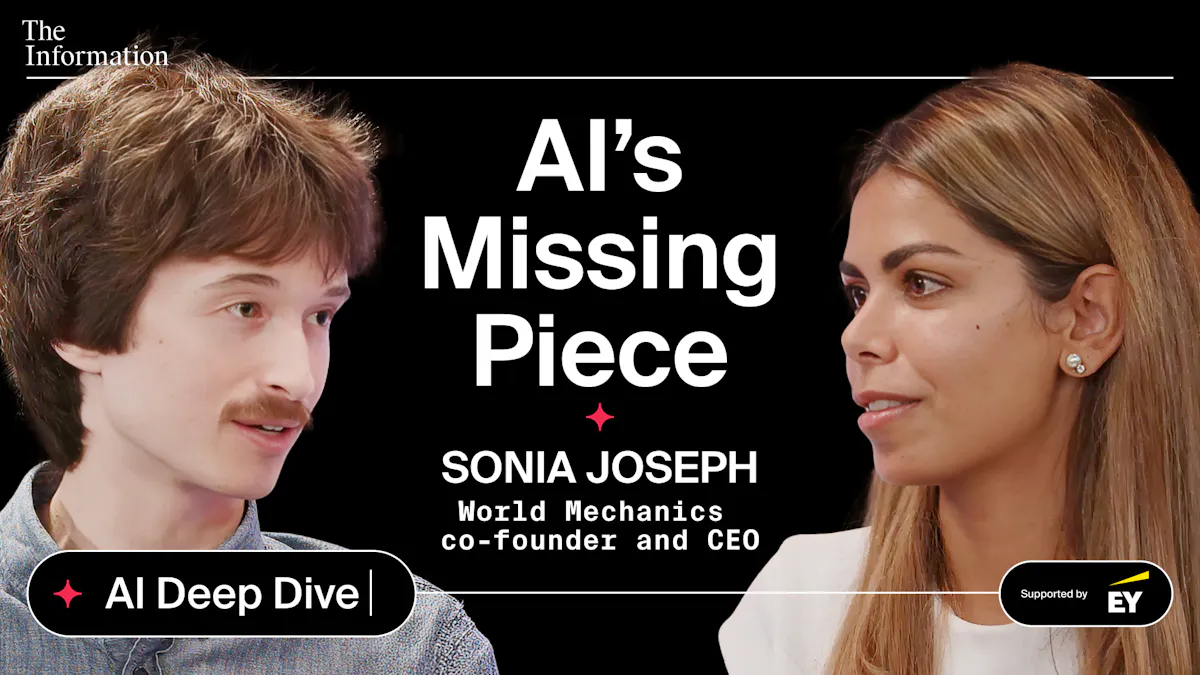
This week on AI Deep Dive
Check out the most recent episode of AI Deep Dive. A reported deep dive into how frontier AI actually gets built — the models, the money, and the people behind them.
| |
Popular articles
By Stephanie Palazzolo and Amir Efrati
|
|
|
|
Opportunities
Empower your teams to stay ahead of market trends with the most trusted tech journalism.
Learn more
Reach The Information's influential audience with your message.
Connect with our team
|
|
|
|
|