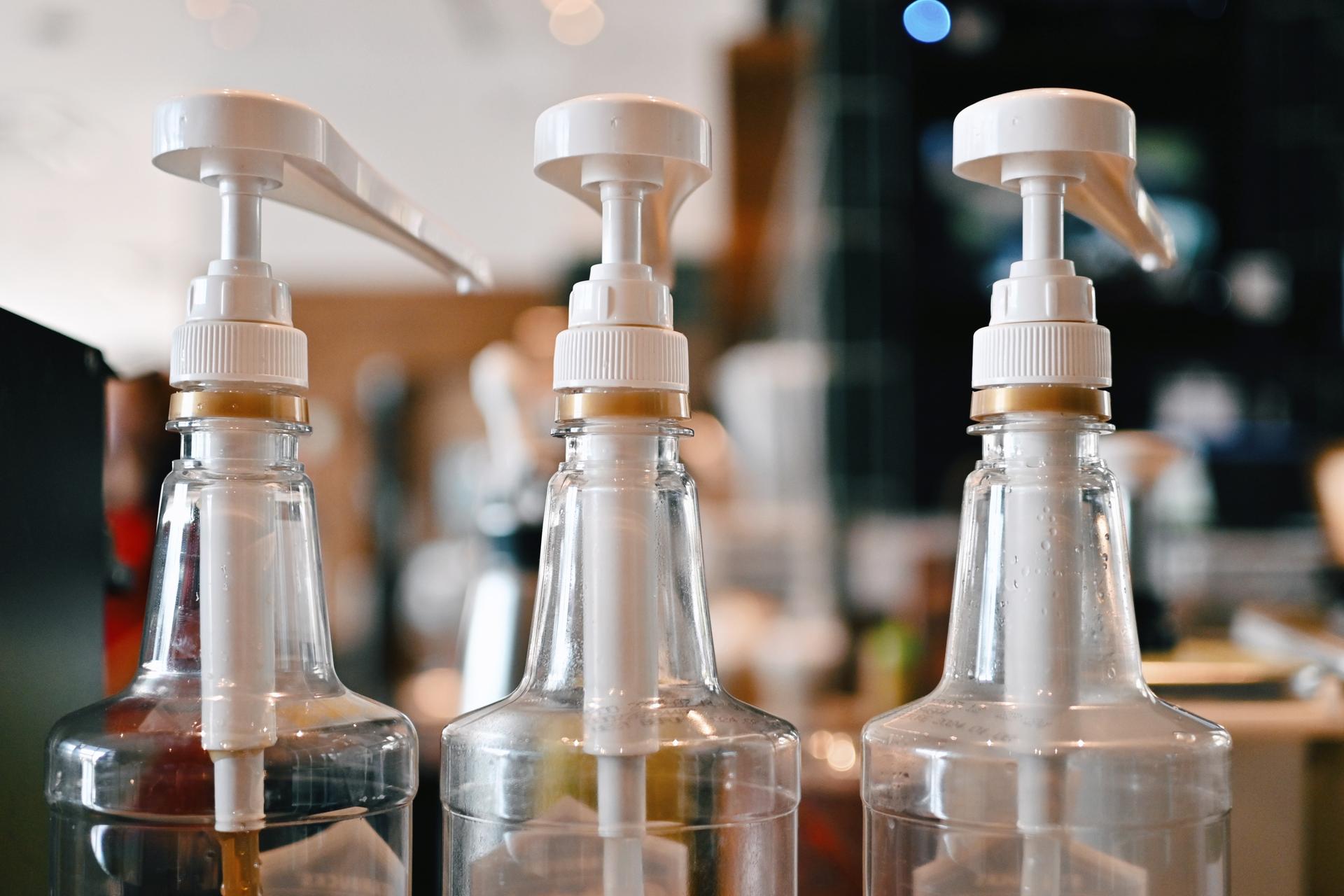
Today’s edition is about coffee shops, but while we’re talking about syrups, I have to wonder: Did the “Italian sodas” synonymous with the “global village coffeehouse” haunts of yore walk so that the “dirty sodas” of today’s TikTok-ified shops could run? |
|
|
|
Is this a coffee shop red flag for you? |
A few weeks ago, my friend, the cookbook author Abi Balingit, had a hit tweet. “If I see these at a cafe, I’m walking out immediately,” it said, accompanying a picture of a shelf of Torani syrups, in flavors like French vanilla, almond, and strawberry. I see this type of sentiment often: that premade syrups now constitute a major red flag at coffee shops.
Last year, Folu Akinkuotu, who intermittently writes the newsletter Unsnackable, published what she called a “Torani tirade.” In a reversal from her younger self’s pro-“Italian soda” stance, she wrote that, “reveling in nostalgia and the economic liberties of adulthood,” she’d bought some of the brand’s syrup a few years ago. “Frankly, it was trash,” she concluded, offering up suggestions for alternatives to “save” her readers from “the tedium of a Torani lifestyle.”
I thought about these feelings as I ordered at a Brooklyn coffee shop the other day, where the menu stated the prices for both house-made syrup and Hollander, a consumer brand I’d never heard of prior. Both incurred the same $1 upcharge, and yet, presumably, the difference in sourcing still mattered to some people. To a certain type of coffee drinker, the biggest red flag for a coffee shop now is premade syrup, with the biggest brands, Torani and Monin, seeming to catch most of that flack. This coffee drinker — the person who seeks out “little sweet treat” drinks flavored like carrot cake and cinnamon rolls, or wants a very specific vanilla syrup in their latte — seems to be growing in market dominance and reshaping the specialty coffee industry with their preferences.
|
|
|
|
For independent coffee shops, house-made syrup has become increasingly essential, denoting for many consumers a major indicator of quality, whether that’s in terms of the effort poured into a drink that might run them $9 or the fact that it simply differentiates a shop from the bigger chains. “I’m behind the counter often, so I hear that question all the time: ‘Hey, do you guys make your syrups in-house?’” says Dennis Medina, co-owner of Room Service Coffee in Ventura, California.
I’ve heard from a handful of coffee shop owners, including Medina, who’ve said they never planned to focus on syrups and fancy toppings in the first place; now, they’re known for them and have had to organize their shops around them. At Room Service, Dennis and his wife Carrie have even hired a full-time prep person whose focus is making syrups and cream tops. It’s “all these things that we do in-house that make us special,” Carrie says.
Read my full piece about house-made syrup and what its rise says about the modern coffee shop industry on Eater. |
Some syrups are more of a green flag
I bought vanilla syrup from the French brand 1883 Maison Routin for my midmorning matchas after hearing it was better than Torani or Monin. While researching this story, I read about Holy Kakow on a forum for baristas, several of whom endorsed it — then clocked it behind the counter at a coffee shop I went to the next day. Years ago, I talked to the founders of Transcendence, syrup brand that features flavors such as Indian gulab jamun and Algerian baklava. Its goal is partially to bring new flavor perspectives to specialty coffee, but also to make syrup with more thoughtfully sourced ingredients: Its Dutch speculaas cookie syrup, for example, features spices from Diaspora Co., the spice company that touts a more equitable sourcing model, in which its farmers in India receive living wages as well as lasting infrastructure including irrigation and mills.
|
|
|
|
|