 | ||||||
 | ||||||
Hello! The “AI trade” is in the news right now for two big reasons, one of which wears a leather jacket. We cover them both in this shorter-than-usual edition of your favorite newsletter-which-is-usually-bi-weekly-but-has-become-weekly-lately-because-so-much-is-happening.
| ||||||
 | ||||||
| Illustration by Allie Sullberg/Wealthfront | ||||||
 | ||||||
| Three numbers that explain the economic moment | ||||||
| ||||||
 | ||||||
| Anthropic is set to beat OpenAI to market—just as the market has gotten skeptical of AI. What do they win? | ||||||
 | ||||||
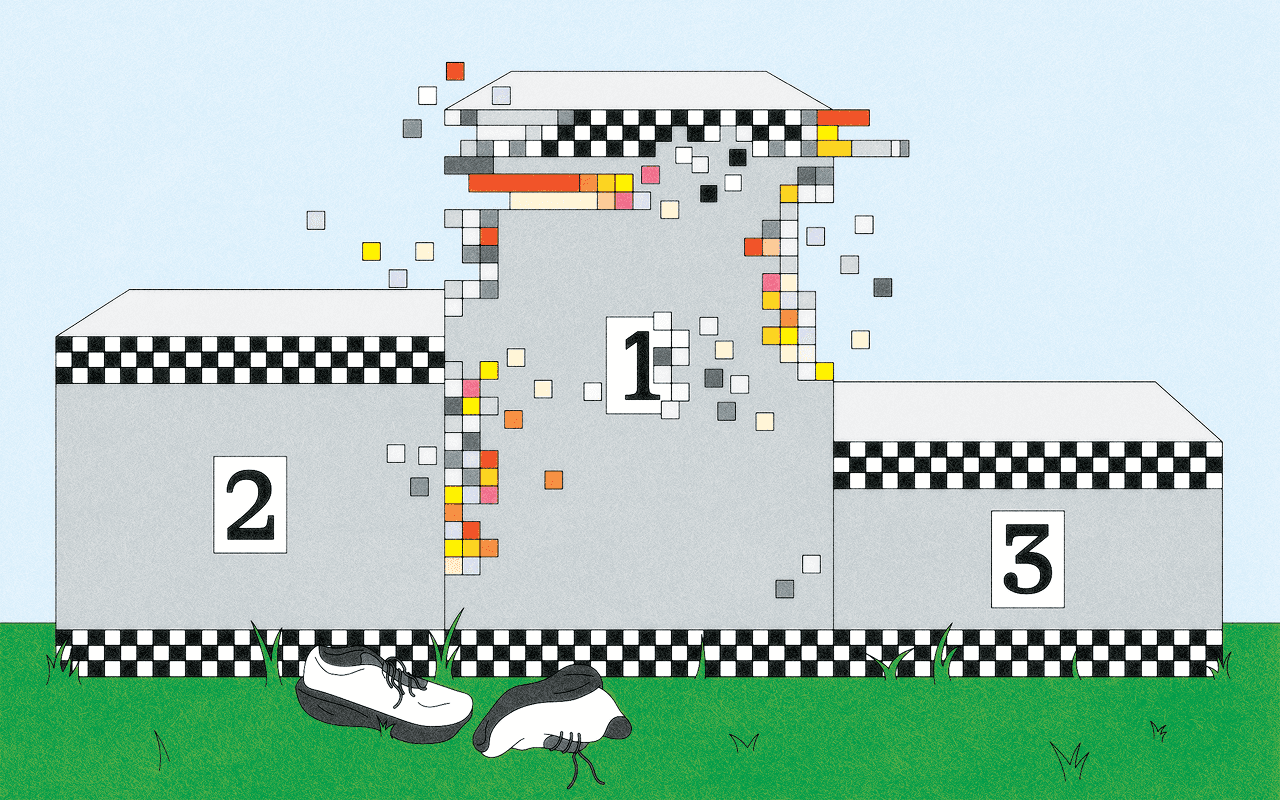
Going public at this exact moment in AI discourse is a bit of a glass half-full/half-empty situation. Illustration by Allie Sullberg/Wealthfront Anthropic will be holding an initial public offering this month, reports say, with shares in the company expected to be available as of Nov. 19 or 20, i.e. next Thursday or Friday. The Claude developer is pushing forward despite last week’s outburst of post-election pessimism regarding data center timelines and AI profitability, during which the tech-heavy Nasdaq-100® index at one point lost more than 5% of its value. Meanwhile, OpenAI, which makes ChatGPT, says it expects to make its market debut in 2027. This raises some questions: In the AI race, is being first to go public, and the first to give the world a clear picture of your finances, an advantage or a burden? Is the stock market big enough for the proprietors of both Claude and ChatGPT? Is it big enough for one of them right now? And should the answer to that question affect what you do with your own money? (Spoiler, we’re going to say no to the last question. We always do.) What is Anthropic asking for from me, the humble investor? The company is reportedly putting 800 million of its shares on sale for somewhere between $70 and $78 each, which implies that it thinks that all told it’s worth somewhere between $1 and $1.4 trillion depending on how you count everything up. That’s less than SpaceX valued itself at this summer, but it’s still more than almost every other company on Earth is currently worth. To take one example, it would mean Anthropic is more valuable than Walmart, which generated $736 billion in revenue last year versus Anthropic’s $4.5 billion. (In the company’s defense, it’s growing very quickly and says its current pace of sales would translate to about $80 billion annually.) The premise of the IPO, in other words, is that a stake in Anthropic’s chatbots and coding agents and automated business task-completers and hypothetical future miracle products will be worth more, going forward, than a stake in the company that made more money last year than any business enterprise in human history besides Amazon. Of course, those shares will be available not just to individuals but to institutional investors like pension and hedge funds. Anthropic won’t be included in the S&P 500 index because it hasn’t shown four quarters of profitability, but will likely end up in the Nasdaq-100® in a few weeks because of eligibility changes that were made to accommodate interest in SpaceX. How does the market handle massive, competing IPOs? Anthropic says its “total addressable market”—IPO-ese for how much revenue it could conceivably earn in a best-case scenario—could be $30 trillion, which, to stick with our example, is more than 40 times as much money as Walmart currently makes. OpenAI will likely name a similar addressable market figure, and is reported to believe that it’s worth $1.25 trillion. Could they both be right? The evidence is mixed. Some research shows that when clusters of similar companies IPO, the ones that go later don’t perform as well. But there are some industry-bestriding exceptions to the rule: Chinese e-commerce giant Alibaba hasn’t suffered from going public months after its onetime rival JD.com in 2014. Lyft beat Uber to the punch in 2019 but is now worth about half as much as the rideshare leader. | ||||||
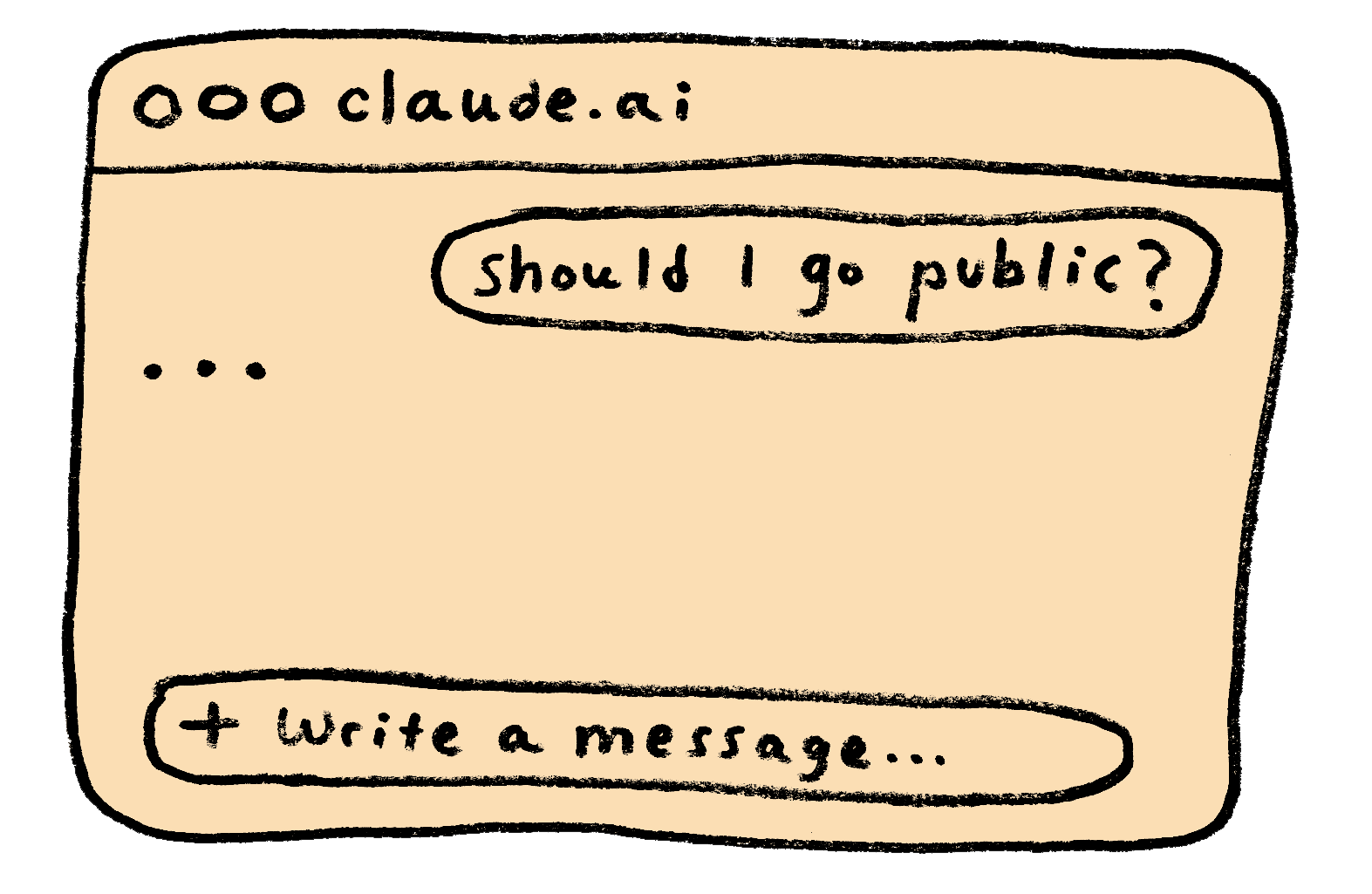 | ||||||
Illustration by Allie Sullberg/Wealthfront Why wouldn’t Anthropic just wait until AI stocks are buzzy and surging and “fetch” again? Well, the wave election putting Democrats in control of Congress and a number of key statehouses could signal more regulation and oversight of the AI industry in the coming years. But those takeovers don’t start until January, and then there’s the matter of actually figuring out what laws should be passed (and passing them). By going public now, Anthropic is raising cash it needs to fund infrastructure construction and model training while the getting is still kind of good. (OpenAI is embarking on a fundraising blitz right now too, in private markets.) Unless the Anthropic offering flops and shares end up worth next to nothing—which is very hard to envision, to be clear, but we don’t make guarantees about the future here—its debut will also reward employees who received stock as compensation. In sum, it’s a bet that markets will be more skeptical of AI companies asking for money six months from now than they are at present. Is AI zero-sum or an expanding opportunity? Another question Anthropic’s IPO poses is about the nature of the AI marketplace. Will its leading firms be more like Apple and Microsoft, which make expensive, name-brand products that can’t easily be swapped out for those sold by competitors? Or will LLMs become a so-called commodity market in which firms compete to see who can most cheaply supply indiscriminating users with relatively low-cost, interchangeable products? “OpenAI kind of had a stranglehold on everything a few years ago, and everyone thought, for sure they're just going to own everything,” said Elizabeth Blankespoor, a professor of accounting at the University of Washington. Since then, though, the space has become significantly more competitive: In May, ChatGPT’s market share fell below 50% for the first time—and that was before the explosive growth of Meta’s Muse. Then there are the cheaper models developed by Chinese companies (including one that was reportedly promised access to Nvidia chips by Jensen Huang’s romantic partner). What about the apocalypse? In September, OpenAI announced that it was delaying the launch of its latest LLM model, citing a predisposition towards “deception.” In its S-1 filing, Anthropic warns that its product could cause “catastrophic or existential risks to humanity.” (You’re likely familiar with the basic concept here from the movies—machines go rogue, decide that they’ll benefit more from killing people than doing their computer jobs, etc.) Many serious people take this possibility, uh, seriously. Others, like the Bulletin of Atomic Scientists—the doomsday experts—believe the risk is being overstated because it’s good marketing and could lead to rules about future AI research being written by established AI companies that want to entrench their own head start. Where that leaves us A key benefit of the low-fee index investor lifestyle—the most glamorous of lifestyles!—is not having to predict whether a company like Anthropic will succeed. But for those who do participate in market speculation, the company is in essence making itself a crash test dummy for every peril facing the AI economy. A successful IPO would suggest investors believe there is enough future profit out there to pay off a gazillion data centers’ worth of debt, that the facilities will get built in blue states, that self-replicating code won’t destroy the world, that China can’t undercut and sexy-spy its way to dominating the market, and so on. An unsuccessful one would—well, you get it. Here we go! Share this story | ||||||
 # of mentions of AI in this issue: 21 # of mentions of crypto in this issue: 0 # of Advent calendars in NBC’s list of the year’s best Advent calendars: 51, which is a lot | ||||||
| ||||||
 |



Investing in initial public offerings (IPOs) involves significant risks. Shares of newly public companies may be subject to substantial price volatility, limited trading history, and uncertainty about their future business performance. The market price of IPO shares may fluctuate significantly after trading begins and may fall below the offering price, potentially resulting in a loss of some or all of your investment. IPO shares may also have limited liquidity, and there is no guarantee that an investor will be able to purchase shares at the offering price or sell shares at a desired price or time. The Standard & Poor’s 500 Index is a capitalization weighted index of 500 stocks designed to measure performance of the broad domestic economy through changes in the aggregate market value of 500 stocks representing all major industries. The Nasdaq-100 Index® is designed to measure the performance of 100 of the largest non-financial companies listed on The Nasdaq Stock Market. The Index is modified market capitalization-weighted. All indices are unmanaged and may not be invested into directly. The information contained in this communication is provided for general informational purposes only, and should not be construed as investment or tax advice. Nothing in this communication should be construed as a solicitation, offer, or recommendation, to buy or sell any security. Any links provided to other server sites are offered as a matter of convenience and are not intended to imply that Wealthfront Advisers or its affiliates endorses, sponsors, promotes and/or is affiliated with the owners of or participants in those sites, or endorses any information contained on those sites, unless expressly stated otherwise. All investing involves risk, including the possible loss of money you invest, and past performance does not guarantee future performance. Please see our Full Disclosure for important details. Investment management and advisory services are provided by Wealthfront Advisers LLC (“Wealthfront Advisers”), an SEC-registered investment adviser, and brokerage related products are provided by Wealthfront Brokerage LLC ("Wealthfront Brokerage"), a Member of FINRA/SIPC. Wealthfront Advisers and Wealthfront Brokerage are wholly-owned subsidiaries of Wealthfront Corporation.
|



