If it feels like it’s getting stuffy, that’s because the AI industry’s biggest names are doing their best to suck all the air out of the room. On Monday, Anthropic, SpaceX and Meta Platforms all unveiled their respective plans for raising gobs of cash to fund their AI ambitions, which could collectively add up to almost a quarter of a trillion dollars, while the getting is still good. This isn’t going to make it any easier for the weaker AI players, especially struggling neoclouds, to find fresh air to breathe in the form of capital. The biggest headline grabber of the day, of course, was Anthropic’s S-1 filing for its initial public offering. You can read a comprehensive breakdown of the most interesting details in that filing by my colleagues here. Anthropic didn’t say in its paperwork how much it plans to raise, though Reuters has previously reported that figure could be as much as $100 billion. On Monday, Meta announced it has its sights set on a similar figure, as much as $95 billion through stock offerings. This wasn’t a surprise: Meta had telegraphed that a fundraising was in the offing as part of its recent third-quarter earnings report. In a filing last week, Meta made it clear it planned to move expeditiously to do the fundraising in part due to a congested pipeline of recent and future deals from the likes of Alphabet, SpaceX, Anthropic and OpenAI. A committee of Meta’s board, the filing said, “recognized that timing is important to secure capital before competitors saturate various funding options.”
Thanks for reading The Briefing, our nightly column where we break down the day’s news. If you like what you see, I encourage you to subscribe to our reporting here.
Greetings!
If it feels like it’s getting stuffy, that’s because the AI industry’s biggest names are doing their best to suck all the air out of the room. On Monday, Anthropic, SpaceX and Meta Platforms all unveiled their respective plans for raising gobs of cash to fund their AI ambitions, which could collectively add up to almost a quarter of a trillion dollars, while the getting is still good. This isn’t going to make it any easier for the weaker AI players, especially struggling neoclouds, to find fresh air to breathe in the form of capital.
The biggest headline grabber of the day, of course, was Anthropic’s S-1 filing for its initial public offering. You can read a comprehensive breakdown of the most interesting details in that filing by my colleagues here. Anthropic didn’t say in its paperwork how much it plans to raise, though Reuters has previously reported that figure could be as much as $100 billion.
On Monday, Meta announced it has its sights set on a similar figure, as much as $95 billion through stock offerings. This wasn’t a surprise: Meta had telegraphed that a fundraising was in the offing as part of its recent third-quarter earnings report. In a filing last week, Meta made it clear it planned to move expeditiously to do the fundraising in part due to a congested pipeline of recent and future deals from the likes of Alphabet, SpaceX, Anthropic and OpenAI. A committee of Meta’s board, the filing said, “recognized that timing is important to secure capital before competitors saturate various funding options.”
But perhaps the most intriguing fundraising effort of the three companies was SpaceX’s $40 billion financing agreement with an entity managed by Apollo Global Management, through which the company will lease graphics processing units for its data centers. It’s the largest GPU financing in history, SpaceX said. My colleague Alex Eichenstein hears that the funding will happen through a special purpose vehicle that will be off SpaceX’s balance sheet, an arrangement that could help SpaceX avoid any negative impact on its credit rating.
What makes the deal so interesting is that SpaceX CEO Elon Musk over the weekend, in a post on X teasing the $40 billion financing, used it as an opportunity to gloat over the reckoning he sees coming for his rivals. Musk said debt markets in recent weeks have closed to companies that don’t have revenue other than from AI data centers. “That means the 200+ neoclouds are going to see guppy-level death and consolidation,” he wrote. “Some will make it through, but not many.”
Musk’s argument is a self-serving one, of course: If he can help nudge already shaky neoclouds into the abyss, that could leave more capital for SpaceX and other big brands to tap in the future. The risk for Musk is that at some point investor disfavor spreads from neoclouds to bigger AI companies like his own. That could happen if AI customers start to lose patience with a lack of payoff from the technology.
Over the weekend, the chief economist for Apollo—the same firm arranging SpaceX’s record-breaking GPU financing—published a sobering essay that pointed to business customers’ growing scrutiny of AI investments. “Despite massive investments and widespread hype around artificial intelligence, the technology has delivered zero financial payoff to corporate America outside of tech,” the economist, Torsten Slok, wrote.
Microsoft’s Buyouts
Microsoft’s announcement on Monday of a new round of voluntary buyouts for employees had an eye-popping number attached to it: 60,000 employees, more than a quarter of its global workforce of 223,000, will be eligible for the offer. The actual number of Microsoft employees who take the company up on the offer is likely to be significantly lower, though, in part because the job market for tech industry employees is tight now.
My colleague Aaron Holmes is hearing that Microsoft is expecting a smaller percentage of employees to take the buyout than took advantage of a similar offer earlier this year. During that earlier round, about a third of the 9,000 employees Microsoft extended the buyout offer to actually accepted it. That suggests Microsoft believes fewer than 20,000 employees will take the latest buyout offer—a big number, to be sure, but one that doesn’t represent a dramatic thinning of the company’s ranks.
In Other News
DoorDash is holding exclusive talks to acquire Instacart, Semafor reported. On Friday, The Information first reported that Instacart was exploring a sale of the company and that it had held preliminary talks with DoorDash and Uber.
Cathedral, a startup founded by former members of the Department of Government Efficiency, said it gained access to Anthropic’s internal systems using AI agents.
Today on The Information’s TITV
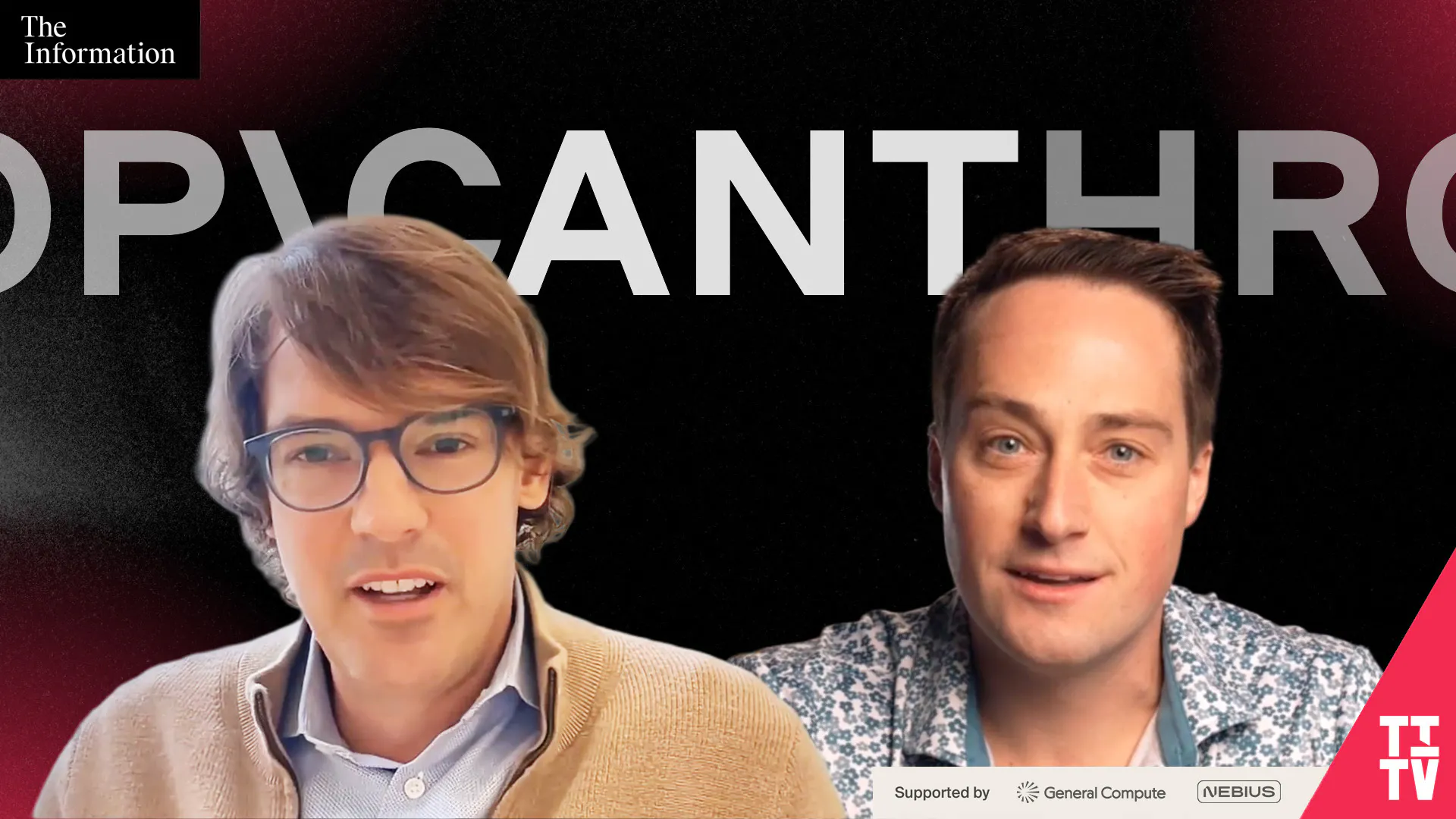
Check out today’s episode of TITV, in which Akash Pasricha unpacks the Anthropic IPO prospectus with Tomasz Tunguz and CJ Gustafson.
Recommended Newsletter
Start your day with Applied AI, the newsletter from The Information that uncovers how leading businesses are leveraging AI to automate tasks across the board. Subscribe now for free to get it delivered straight to your inbox twice a week.
The Information's WTF Summit returns to Napa Valley, bringing together the women shaping tech, media and finance. Confirmed speakers include Bari Weiss, Whitney Wolfe Herd (Bumble), Kim Posnett (Goldman Sachs) and Whitney Cummings. Expect candid conversations and a room built for meaningful exchange. Limited tickets remain—reserve your spot now.
Trust is quickly becoming the defining question of the AI era. Over dinner, Jessica Lessin, Founder & Editor-in-Chief of The Information, and Whitt Butler, EY Americas Vice Chair – Consulting, will talk candidly about how leaders can build that trust and keep it. Request an invite.
Join The Information and NYSE for a cocktail reception and conversation on what it really takes to go public, hosted by The Information’s Dakin Campbell. The panel will explore the trust, relationships and preparation companies need to build with advisers, investors and exchange executives, along with the many complexities founders and executives must navigate along the way. Sponsored by NYSE. Apply to attend.








 Gift Subscription
