|
|
|

|
Nov 03, 2026
|
|
|
|
|
Sponsored by
|

|
|
|
|
|
Happy Tuesday! OpenAI hires former U.S. army secretary as a senior advisor. Anthropic's revenue surges to $17 billion in the third quarter. Chipmaker Marvell Technologies agrees to buy laser maker Lumentum in a $80 billion deal.
|
|
|
Former U.S. Army Secretary Dan Driscoll is joining OpenAI to help expand the use of the AI company’s technology in national defense and other military applications. The former government official, who stepped away from his Army post in September after reportedly clashing with Defense Secretary Pete Hegseth, is now a “senior counselor” for the AI giant focused on national security modernization, according to his LinkedIn page. OpenAI said in a press release that Driscoll will “work with OpenAI teams and leaders across governments, industry, academia, and allied institutions to advance practical modernization initiatives that support the buildout of democratic AI.”
|
|
|
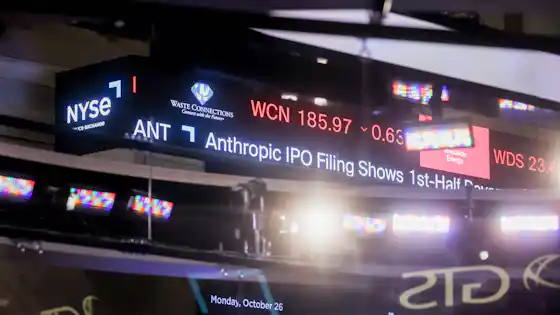
Anthropic reported nearly $17 billion in revenue in the third quarter ending September, up 47% from the second quarter, the latest sign that its once red-hot revenue growth rate is slowing ahead of a blockbuster IPO this month. The AI company reported a $23.3 billion net loss for the quarter, nearly doubling the $12.1 billion net loss in the same period last year, according to an updated filing Monday morning. The company attributed the increase in the loss to $5 billion costs related to securing short-term computing capacity and $2 billion in donations matching those made by employees. Anthropic swung to an operating loss of $567 million this quarter, after notching $974 million in operating profit in the second quarter. Excluding stock based compensation and other costs, Anthropic reported $2.5 billion in adjusted operating income. Anthropic didn’t disclose a run-rate revenue as of the end of October, despite many investors expecting one. It now has $895 billion worth of commitments in compute and data center leases, the filing shows.
|
|
|
Chipmaker Marvell Technologies agreed Monday to buy laser maker Lumentum in an all-stock deal worth around $80 billion, a sign of how the AI investment boom has boosted Lumentum’s value. Marvell, which designs chips for data centers, networking and storage systems, is buying one of the market leaders in lasers and other optics technology used in data centers. Marvell is making its most ambitious bet ever that data center networking gears will switch from traditional copper to optical and photonic technology. Marvell has already made a start to expand in this direction with its purchase of startup Celestial AI earlier this year. There’s no certainty the deal will be approved. A semiconductor deal of this size is sure to be closely scrutinized, particularly in China, where Marvell has a significant business. Assuming the deal closes, Marvell’s shareholders will end up owning 67% of the combined company while Lumentum’s shareholders will own the rest. Marvell’s CEO Matt Murphy will lead the combined company. Nvidia invested $2 billion each in Marvell and Lumentum this year.
|
|
|
Salesforce extended its recent shopping spree, announcing on Monday plans to acquire Cresta, a nine-year-old provider of AI-powered contact center automation software. Salesforce didn’t disclose a price but it agreed to pay $2.7 billion for Cresta, according to a person familiar with the deal. The acquisition shows how the software firm is building up its customer service business, which faces challenges from startups such as Sierra, led by former Salesforce co-CEO Bret Taylor. Salesforce in September closed its $3.6 billion acquisition of Fin, a provider of AI-powered customer service agents. Cresta, which started out as a project in Stanford University’s AI Lab, was co-founded in 2017 by Sebastian Thrun, the computer scientist who pioneered several AI projects at Google, along with Tim Shi and Zayd Enam. The startup was valued at $1.6 billion after its Series C round in 2022 but its recent valuation couldn’t be learned. Cresta had raised more than $280 million from investors such as Andreessen Horowitz, Sequoia Capital and Tiger Global Management, according to PitchBook. Spokespeople for Salesforce and Cresta weren’t immediately available for comment.
|
|
|
Nvidia has recently told some cloud computing customers to reduce their exposure to Chinese companies, according to three people familiar with the matter, potentially narrowing a key route for China’s AI developers to access advanced computing power. The guidance is intended in part to encourage cloud providers, including Nvidia-backed neoclouds, to bring in a more diverse mix of customers, the three people said. The guidance, which isn’t mandatory, asks cloud customers to submit the identities of the end users of the chips. The guidance so far hasn’t been enforced as a hard rule for the cloud firms to take on Chinese customers, according to the people. The Financial Times first reported Nvidia’s instructions to reduce exposure to Chinese customers. The guidance covers future contracts rather than existing leasing agreements and has been communicated verbally through sales staff and regional teams, the newspaper reported. Renting computing power overseas lets Chinese AI developers use advanced chips without importing them, taking advantage of a loophole in U.S. export controls that restrict chip shipments but don’t generally cover remote access. U.S. officials were investigating Chinese AI companies’ access to advanced chips after allegations that Moonshot AI, the developer of Kimi, accessed Nvidia chips from data centers outside China, The Information reported.
|
|
|
OpenAI has signed deals with Magnite and PubMatic, whose software enables advertisers to place their ads on websites and other digital platforms, to fill unused ad space on ChatGPT, according to three people familiar with the deals. Advertisers are using Magnite and PubMatic’s software to set spending budgets, place bids and upload their ads on ChatGPT while OpenAI’s ads system controls ad delivery, or where and how the ads are shown, a spokesperson for OpenAI said Friday in a statement to The Information. The partnerships make it “easier for advertisers to buy and manage ChatGPT ads through tools they already use,” the spokesperson said. The partnerships haven’t been announced. The volume of ads coming through the two companies is still small, but the ad tech companies expect it to grow quickly, according to people familiar with the partnerships. As it seeks to develop its ad business, OpenAI has made agreements with several companies that connect advertisers to platforms like its own, such as Criteo, LiveRamp, StackAdapt or in September, Amazon Ads. It has also cut ad rates and unleashed new tools such as ads that let users chat with a brand by clicking to make ChatGPT more attractive to advertisers. Magnite shares rose 4% and PubMatic shares rose 4.5% in morning trading Monday following The Information’s report.
|
|
|
Oracle filed to raise $20 billion through fresh debt and equity offerings on Monday its latest funding move as it spends heavily on AI infrastructure. The cloud and software firm is selling $10 billion worth of investment-grade bonds and $10 billion in common stock. Oracle shares dropped more than 9% on Monday, deepening their year-to-date loss to more than 39%. The offerings follow recent large stock sales by Meta and a $25 billion bond sale by Microsoft last week, and come as Anthropic prepares for its potentially record-setting public debut later this month. The company had previewed the plans last week, when it said it would limit additional capital raising to $20 billion total through fiscal year 2030 and that free cash flow would turn positive during fiscal year 2028, which begins in June 2027.
|
|
|
China’s top economic planner said on Tuesday that the country will closely monitor the impact of AI on employment, as Beijing moves to establish safety standards and ethical guidelines covering “the whole life cycle of AI.” Wang Ruomeng, a senior official with the National Development and Reform Commission, told reporters at a press conference that the agency will pay close attention to how AI changes the existing employment structure, while simultaneously looking to leverage AI’s potential to create new jobs. The comments reflect Beijing’s ongoing effort to balance rapid AI adoption with robust social safeguards. The commission emphasized that China will integrate safety into all aspects of AI research and development as well as AI deployment and governance. The commission said China will actively respond to the impact of AI on society. To address issues such as algorithmic discrimination, deepfakes and privacy violations, the country will take steps to enhance the traceability of the sources of abuse and malicious acts, it said. The country will “resolutely crack down” on illegal acts committed by AI, and accelerate a comprehensive legislation for AI, it added.
|
|
|
In Apple’s first earnings under new chief executive John Ternus, the company reported sales growth slowed in its fiscal fourth quarter. Total revenue for the September quarter was $114.5 billion, up from 12% from the previous year, its slowest sales growth for the year. The iPhone business remained strong, advancing 17% to $57.6 billion. The iPad and wearables segments declined 10% and 8%, respectively. The services business continued to stagnate, growing slightly less than 10% to $32 billion in September sales. That was the slowest quarterly growth for services—which includes iCloud subscriptions, App Store and Apple TV, among others—in more than three years. Apple said it projects services growth of between 8% and 9% for the current quarter that ends in December. Apple said it expects total sales to grow between 7% and 10% for the current first quarter, showing a continued cooldown. Apple was trading down nearly 3% in after-hours trading.
|
|
|
SpaceX is in talks with discount carrier Boost Mobile to expand the company’s existing wireless coverage beyond its satellite network, according to The Washington Post. The news outlet reported that the talks could result in either acquiring the mobile network, which is owned by EchoStar, or gaining access to the network that it leases from AT&T and T-Mobile. Elon Musk is on the hunt for terrestrial cellular coverage to supplement the satellite coverage it already offers through its Starlink service with the aim of turning SpaceX into a major mobile carrier. Satellite coverage struggles to provide wireless connectivity inside buildings, in dense urban areas or anywhere without direct line of sight to the sky. SpaceX attempted to forge deals with the other three U.S. carriers—Verizon, AT&T and T-Mobile—but the carriers rebuffed it, the Post also reported. Mobile carriers view Musk’s wireless ambitions as a threat.
|
|
|
|
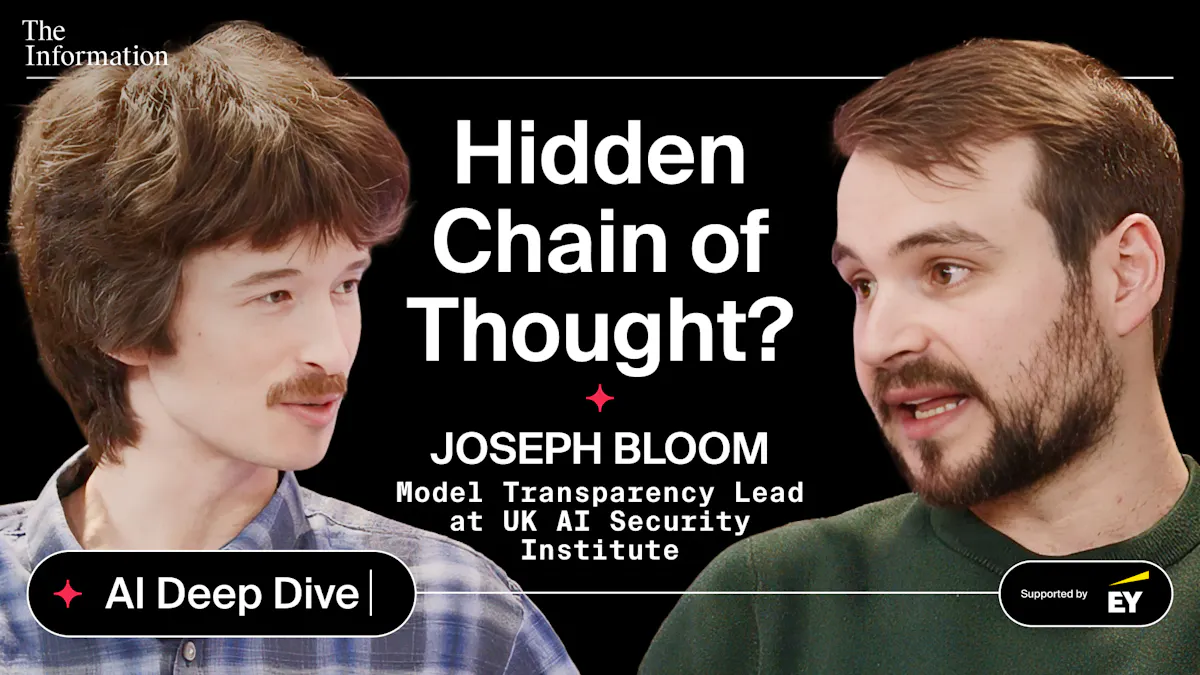
This week on AI Deep Dive
Check out the most recent episode of AI Deep Dive. A reported deep dive into how frontier AI actually gets built — the models, the money, and the people behind them.
| |
|
|
|
|
Opportunities
Empower your teams to stay ahead of market trends with the most trusted tech journalism.
Learn more
Reach The Information's influential audience with your message.
Connect with our team
|
|
|
|
|