There’s too much to digest out there. Here’s a taste of what happened in the food world this week. |
|
|
|
Erin Byrne/Pizza Studio Tamaki |
|
|
|
Here’s what you might have missed -
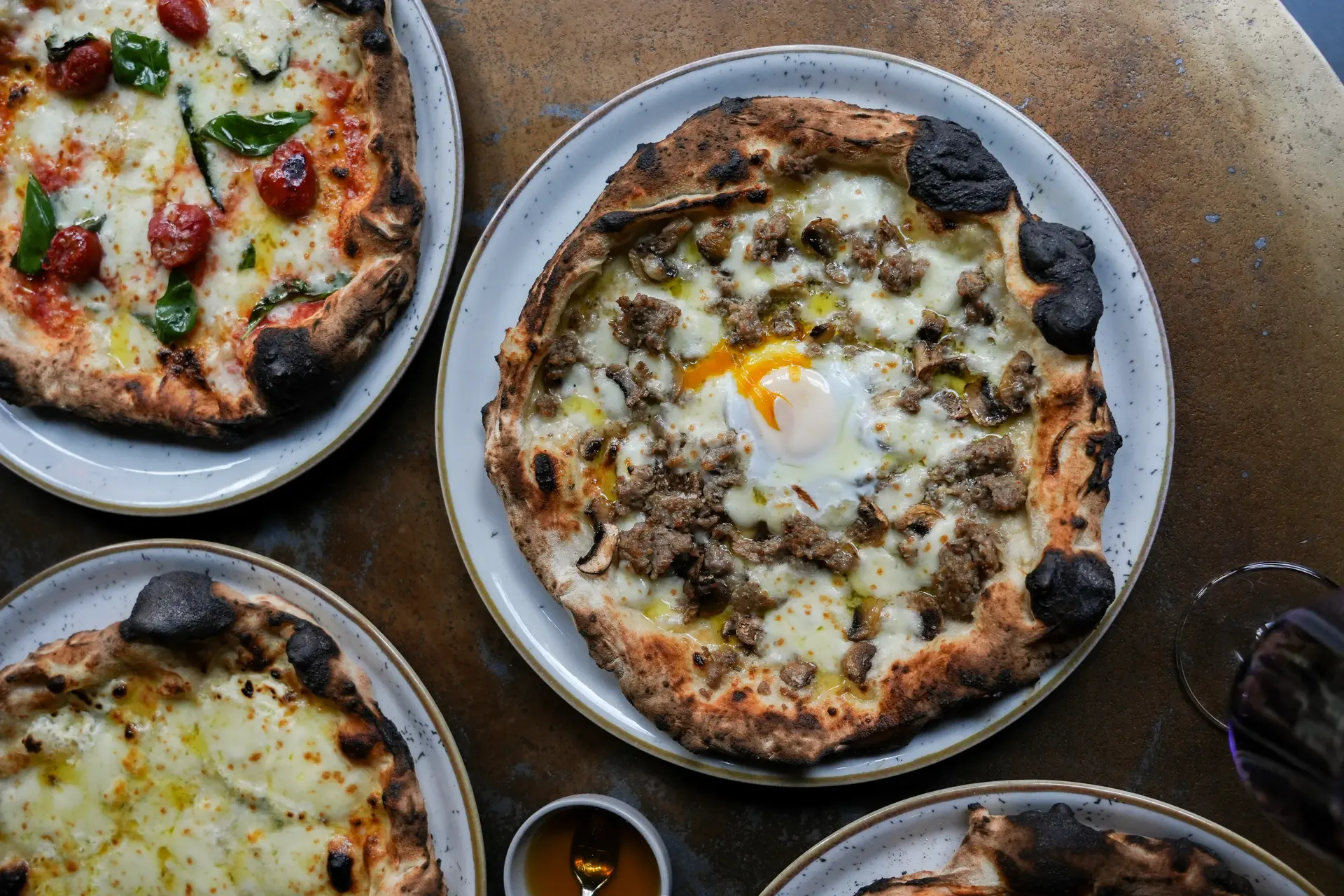
Can one of Tokyo’s most acclaimed pizza shops translate its success to New York City? The famously pizza-filled city has recently seen an influx of Japanese pizza imports, with a pop-up by Seirinkan earlier this year, in addition to the highly anticipated opening of Pizza Studio Tamaki. (PST took the place of Moody Tongue Pizza, a restaurant that started in NYC but billed itself as offering Tokyo-style Neapolitan pizza.) While PST’s reputation precedes it, as the long lines at its new East Village location prove, the execution doesn’t appear to be there yet, Ryan Sutton concluded in the New York Times. Though Sutton loved some of the pizzas, which are known for their charred and puffy crusts, he found other dishes inconsistent and some pies, like the sausage, “unremarkable.” (For background on the Tokyo pizza scene, revisit this piece from our archives.)
-
The San Francisco Chronicle brings back starred reviews: Restaurant critic MacKenzie Chung Fegan announced that she’s ending the paper’s eight-year hiatus on star ratings and adding them to her reviews. Former critic Soleil Ho decided not to use the star system, on the grounds that Ho did not “hold [themself] to be an objective authority on restaurants who can accurately quantify the experience for [readers].” Fegan’s position is that the star system best serves readers “especially at a time when restaurants are more expensive than ever,” she said. During the pandemic period, many restaurant critics suspended starred reviews, though the trend has since reversed. At the Chronicle, zero stars will mean not recommended; one: good; two: great; three: excellent; and four: extraordinary. Fegan’s inaugural starred review went to the 77-year-old San Francisco icon House of Prime Rib, which she awarded two stars.
DoorDash is adopting AI agents now: Earlier this week, I wrote about the rise of AI agents like Instinct and Muse in the restaurant space (and how they’ve been getting some users in trouble with Resy). On Wednesday, DoorDash cofounder Andy Fang announced that the company is now building agents into its app. A new feature, still in beta testing, allows users to text DoorDash “and let it order for you,” Fang wrote. “It’s proactive, learns from your repeat orders, and helps you find the best deals and new spots.” Expect to see more food apps adopt technology like this.
Goodbye, Pop-Tarts-flavored BuzzBallz; we hardly knew ye: Last month, ready-to-drink cocktail brand BuzzBallz announced a new partnership with Pop-Tarts, which would imbue the 15-percent ABV drinks with the latter’s popular Frosted S’mores and Frosted Brown Sugar Cinnamon flavors. This week, Bloomberg reported that it’s not happening after all: Mars Inc., which owns Pop-Tarts, pulled the partnership over fears that it would appeal to underage drinkers.
Bon Appétit has a new restaurant editor: Gabe Hiatt heads to the magazine from the Washington Post, where he most recently edited the Travel section. (Hiatt was also the editor of Eater D.C. back in the day.) We might call the move a rebalancing of the scales: Elazar Sontag (also an Eater alum) left that role at Bon App to become the Post’s restaurant critic late last year. (Speaking of the Post: This week, it consolidated the Instagram pages of both its Travel vertical and its Food vertical Voraciously into the Post’s wider Style section.)
We’ve hit peak novelty popcorn bucket: Dune got moviegoers stuffing their arms down the bristles of a Shai-Hulud; Deadpool and Wolverine prompted people to reach into Wolverine’s wide-open mouth. In a move of comparative normalcy, the newly announced bucket for the forthcoming adaptation of Sense and Sensibility looks like a stack of books, making it more easily reusable than many, but as much as I like the design, the whole novelty popcorn bucket thing is feeling a little straight-to-landfill now.
Thomas Straker’s All Things line of butter has entered Whole Foods in the United States: Before the London chef courted controversy for his all-white, all-male staff and gained a reputation as a “bad boy” for his fling with a Greek princess, he was known for being the British chef on TikTok who cooked with a hell of a lot of butter. His butter line launched in the United Kingdom in 2023 and is pursuing the U.S. market, now available in over 500 Whole Foods locations. We’re about to see much more of the chef: He’ll soon be opening Straker’s in NYC.
“What if you never cooked again?” Headline of the week goes to Grub Street on its recent piece about the thriving ecosystem of prepared food at NYC’s gourmet grocers. (Personally, I’m inclined to agree with the opposing piece it published, which makes the case for cooking nearly everything from scratch.)
-
ICYMI: Maine’s “red snapper” hot dogs will now get their color from crushed insects: In a win for critics of artificial food coloring, W.A. Bean, the last-remaining producer of the state’s iconic red hot dogs, announced last week that it’s replacing Red Dye 3 with carmine, which is made by drying and crushing small, squishy cochineal beetles.
|
|
|
|
What I’m consuming this weekend |
I was planning on seeing Verity (which I think will be fun even though everyone seems to be saying that it’s actually bad and not “good bad”), but a slight cold is now putting a damper on my weekend. Luckily, I still have some chicken noodle soup in the freezer. Also, after months of resisting, I’m finally giving in: I started reading Dungeon Crawler Carl.
|
|
|
|
|