Maybe dining out all the time is hurting my friendships  ‌ ‌ ‌ ‌ ‌ ‌ ‌ ‌ ‌ ‌ ‌ ‌ ‌       ‌ ‌ ‌ ‌ ‌ ‌ ‌ ‌ ‌ ‌ ‌ ‌ ‌       ‌ ‌ ‌ ‌ ‌ ‌ ‌ ‌ ‌ ‌ ‌ ‌ ‌       ‌ ‌ ‌ ‌ ‌ ‌ ‌ ‌ ‌ ‌ ‌ ‌ ‌       ‌ ‌ ‌ ‌ ‌ ‌ ‌ ‌ ‌ ‌ ‌ ‌ ‌       ‌ ‌ ‌ ‌ ‌ ‌ ‌ ‌ ‌ ‌ ‌ ‌ ‌       ‌ ‌ ‌ ‌ ‌ ‌ ‌ ‌ ‌ ‌ ‌ ‌ ‌       ‌ ‌ ‌ ‌ ‌ ‌ ‌ ‌ ‌ ‌ ‌ ‌ ‌       ‌ ‌ ‌ ‌ ‌ ‌ ‌ ‌ ‌ ‌ ‌ ‌ ‌       ‌ ‌ ‌ ‌ ‌ ‌ ‌ ‌ ‌ ‌ ‌ ‌ ‌ 

View on web 

October 1, 2026

Happy October! (Oh no, it’s already October!) Here’s what I’ve been thinking about with cozy season looming.

Bettina Makalintal


Bettina Makalintal


What do we lose when we default to dining out with our friends?

Every fall, when the weather cools and I start to think about making my home cozier, I experience a predictable series of events. I think: I should host more. I run through concepts, like a biweekly open invite in which I make different iterations of soup and bread each time; a Saturday “home cafe,” in which I bake everything that feels too big-batch for just my husband and me; or that “Friday night meatballs” idea that started making the rounds online over a decade ago. Every year, I fail to execute, rationalizing that I don’t have enough chairs or that it’s annoying that my dining table is in my kitchen, forcing visitors to be needlessly cramped, or whatever.


More and more of us are talking ourselves out of hosting, apparently. On Tuesday, journalist and author Derek Thompson published a piece titled “You Are No Longer Invited to Dinner,” charting the decline of hosting in the United States over the past 50 years through lifestyle survey data. “Between 1975 and 1998, the share of Americans who gave or attended a monthly dinner party declined by half. The share of Americans saying they never entertained people at home tripled,” he wrote. Between 1995 and 2026, the share of people who had hosted guests or attended dinner parties dwindled even further, dropping by an additional 20-ish percent. Thompson argues that people aren’t moving these gatherings to restaurants or bars; they’re just socializing less in-person.


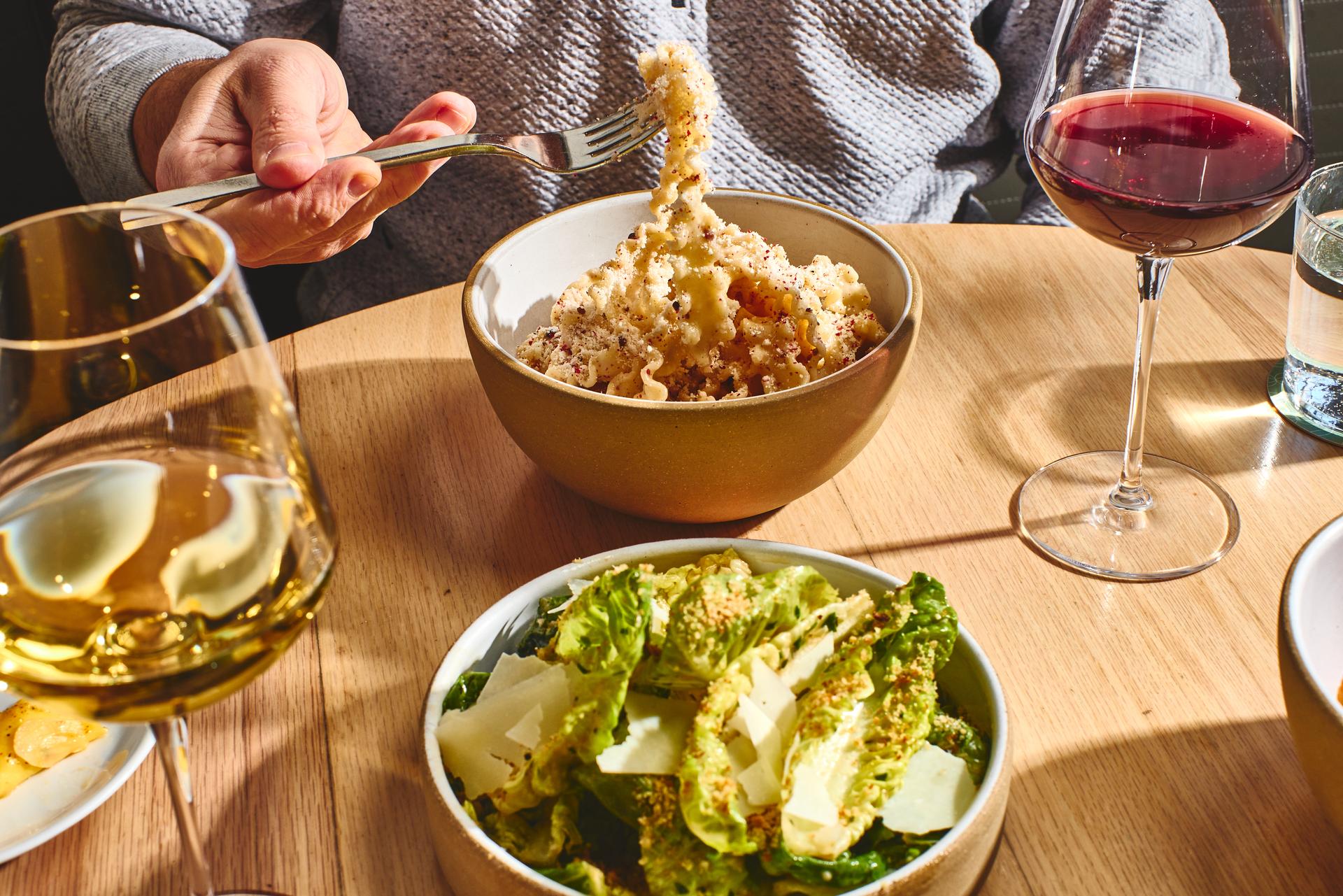
Let’s go back to the anecdotal, because what Thompson’s piece made me think about is not whether people are replacing hosting with dining out, but what it means for the people who do. After all, that is my experience, with restaurants at the center of my social milieu. From my peers, too, I see more nights out than I do dinners in (though, of course, we might attribute some of this to the latter being considered less Instagrammable than the former). How does that shift to socializing — spending money together out in the world versus gathering in the homes of friends — also shape our relationships and how we show up in them?

Cole Saladino/Eater

In an outlier to the big-picture data, my upbringing in the late 1990s to early 2010s was full of dinner parties, both in my home and the homes of my parents’ friends. My mom prided herself in hosting to the point that helping her pull out the chafing dishes (yes, multiple) to have people over was just the typical run-of-show, scheduled sometime between her vacuuming and me cleaning the bathroom. Yet here I am, raised on Martha Stewart Living and inundated with TikTok tablescaping influencers, texting my friends to schedule hangouts in which we almost always just go out to dinner. I’m much more likely to receive an invite to catch up over a dinner out than at a friend’s. (Still, I will admit: There are few things greater than gossiping with a friend over a dinner out.)


A restaurant experience, even at the most casual of spots, is inherently structured and predictable. You show up at the restaurant at an agreed-upon time on an agreed-upon date; perhaps there was even a calendar invite. The meal is made in a specific order on a time scale that generally doesn’t deviate too much from your expectations, and you can count on spending about 90 minutes there before the restaurant starts to shoo you out. People tend to act a certain way at a restaurant, too: generally aware of the way they’re perceived publicly, hewing to the conversation roadmap of the “catch-up.” 


In this way, the default of dining out with friends could be another example of the overstructuring and odd formality of many adult friendships now, in which spontaneity and casualness are fleeting. The death of the “casual hang” has been much lamented across social media. “Catch-up culture is killing friendship,” argued a popular essay on a Substack publication called I Remember, citing a term coined by author Michelle Elman. 


The argument against “catch-up culture” is that intermittent dinner dates, in which we primarily account what has happened since the last one, do not really constitute experiencing life together. The latter, according to this argument, is built through the intimacy and casualness of experiences like grocery shopping together, or eating snacks on the couch together while watching TV. This has led to what others have dubbed “the friendship depth gap,” in which we increasingly struggle to “let the people in our lives truly know us.” We forget that hosting does not have to mean a big dinner party or a picturesque spread. It can mean a meal that’s humble and perfunctory, in the theoretically lower-stakes setting of home.


I say “theoretically” because ultimately, for me, my failure to host is not about the big-picture factors that Thompson highlights (feeling overworked or stressed from parenting, for example), but about the feeling of being somehow too-seen in my own space and therefore known in ways I don’t want to be known. I worry that I’m actually a bad cook, or that I’ll be judged for the cords I’ve struggled to wrangle, or that my standards for a tidy home are below someone else’s — even though on the occasions that I’ve clocked these things in other people’s homes, I’ve mostly just been thankful they invited me over at all. 


How close can you really be to a friend if you won’t show them your weird imperfections, the version of you that is the clearest when you’re in the comfort of your own home and not trying to impress your server with how socially gracious and easygoing you are as a diner? I’ll probably never stop dining out, but for the sake of my friendships, maybe it’s time to send a few “want to come over for dinner?” texts.


Food worth traveling for

Dispatches from the Eater staff about the world’s culinary destinations worth planning an entire trip around, delivered to your inbox. 

Plan your next trip 
 
 
Learn more about OpenWeb

More for the table 

  • The best piece I’ve read recently on the purported “loneliness epidemic” came from Slate, in which Nick Keppler explored how socioeconomic status influences loneliness.
  • A few years ago I was having a real potluck moment. I wrote about why that approach to social interaction felt so special to me. (Plus, it’s easier than hosting.)
  • The saddest restaurant closures in Los Angeles in September include a decade-old Hollywood hangout and a 75-year-old barbecue spot.
  • ICYMI: I wrote about why everyone wants to watch “Making the Restaurant” videos on social media now.
  • Why does shrimp cocktail come with only five shrimp? I loved this piece by Jamie Feldmar for The Angel.
 
 
Learn more about OpenWeb
FacebookTwitterInstagram

This email was sent to you@example.com. Manage your email preferences or unsubscribe.


View our Privacy Notice and our Terms of Service.

Eater is a part of PMX Global, LLC, a subsidiary of Penske Media Corporation.
© 2026 VM Publishing, LLC. All rights reserved.